







Kunle Omisore biography is the story of a Nigerian actor, filmmaker and producer whose career has become closely associated with Yoruba-language cinema and the preservation of indigenous culture through film. Known professionally as 33 Films Omisore, he has worked across acting and movie production and has appeared in projects including Crab, Seven Doors, Love or Death, 48 Hours Marriage and other Nigerian productions.
What makes Kunle Omisore’s journey particularly interesting is that his ambitions extend beyond simply appearing on screen. In interviews, he has spoken openly about his desire to use filmmaking to promote Yoruba language, traditions and stories internationally. “I came to the industry to promote my culture so I can propagate Yoruba to the whole world,” he told The Nation in 2024.
At the same time, publicly available information about his private life and early years is surprisingly limited. Several entertainment websites publish conflicting dates of birth, educational histories and personal details, meaning a responsible biography must distinguish between information that can be independently supported and claims that remain unverified.
This article therefore focuses on the strongest publicly available evidence and avoids presenting uncertain online claims as established facts.
Quick Facts About Kunle Omisore
| Category | Details |
|---|---|
| Full name | Kunle Omisore |
| Professional identity | 33 Films Omisore |
| Nationality | Nigerian |
| Profession | Actor, filmmaker and producer |
| Main industry | Nollywood, particularly Yoruba-language cinema |
| Known production identity | 33 Films |
| Notable screen credit | Crab (2022) |
| Notable recent credit | Seven Doors (2024) |
| Production project | Kori Kosun |
| @33filmsomisore | |
| Cultural focus | Yoruba language, traditions and indigenous storytelling |
| Net worth | No reliable publicly verified figure |
| Marital status | Not sufficiently verified from authoritative sources |
One important fact-checking note concerns Kunle Omisore’s age. Some entertainment sites claim that he was born in 1973 or 1974, while other sources list different dates. A 2023 entertainment report stated that the actor known as 33 Films Omisore celebrated his 50th birthday, which would indicate a 1973 birth year. However, the exact date has not been sufficiently established by a strong primary source.
For that reason, this biography does not treat a precise date of birth as confirmed fact.
Early Life and Family Background
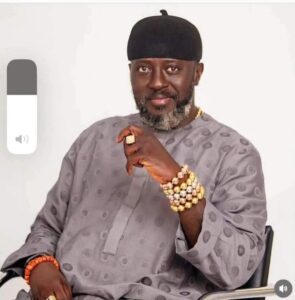
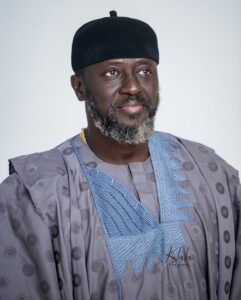
The early life of Kunle Omisore is one of the areas where publicly documented information is relatively scarce.
Multiple entertainment biographies state that he was born in Lagos and has roots in Ile-Ife, Osun State. However, these details are not consistently supported by primary sources, and published biographies disagree about his exact birth date and other aspects of his childhood.
As of this writing, there is no publicly verified information confirming the names of Kunle Omisore’s parents, the exact size of his immediate family, or detailed accounts of his childhood experiences.
What can be established more confidently is his strong connection to Yoruba culture. That connection has become one of the defining characteristics of his professional identity.
For Omisore, Yoruba culture is not merely a background element. His own explanation of his career suggests that language, tradition and cultural representation are central reasons for his continued involvement in filmmaking.
In his 2024 interview with The Nation, he explained that his motivation for entering the industry was to promote Yoruba culture and make Yoruba stories accessible to audiences around the world.
That cultural purpose provides an important lens through which to understand his career.
Rather than viewing acting simply as celebrity or entertainment, Omisore has repeatedly presented filmmaking as a vehicle for cultural expression.
The Meaning Behind 33 Films Omisore
One of the names associated with Kunle Omisore is 33 Films.
Public references dating back to 2018 identify Omisore as the CEO of 33 Films and describe him as an actor and producer working on Yoruba-oriented productions.
The company identity is important because it shows that Omisore’s involvement in the industry has not been restricted to acting.
He has also positioned himself behind the camera as a producer and filmmaker, giving him greater control over the kinds of stories he wants to bring to audiences.
This producer’s perspective is especially relevant to his cultural mission. By participating in the creation and financing of stories rather than merely accepting acting roles, he has been able to pursue projects connected to Yoruba themes and indigenous storytelling.
Education and Academic Journey
Kunle Omisore’s educational background is another area where online sources provide conflicting accounts.
Several biography websites claim that he studied Geology at the University of Ilorin before later pursuing Theatre Arts at the University of Lagos. However, the available reporting from major Nigerian news organisations does not independently establish the complete sequence or dates of those studies.
As of this writing, there is no publicly verified information confirming the precise years of his university attendance, graduation dates or complete academic record.
Consequently, claims that he graduated from a particular programme in a particular year should be treated cautiously.
What is much clearer is that his professional development ultimately moved toward acting and filmmaking.
His subsequent career demonstrates practical knowledge of performance, production and the Nigerian film business, regardless of the precise details of his academic path.
How Kunle Omisore Entered Nollywood
Kunle Omisore’s entry into filmmaking was rooted in acting.
A number of entertainment publications identify Jenifa Diaries as an early or debut television appearance, with 2018 frequently cited as the beginning of his better-known screen career.
However, the broader record suggests that his relationship with movie production was developing alongside his acting work.
By 2018, contemporary reporting was already describing Omisore as the CEO of 33 Films and a producer involved in projects such as Ayomipo, Isun Ayo and Entangled.
That distinction matters.
It means that his career should not simply be described as the story of an actor who later discovered production. Publicly available evidence indicates that acting and production were intertwined aspects of his professional development.
His early involvement in Yoruba-language productions also placed him within a long-established Nigerian filmmaking tradition in which theatre, television, indigenous-language cinema and community storytelling frequently overlap.
Building a Career as an Actor and Producer
Omisore gradually became associated with Yoruba-language productions while also appearing in broader Nollywood projects.
His filmography includes Crab, a Yoruba-language drama released in Nigeria in 2022. IMDb lists him in the cast as Bade and identifies 33 Films as the production company.
The credit is significant because it connects his acting career directly with the production identity associated with him.
His work has also extended into other projects, including 48 Hours Marriage and Love or Death, according to entertainment-film databases and Nigerian biography publications.
His career demonstrates a recurring pattern: acting provides the public-facing performance, while production provides an opportunity to shape stories from behind the scenes.
This combination is increasingly common in Nollywood, where established performers frequently become producers, directors or executive producers as they develop their careers.
For Omisore, however, production appears to have an additional purpose: giving indigenous stories room to grow.
The Cultural Mission Behind His Acting
The most clearly documented aspect of Kunle Omisore’s professional philosophy is his commitment to Yoruba culture.
In his interview with The Nation, he explained that his desire was to propagate Yoruba culture internationally. He also expressed satisfaction that Yoruba-language movies were increasingly performing well and receiving attention.
This perspective places Omisore within a larger movement in contemporary Nigerian cinema.
For decades, Yoruba theatre and film have served as important vehicles for preserving language, folklore, social values, humour and historical memory.
Modern streaming platforms and cinemas have expanded the potential audience for these stories beyond Nigeria.
Omisore has recognised that opportunity.
His approach suggests that Yoruba-language cinema does not have to remain confined to a Nigerian audience. Instead, the language and cultural traditions can become part of a global entertainment market.
He has also expressed optimism about international interest in Nigerian traditions, arguing that the industry is already reaching global audiences.
That ambition is bigger than individual fame. It is a cultural argument: Nigerian filmmakers can compete internationally without abandoning the languages and traditions that make their stories distinctive.
Major Film and Television Credits
Crab
One of the better-documented credits in Kunle Omisore’s filmography is Crab, released in Nigeria in November 2022.
The film is a Yoruba-language drama directed by Kayode Adebayo, and IMDb lists Kunle Omisore as Bade. The production company is identified as 33 Films.
The project is particularly relevant to Omisore’s biography because it demonstrates his dual identity as performer and producer.
Seven Doors
Omisore was also part of the cast of Seven Doors, a Nigerian television mini-series released in 2024.
The series starred Femi Adebayo, Chioma Chukwuka, Gabriel Afolayan and other established Nigerian performers. IMDb credits Kunle Omisore as Amaka’s Uncle.
His involvement in a high-profile ensemble production illustrates his continued presence within contemporary Nigerian screen entertainment.
The project also fits his broader professional environment, where Yoruba cultural themes and mainstream Nigerian television intersect.
Ewa
Kunle Omisore was also credited in Ewa – Beauty, a Yoruba drama produced by Adunni Ade.
The film featured actors including Ibrahim Chatta, Yinka Quadri, Sola Kosoko, Tayo Sobola and Omisore.
The production further demonstrates the range of collaborations surrounding his career.
The Ghost and the Tout
Several entertainment publications list Omisore among the cast associated with The Ghost and the Tout.
The film belongs to the broader Nigerian commercial cinema landscape, illustrating how Omisore’s work has extended beyond strictly Yoruba-language projects.
Omo Ghetto: The Saga
Omisore has also been associated in entertainment biographies with Omo Ghetto: The Saga, one of the major Nigerian commercial films of its period.
The project represents another example of his participation in larger Nollywood productions alongside his work within Yoruba-language cinema.
Shanty Town
Shanty Town is another title frequently mentioned in connection with Omisore’s filmography.
The Netflix-era growth of Nigerian film and television has increased international exposure for actors working in the Nigerian industry, and Omisore’s appearances in such productions have contributed to his wider visibility.
Kori Kosun and the Move Deeper Into Production
Production became an increasingly important part of Omisore’s professional identity.
In October 2022, Tribune Online reported that he was preparing to begin work on a movie titled Kori Kosun. The publication described him as both an actor and movie producer and noted that his journey into movie making began with acting.
The report also highlighted the importance of established industry colleagues to his development.
Omisore acknowledged that the trust and support of experienced actors helped make his entry into the industry easier.
This is a revealing detail about how Nollywood careers often develop.
Unlike industries where a performer may enter through a highly structured studio system, Nigerian actors and producers frequently build careers through relationships, collaborations, referrals and repeated work with established professionals.
Omisore’s own account reflects this ecosystem.
33 Films and the Business Side of Filmmaking
The development of 33 Films represents another important part of Kunle Omisore’s career.
A 2018 report identified him as the company’s CEO while discussing Entangled, a project involving several Nigerian performers.
The company’s connection with his film work is also visible in Crab, where IMDb lists 33 Films as the production company.
This suggests that Omisore’s ambitions have extended beyond individual acting contracts.
Producing allows him to participate in decisions involving story development, casting, financing, production and distribution.
It also gives filmmakers a platform through which they can pursue stories that might not always be prioritised by larger commercial producers.
For an artist whose stated mission is cultural preservation, that independence can be particularly valuable.
Challenges and Turning Points
The glamour associated with Nollywood can obscure the financial and structural difficulties performers experience behind the scenes.
Omisore has spoken publicly about these difficulties.
In a 2025 interview with The Nation, he discussed gatekeeping in the Nigerian film industry and described dealing with industry power structures as part of a learning process.
He recalled one early business experience in which he said a marketer paid him ₦450,000 rather than the ₦850,000 they had agreed upon.
According to Omisore, the marketer nevertheless gave his image significant visibility by prominently featuring him on a movie poster. He later said that he viewed the incident as part of his professional growth rather than allowing it to become a permanent conflict.
The episode offers an unusually candid look at the economics of Nigerian filmmaking.
For emerging actors, visibility can sometimes be as valuable as immediate financial compensation, particularly when marketers control access to audiences.
Omisore’s account does not mean that underpayment should be accepted. Rather, it illustrates the complicated trade-offs artists sometimes encounter while building careers.
His willingness to discuss the experience also provides insight into the realities behind his eventual progression into production.
Gatekeeping and the Nigerian Film Industry
Omisore’s comments about gatekeeping are important because they move his story beyond celebrity biography.
He described gatekeepers as people who can either help or exploit performers, depending on their relationships and motivations.
The issue is particularly relevant in Nollywood, where opportunities often depend on networks and established professional relationships.
For an actor trying to move from supporting roles toward more influential creative positions, learning how the industry works becomes part of the career itself.
Omisore’s experience therefore illustrates a wider reality: success in Nigerian entertainment involves talent, but talent alone is rarely the complete story.
Professional relationships, persistence, reputation, production knowledge and the ability to create one’s own opportunities can be equally important.
Family and Personal Life
Kunle Omisore has generally kept his private life away from the level of public scrutiny surrounding his professional career.
Various entertainment websites publish claims about his marital status, children and family circumstances, but these accounts are inconsistent and are not adequately supported by authoritative sources.
As of this writing, there is no publicly verified information confirming the identity of Kunle Omisore’s wife, the exact number of his children, or a comprehensive account of his immediate family.
Some online biographies make specific claims about his relationships and children. Because those claims are not sufficiently corroborated, they should not be treated as established facts.
This restraint is important in biography writing.
A person’s private life should not be filled with assumptions simply because search engines contain conflicting claims.
The available evidence supports describing Omisore primarily through his professional achievements and his publicly expressed views on filmmaking.
Awards and Recognition
There is limited reliable documentation of major formal awards won by Kunle Omisore.
Some entertainment websites claim that he has received various recognitions, but the available evidence does not provide sufficiently strong documentation to establish a complete awards history.
As of this writing, there is no publicly verified information confirming a comprehensive list of major national or international acting awards won by Kunle Omisore.
That does not mean his work has gone unnoticed.
His continued presence in Yoruba cinema, his work as a producer and his participation in recognisable Nigerian film projects demonstrate professional longevity.
Recognition in the Nigerian film industry can also take forms other than trophies, including repeated casting, producer relationships, audience familiarity and the ability to sustain independent productions.
Net Worth and Sources of Income
Kunle Omisore’s net worth is frequently searched online, but reliable evidence for a specific figure is lacking.
Several entertainment websites publish estimates ranging from hundreds of thousands of dollars to approximately $1 million. However, those figures are generally presented without audited financial statements, verifiable business records or credible evidence showing how the calculations were made.
For that reason, those numbers should not be presented as fact.
His publicly documented professional activities indicate several potential sources of income, including acting, movie production and filmmaking.
However, the value of his assets, investments, property holdings, production revenues and private business interests has not been reliably disclosed.
A responsible Kunle Omisore biography should therefore avoid attaching a precise dollar amount to his wealth.
Social Media and Public Identity
Kunle Omisore is publicly associated with the Instagram handle @33filmsomisore.
Contemporary reports about his 2023 birthday identified him by the same handle and referred to him as 33 Films Omisore.
His Instagram identity reinforces the connection between his personal brand and 33 Films.
Social media has become an important part of Nollywood’s modern ecosystem because actors and producers can promote films directly, announce new projects, share behind-the-scenes material and communicate with audiences without relying exclusively on traditional entertainment media.
However, readers should distinguish between a social-media account being associated with a celebrity and an account being formally verified by the platform.
As of this writing, the available sources reviewed for this biography do not provide sufficient evidence to label the account as officially verified.
Verified Quote: Why Kunle Omisore Became an Actor

One of the clearest windows into Omisore’s philosophy comes from his own words.
Speaking to The Nation in 2024, he explained:
“I came to the industry to promote my culture so I can propagate Yoruba to the whole world.”
The statement is significant because it captures the central idea running through his career.
For Omisore, the Yoruba film industry is not merely a commercial niche.
It is a cultural platform.
He has also expressed satisfaction with the growing performance of Yoruba-language movies and argued that the language has the strength to succeed on the big screen.
That philosophy helps explain his continued involvement in Yoruba-related productions.
Career Timeline
| Period | Career development |
|---|---|
| Early years | Developed an interest in performance and filmmaking |
| Early professional period | Became involved in Nigerian movie production and acting |
| 2018 | Public reporting identified him with 33 Films and projects including Entangled |
| 2018 onward | Became increasingly visible in Nigerian film and television |
| 2022 | Appeared in Crab and continued developing production projects |
| 2022 | Reported to be preparing Kori Kosun |
| 2023 | Publicly celebrated his 50th birthday according to entertainment reports |
| 2024 | Discussed his cultural mission and Yoruba filmmaking in The Nation |
| 2024 | Appeared in Seven Doors |
| 2025 | Discussed gatekeeping and financial realities in Nollywood |
| 2026 | Remains associated with acting and Yoruba-oriented filmmaking |
The timeline should be read with the same fact-checking caution applied throughout this biography. Some dates come from entertainment reporting rather than primary documents.
What Makes Kunle Omisore’s Career Significant?
Kunle Omisore’s significance lies partly in the combination of roles he has embraced.
He is not simply an actor waiting for casting opportunities.
His involvement in production gives him the ability to develop projects, while his acting work keeps him connected to audiences.
That dual position is especially useful in Yoruba cinema.
The industry depends heavily on performers who understand language, cultural context and audience expectations. Producers who also understand performance can potentially make more informed decisions about storytelling and casting.
Omisore’s stated cultural mission adds another layer.
His goal of taking Yoruba stories to a global audience reflects a broader transformation in African entertainment.
Streaming platforms, international festivals and digital distribution have made it increasingly possible for indigenous-language productions to reach viewers who may never have encountered them through traditional Nigerian cinema.
Yoruba Cinema and Global Audiences
The rise of Yoruba-language films is part of a much larger shift in Nigerian entertainment.
For years, English-language Nollywood productions dominated much of the international conversation surrounding Nigerian cinema.
But indigenous-language filmmakers have increasingly demonstrated that local language can be a strength rather than a limitation.
Omisore’s comments reflect that changing philosophy.
His belief that Yoruba movies can compete internationally is built around the idea that audiences are interested in authentic stories and cultural experiences.
A film does not necessarily need to abandon its language or traditions to become globally relevant.
Instead, those qualities can become part of its appeal.
This is particularly important at a time when international audiences are consuming entertainment from an increasingly diverse range of countries.
Collaborations With Other Nollywood Professionals
Omisore’s career has placed him alongside many established Nigerian actors and filmmakers.
His documented projects have included collaborations involving performers such as Adebayo Salami, Moyo Lawal, Ibrahim Chatta, Yinka Quadri, Femi Adebayo, Chioma Chukwuka and Gabriel Afolayan, among many others.
Such collaborations have helped position him within the broader Yoruba and Nigerian entertainment community.
The importance of collaboration is also reflected in his own comments about his career.
When discussing his rise in the industry, he acknowledged the support and trust of established actors who helped make his entry into movie production easier.
That acknowledgement reflects a recurring feature of Nigerian theatre and film: careers are often built collectively.
What Is Still Unknown About Kunle Omisore?
A comprehensive biography should also explain what cannot be established.
There are significant gaps in publicly accessible information about Omisore.
These include:
- His officially documented date of birth
- His parents’ identities
- Detailed childhood history
- A fully verified educational timeline
- His wife’s identity
- Complete information about his children
- A verified personal net-worth figure
- A complete list of awards
- Audited information about business assets
- A comprehensive official filmography covering every production
These gaps should not be interpreted negatively.
Many Nigerian actors have professional careers that are better documented through film credits, interviews and entertainment reporting than through formal biographies.
The responsible approach is to acknowledge the gaps rather than fill them with speculation.
Legacy and Influence
Kunle Omisore’s career is still developing, so it would be premature to describe his legacy in the same terms as that of Nigeria’s most established film veterans.
Yet his contribution is already visible in an important area: the continued production and promotion of Yoruba-language entertainment.
His career demonstrates how an actor can evolve into a producer and filmmaker while maintaining a strong connection to indigenous culture.
His willingness to discuss the industry’s challenges also adds another dimension to his public profile.
Rather than presenting Nollywood as a perfect world of fame and wealth, he has spoken about gatekeeping, financial disagreements and the difficult learning process involved in establishing oneself.
That honesty makes his story particularly relevant to aspiring actors and filmmakers.
The most enduring part of his public philosophy may ultimately be his belief that Yoruba stories deserve global recognition.
In an entertainment landscape increasingly shaped by streaming and international audiences, indigenous Nigerian storytelling has an opportunity to travel further than ever before.
Omisore’s stated ambition is to be part of that journey.
Conclusion
The story of Kunle Omisore is ultimately a story about more than acting.
It is about the evolution of a Nigerian creative professional who has moved between performance, production and filmmaking while maintaining a clear interest in Yoruba culture.
His career has included screen appearances, production work and projects connected to indigenous storytelling. His association with 33 Films has also allowed him to participate in filmmaking from behind the scenes rather than relying exclusively on acting opportunities.
Perhaps the clearest explanation of his career comes from his own statement that he entered the industry to promote Yoruba culture and propagate it around the world.
That objective gives his professional journey a distinctive identity.
There are still unanswered questions about his early life, education, family and finances, and responsible reporting requires acknowledging those gaps.
But the information that can be verified already tells an interesting story: Kunle Omisore has built a place for himself within Nigerian cinema by combining acting with production and by treating Yoruba culture not simply as a subject for entertainment, but as something worth preserving, developing and sharing with the world.
As Nigerian cinema continues to expand internationally, filmmakers with that kind of cultural commitment may become increasingly important.
For Kunle Omisore, the next chapter of his career will determine how far that vision ultimately travels.
Also read: Tall Lizzy Biography: The Story Behind the Nigerian Adult Entertainment Personality
Frequently Asked Questions About Kunle Omisore
Who is Kunle Omisore?
Kunle Omisore is a Nigerian actor, filmmaker and producer associated particularly with Yoruba-language cinema. He is also known professionally as 33 Films Omisore and has worked on both sides of film production.
What is Kunle Omisore known for?
He is known for acting and producing Nigerian films, particularly Yoruba-oriented productions. His credits include Crab and Seven Doors, while entertainment publications have also associated him with titles such as Love or Death, 48 Hours Marriage, The Ghost and the Tout and Omo Ghetto: The Saga.
What is Kunle Omisore’s real name?
His publicly used professional name is Kunle Omisore. He is also widely associated with the name 33 Films Omisore.
When was Kunle Omisore born?
There is conflicting information online about his exact birth date. A 2023 entertainment report said that he celebrated his 50th birthday, suggesting a 1973 birth year, but a precise date has not been sufficiently established by authoritative sources.
Where is Kunle Omisore from?
Entertainment biographies commonly associate him with Lagos and Osun State, particularly Ile-Ife. However, the publicly available authoritative record is insufficient to establish every detail of his birthplace and family origin with certainty.
Is Kunle Omisore married?
Some entertainment websites claim that he is married, while others provide contradictory personal information. As of this writing, there is no sufficiently authoritative source confirming the details of his marital status and spouse.
Does Kunle Omisore have children?
Online biographies make different claims about his children. Because those claims are not sufficiently corroborated, the exact number of his children cannot be stated as verified fact.
What is Kunle Omisore’s Instagram handle?
He is publicly associated with the Instagram handle @33filmsomisore. Contemporary reporting has identified him by that handle.
Why did Kunle Omisore become an actor?
According to his 2024 interview with The Nation, his major motivation was promoting Yoruba culture and helping propagate Yoruba language and traditions globally.
Is Kunle Omisore a movie producer?
Yes. Contemporary reporting has identified him as a producer and associated him with 33 Films. His production involvement includes projects such as Crab and the reported development of Kori Kosun.
What is 33 Films?
33 Films is the production identity associated with Kunle Omisore. Public reporting has identified Omisore as its CEO, while IMDb lists 33 Films as the production company for Crab.
What movies has Kunle Omisore appeared in?
His publicly documented screen credits include Crab and Seven Doors. Other entertainment sources associate him with Love or Death, 48 Hours Marriage, The Ghost and the Tout, Omo Ghetto: The Saga and Shanty Town.
Has Kunle Omisore won major awards?
There is not enough reliable public documentation to establish a comprehensive list of major awards won by him. Claims on some biography websites should therefore be treated cautiously.
What is Kunle Omisore’s net worth?
There is no reliable publicly verified figure for his net worth. Online estimates vary considerably and should not be treated as confirmed financial information.
What is Kunle Omisore’s biggest career goal?
Based on his public comments, one of his central ambitions is to take Yoruba culture and Nigerian indigenous storytelling to a global audience. He has expressed a desire to see the Nigerian movie industry become increasingly international.










+ There are no comments
Add yours