






Few Nigerian politicians have successfully built a reputation in both the private sector and public service quite like Seyi Makinde. An accomplished engineer, entrepreneur, philanthropist, and politician, Makinde’s rise from a modest upbringing in Oyo State to becoming one of Nigeria’s most influential governors reflects decades of determination, technical expertise, and public engagement.
His story is not merely about politics. It is about how engineering principles, business discipline, and community development shaped a leader who would eventually govern one of Nigeria’s oldest and most politically significant states. Before occupying the Government House in Ibadan, Makinde had already established himself as one of Nigeria’s successful indigenous oil and gas entrepreneurs through his engineering company.
Since assuming office as Governor of Oyo State in May 2019, his administration has attracted national attention for infrastructure development, educational reforms, healthcare initiatives, agricultural investments, security improvements, and fiscal transparency. Supporters often describe him as a pragmatic administrator, while critics continue to scrutinize aspects of his governance, making him one of Nigeria’s most discussed state governors.
This comprehensive Seyi Makinde Biography explores his life from childhood to political prominence, separating verified facts from speculation while providing an in-depth account of his achievements, challenges, leadership philosophy, and enduring influence.
Quick Facts
| Detail | Information |
|---|---|
| Full Name | Oluseyi Abiodun Makinde |
| Popular Name | Seyi Makinde |
| Date of Birth | 25 December 1967 |
| Age | 58 (as of 2026) |
| Place of Birth | Ibadan, Oyo State, Nigeria |
| State of Origin | Oyo State |
| Nationality | Nigerian |
| Profession | Engineer, Entrepreneur, Politician |
| Political Party | Peoples Democratic Party (PDP) |
| Current Position | Governor of Oyo State |
| Assumed Office | 29 May 2019 |
| Religion | Christianity |
| Marital Status | Married |
| Spouse | Tamunominini Makinde |
| Children | Publicly acknowledged to have children |
| Alma Mater | University of Lagos |
| Profession Before Politics | Electrical Engineer |
| Company Founded | Makon Engineering and Technical Services Limited |
Who Is Seyi Makinde?
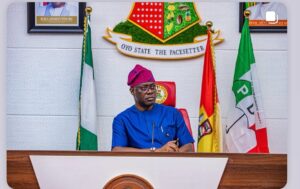
Oluseyi Abiodun Makinde is a Nigerian engineer, businessman, philanthropist, and politician best known as the Executive Governor of Oyo State. His journey differs from many Nigerian politicians because he first established financial independence through engineering and entrepreneurship before fully entering elective politics.
Makinde built his professional reputation in Nigeria’s oil and gas sector, where he founded Makon Engineering and Technical Services Limited. Under his leadership, the company became involved in engineering procurement, power projects, oil servicing, and industrial maintenance.
Long before becoming governor, he was widely recognized across Oyo State for funding scholarships, supporting healthcare initiatives, donating to religious institutions, assisting vulnerable communities, and sponsoring youth empowerment programs. These philanthropic activities significantly increased his public profile years before his electoral success.
His political breakthrough came after multiple unsuccessful attempts at elective office. Rather than withdrawing from politics, he continued building grassroots support until winning the 2019 gubernatorial election, after which he secured a second term in 2023.
Early Life and Family Background
Birth and Childhood
Seyi Makinde was born on 25 December 1967 in Ibadan, the capital city of Oyo State in southwestern Nigeria. Growing up in one of Nigeria’s most historically significant cities exposed him to the cultural heritage of the Yoruba people while also placing him in an environment known for education, commerce, and political activism.
His birth came only a few years after Nigeria gained independence, during a period when the nation was still developing many of its institutions. Ibadan itself was one of Africa’s largest cities and an important center for education and administration.
Although Makinde later achieved considerable wealth and influence, numerous interviews indicate that his upbringing emphasized discipline, education, hard work, and personal responsibility rather than privilege.
Parents and Family
Seyi Makinde was born into the family of Olatunbosun Makinde and Abigail Makinde.
His parents encouraged academic excellence from an early age and reportedly instilled values of honesty, perseverance, and service to others. While aspects of his family life have occasionally been mentioned in interviews and public speeches, they have generally maintained a private profile.
Unlike many public figures, Makinde has not extensively publicized every aspect of his extended family, preferring to keep many relatives away from political attention.
Growing Up in Ibadan
Growing up in Ibadan during the 1970s exposed Makinde to a rapidly changing Nigeria.
The city was home to prestigious educational institutions, thriving commercial districts, and vibrant political discourse. It also offered opportunities to observe how government policies affected ordinary citizens.
Many analysts believe these early experiences later influenced his interest in infrastructure, education, and economic development.
Educational Journey
Primary Education
Makinde began his formal education in Ibadan.
He attended Bishop Phillips Academy, where he completed his primary education. During these formative years, he reportedly demonstrated strong academic ability and developed a keen interest in mathematics and science.
Teachers who encountered him during this period have been described as recognizing his analytical mindset, although detailed public records from his primary school years remain limited.
Secondary Education
For his secondary education, Makinde attended Bishop Phillips Academy Secondary School before continuing at Aquinas College, Lagos.
His move to Lagos expanded his educational exposure beyond Oyo State. Aquinas College has produced numerous distinguished Nigerians across professions, and the environment encouraged intellectual development alongside leadership and discipline.
Science subjects became his strongest academic area, helping shape his eventual decision to pursue engineering.
University Education
Makinde gained admission into the University of Lagos, one of Nigeria’s leading institutions for engineering and technology.
He studied Electrical Engineering, earning a Bachelor of Science degree.
Engineering education at the University of Lagos required rigorous training in:
- Electrical systems
- Electronics
- Mathematics
- Industrial processes
- Power engineering
- Engineering design
- Technical problem-solving
This period proved highly influential because it developed the analytical approach that later became evident in both his business management and public administration.
Makinde has frequently emphasized the importance of technical education and practical knowledge, reflecting the influence of his engineering background.
Professional Development
Beyond his university degree, Makinde pursued numerous professional certifications and executive management courses throughout his engineering career.
These included specialized training in:
- Industrial engineering
- Project management
- Oil and gas operations
- Business leadership
- Strategic management
Continuous learning became a defining feature of his career, allowing him to adapt to Nigeria’s evolving energy industry.
Engineering Career Begins
Entering Nigeria’s Oil and Gas Industry
After graduating, Makinde entered Nigeria’s highly competitive engineering sector.
Rather than immediately pursuing politics, he focused on building technical expertise.
He worked with several engineering organizations, gaining practical experience in electrical engineering, industrial systems, and energy infrastructure.
These early positions exposed him to:
- Oil production facilities
- Power generation systems
- Industrial maintenance
- Technical consulting
- Engineering project supervision
The experience helped him understand both the technical and commercial dimensions of Nigeria’s energy sector.
Building Technical Expertise
Makinde earned a reputation for professionalism, technical competence, and disciplined execution.
Colleagues reportedly regarded him as someone capable of solving complex engineering problems while maintaining strong relationships with clients and project teams.
His years in industry also gave him firsthand insight into the operational challenges facing Nigerian businesses, including unreliable infrastructure, regulatory bottlenecks, and financing constraints.
These experiences would later influence many of his economic and infrastructure policies as governor.
Entrepreneurial Journey
After several years working as an engineer, Makinde decided to establish his own engineering company.
This marked one of the most significant turning points in his professional life.
Instead of remaining an employee, he embraced entrepreneurship during a period when indigenous participation in Nigeria’s oil and gas industry was steadily increasing.
The company he founded would eventually become one of the notable indigenous engineering firms operating within Nigeria’s energy sector, laying the financial and professional foundation for his later philanthropic and political activities.
Building Makon Engineering and Technical Services Limited
Having accumulated years of experience in Nigeria’s engineering and oil and gas industry, Seyi Makinde took the bold step of establishing his own company—Makon Engineering and Technical Services Limited.
The company was founded with the goal of providing engineering, procurement, construction, installation, maintenance, and technical support services to Nigeria’s rapidly expanding energy sector.
Unlike many indigenous firms that struggled to compete with multinational companies, Makon Engineering gradually built a reputation for delivering projects that met industry standards. Over time, the company secured contracts involving:
- Oil and gas facility maintenance
- Electrical engineering projects
- Industrial automation
- Procurement services
- Technical manpower supply
- Power infrastructure
- Equipment installation
- Engineering consulting
Its client base eventually included major operators within Nigeria’s upstream and downstream petroleum industries.
Although Makon Engineering is privately owned and does not publicly disclose detailed financial records, the company’s continued operations over many years established Makinde as one of Nigeria’s successful indigenous entrepreneurs.
Becoming a Business Leader
Makinde’s transition from engineer to entrepreneur required more than technical expertise.
He had to master:
- Financial management
- Corporate governance
- Contract negotiation
- Human resource management
- Business strategy
- Risk management
- Regulatory compliance
Those who worked with him during this period often described him as a hands-on executive who remained actively involved in engineering operations rather than functioning solely as an investor.
His engineering background also influenced his management philosophy. He has frequently emphasized measurable outcomes, efficiency, accountability, and long-term planning—principles that later became central to his style of governance.
Challenges of Running an Indigenous Engineering Firm
Building a successful engineering company in Nigeria was far from straightforward.
Makon Engineering operated during periods marked by:
- Fluctuating global oil prices
- Foreign exchange volatility
- Infrastructure deficiencies
- Regulatory changes
- Security concerns in oil-producing regions
- Competition from international engineering firms
Despite these obstacles, the company continued to expand its footprint.
Makinde has occasionally referenced these experiences when discussing economic policy, arguing that governments should create environments where businesses can thrive rather than struggle against avoidable administrative barriers.
Philanthropy Before Politics
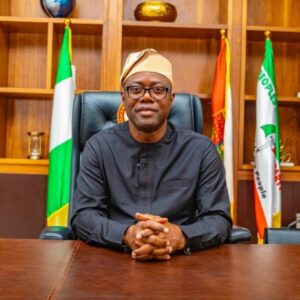
Long before becoming governor, Makinde was already known across Oyo State for his philanthropic activities.
His charitable efforts extended beyond occasional donations. They included structured support for education, healthcare, religious organizations, youth development, and community projects.
Among the areas where he became particularly active were:
Educational Support
Education became one of Makinde’s most visible philanthropic priorities.
He sponsored:
- Scholarships for students
- School infrastructure improvements
- Educational materials
- Financial assistance for indigent learners
His belief that education serves as the most effective pathway out of poverty would later influence major investments in public schools during his tenure as governor.
Healthcare Assistance
Makinde also funded various healthcare initiatives.
These reportedly included:
- Medical outreach programs
- Hospital support
- Assistance for patients requiring specialized treatment
- Donations of medical equipment to selected institutions
Many of these interventions were carried out through collaborations with community organizations and faith-based institutions.
Community Development
His philanthropic work extended to rural communities through projects involving:
- Water supply initiatives
- Community development projects
- Religious organizations
- Youth empowerment schemes
- Small business support
Supporters often cite these activities as evidence that his public service orientation predated his electoral success.
Entry into Politics
Although Makinde had become financially successful, he increasingly expressed concern about governance and public administration in Oyo State.
Rather than remaining solely in business, he decided to participate directly in politics.
Like many Nigerian politicians with private-sector backgrounds, he argued that sustainable development required effective leadership, transparency, and strategic planning.
His political journey, however, would prove considerably more difficult than many observers anticipated.
First Political Ambitions
Makinde initially pursued elective office through the People’s Democratic Party (PDP).
His early political career involved building grassroots structures across Oyo State, engaging community leaders, party stakeholders, and local supporters.
Unlike career politicians who had spent decades within party structures, Makinde entered politics after establishing a successful business career. This outsider status presented both opportunities and challenges.
While many admired his professional accomplishments, he still had to earn the trust of experienced political actors.
Electoral Setbacks
Makinde’s rise to the governorship was not immediate.
He experienced several political disappointments before achieving statewide victory.
Among the challenges he faced were:
- Internal party disagreements
- Competitive primary elections
- Coalition politics
- Electoral losses
- Political realignments
Rather than abandoning politics, he continued strengthening his grassroots network.
These years became an important period of learning.
Political analysts have observed that his persistence after multiple setbacks significantly enhanced his credibility among supporters, who viewed him as resilient rather than opportunistic.
Building Grassroots Support
Throughout the years preceding the 2019 election, Makinde traveled extensively across Oyo State.
He visited numerous local government areas, engaging with:
- Farmers
- Traders
- Students
- Traditional rulers
- Civil servants
- Religious leaders
- Youth organizations
- Professional associations
These engagements allowed him to better understand public concerns regarding infrastructure, unemployment, education, healthcare, and security.
They also helped transform him from a businessman known primarily within professional circles into a widely recognized political figure.
Political Philosophy
Makinde consistently presented himself as a leader focused on governance rather than political rhetoric.
Several recurring themes emerged in his public speeches:
- Accountability in government
- Fiscal responsibility
- Infrastructure development
- Investment in education
- Agricultural modernization
- Youth employment
- Private-sector partnerships
- Transparency
His engineering background influenced how he framed policy discussions, often emphasizing planning, measurable outcomes, and evidence-based decision-making.
The Road to the 2019 Governorship Election
The political climate leading into the 2019 Oyo State governorship election was highly competitive.
Several prominent politicians sought to succeed the outgoing administration, making the contest one of the state’s most closely watched elections.
Makinde campaigned on promises centered around:
- Better governance
- Improved education
- Economic development
- Agricultural transformation
- Infrastructure renewal
- Healthcare reform
- Job creation
- Institutional transparency
His message resonated with many voters seeking a change in leadership style.
Coalition Building
One of the defining features of the 2019 election was coalition politics.
Various political interests aligned behind Makinde, contributing to a broader opposition movement against the incumbent ruling party in the state.
Political observers have noted that his ability to attract support beyond his immediate party significantly strengthened his electoral prospects.
This coalition reflected not only party calculations but also widespread public desire for political change.
Historic Victory
On 9 March 2019, voters across Oyo State went to the polls.
Following the collation of results by the Independent National Electoral Commission (INEC), Seyi Makinde emerged as the winner of the gubernatorial election.
His victory marked one of the most significant political transitions in the state’s recent history.
He defeated candidates from several rival political parties, securing a decisive mandate from the electorate.
The result was widely interpreted as both a personal triumph and a broader endorsement of his campaign message centered on inclusive governance and development.
Swearing-In as Governor
On 29 May 2019, Seyi Makinde was officially sworn in as the Executive Governor of Oyo State.
During his inaugural address, he emphasized several priorities that would shape his administration:
- Education
- Security
- Healthcare
- Economic expansion
- Agriculture
- Infrastructure
- Institutional reforms
He pledged to govern with transparency and accountability while placing citizens at the center of public policy.
For many supporters, the inauguration represented the culmination of years of persistence after repeated electoral setbacks.
For Makinde himself, it marked the beginning of the most consequential phase of his public career.
A Leadership Style Shaped by Engineering
Observers quickly noticed that Governor Makinde approached governance differently from many traditional politicians.
Cabinet meetings, project implementation, and budget discussions often reflected structured planning and performance monitoring.
His administration emphasized:
- Data-driven decision-making
- Performance evaluation
- Fiscal discipline
- Long-term infrastructure planning
- Public-private collaboration
Supporters argued that these characteristics reflected the influence of his engineering and business background, while critics maintained that practical governance would ultimately be judged by measurable outcomes rather than management style alone.
Beginning a New Administration
When Seyi Makinde assumed office as Governor of Oyo State on 29 May 2019, expectations were exceptionally high. After years of campaigning and multiple unsuccessful political attempts, many residents expected immediate improvements in governance, infrastructure, education, healthcare, and economic opportunities.
One of the administration’s earliest priorities was restoring public confidence in government institutions. Makinde repeatedly emphasized openness, accountability, and prudent management of public finances as guiding principles.
His administration also introduced what it described as a four-point service agenda focused on:
- Education
- Healthcare
- Security
- Economic expansion through infrastructure and agribusiness
These priorities shaped many of the policies introduced during his first four years in office.
Commitment to Transparency and Fiscal Responsibility
Early in his administration, Makinde pledged to make government finances more transparent.
His government began publishing information on state revenues and expenditures more regularly than previous administrations, with the stated aim of increasing public accountability and enabling citizens to monitor government performance.
Supporters viewed this as a significant step toward strengthening public trust, while governance advocacy groups encouraged continued improvements in fiscal reporting and procurement transparency.
The administration also focused on improving internally generated revenue (IGR) without placing excessive additional burdens on taxpayers. Efforts included expanding the tax base, digitizing revenue collection in some areas, and reducing leakages in government finances.
Education Reform
Education became one of the defining pillars of Makinde’s first term.
Abolition of School Fees
One of the administration’s most widely publicized decisions was the removal of certain fees charged in public secondary schools, with the objective of improving access to education for children from low-income households.
The policy was welcomed by many parents and education advocates, who argued that financial barriers had prevented some students from continuing their education.
Recruitment of Teachers
To address shortages in public schools, the government recruited thousands of teachers and non-teaching staff through a statewide employment process.
The recruitment exercise aimed to:
- Reduce teacher shortages
- Improve classroom learning
- Lower student-to-teacher ratios
- Strengthen educational administration
The exercise attracted significant public interest due to the large number of applicants.
Infrastructure Improvements
The administration invested in the renovation and rehabilitation of public schools across Oyo State.
Projects included:
- Classroom reconstruction
- Provision of desks and chairs
- Roofing repairs
- Improved sanitation facilities
- Learning materials
- School fencing in selected locations
Many of these interventions focused on schools that had experienced years of inadequate maintenance.
Healthcare Transformation
Healthcare was another major focus area.
Makinde’s administration initiated projects intended to improve primary healthcare delivery, particularly in rural communities.
Upgrading Primary Healthcare Centres
The government embarked on rehabilitation projects covering numerous primary healthcare centres throughout the state.
Objectives included:
- Better maternal healthcare
- Improved child immunization services
- Expanded access to essential medicines
- Stronger emergency response capacity
Primary healthcare remained a strategic priority because it represented the first point of contact for many residents.
Recruitment of Health Workers
To strengthen healthcare delivery, additional medical personnel were recruited into the state health system.
The government stated that increasing the number of healthcare professionals would improve service delivery while reducing pressure on existing facilities.
Responding to the COVID-19 Pandemic
Perhaps the greatest challenge of Makinde’s first term emerged in early 2020 with the outbreak of the COVID-19 pandemic.
Like governments across the world, Oyo State had to respond rapidly to an evolving public health emergency.
One of Nigeria’s Earliest High-Profile Cases
In March 2020, Governor Makinde announced that he had tested positive for COVID-19 after participating in meetings involving individuals who later became infected.
His public disclosure attracted national attention.
Rather than concealing his diagnosis, he provided regular health updates while observing isolation protocols.
After recovering, he resumed official duties and encouraged residents to follow public health guidelines.
Pandemic Response Measures
The state government implemented various measures aimed at reducing transmission, including:
- Public awareness campaigns
- Temporary movement restrictions
- School closures during critical periods
- Isolation facilities
- Expanded testing capacity
- Distribution of protective equipment
- Collaboration with federal health authorities
Like many governments worldwide, Oyo State faced the difficult task of balancing public health measures with economic realities.
Economic Support
Recognizing the economic hardship caused by lockdowns and movement restrictions, the administration introduced relief initiatives targeting vulnerable households.
These included food distribution programs and support measures for selected sectors affected by the pandemic.
Infrastructure Development
Infrastructure development became one of the administration’s most visible achievements.
Road construction and rehabilitation projects were undertaken across multiple local government areas.
Road Projects
Numerous roads in Ibadan and other parts of Oyo State underwent reconstruction or rehabilitation.
Priority projects focused on:
- Urban mobility
- Rural connectivity
- Agricultural access roads
- Economic corridors
- Market access routes
Improved transportation infrastructure was intended to facilitate commerce, reduce travel time, and support agricultural production.
Bridges and Drainage
In addition to roads, investments were made in drainage systems and bridge construction to address flooding and improve transportation networks.
Flood mitigation became increasingly important as urban expansion continued across parts of the state.
Agricultural Development
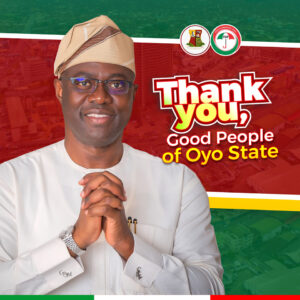
Makinde consistently argued that agriculture represented one of Oyo State’s greatest economic opportunities.
His administration sought to reposition the sector through partnerships with private investors and development organizations.
Agribusiness Focus
Rather than emphasizing only traditional farming, the government promoted agribusiness and value-chain development.
Areas of focus included:
- Mechanized farming
- Agricultural processing
- Youth participation
- Commercial farming
- Livestock development
- Rural infrastructure
Fasola Agribusiness Hub
One of the administration’s flagship agricultural initiatives involved expanding activities around the Fasola Agribusiness Industrial Hub.
The vision was to create an integrated agricultural ecosystem capable of attracting investment, generating employment, and supporting food production.
Security Initiatives
Security remained a significant concern throughout Makinde’s first term.
The administration supported collaboration between security agencies and community stakeholders to address criminal activities.
Establishment of Amotekun
One notable development during this period was the establishment and operationalization of the Western Nigeria Security Network (Amotekun) in Oyo State.
Amotekun was created by the governments of the six South-West states as a regional security initiative designed to complement existing federal security agencies.
In Oyo State, the corps became involved in:
- Community patrols
- Intelligence gathering
- Rural security
- Support for law enforcement agencies
Supporters argued that the initiative strengthened local security capacity, while discussions about constitutional authority and operational oversight continued nationally.
Economic Policies
Makinde’s administration sought to attract investment by presenting Oyo State as a business-friendly destination.
Efforts included:
- Investor engagement
- Infrastructure improvements
- Agricultural investment promotion
- Ease-of-doing-business reforms
- Public-private partnerships
Government officials frequently emphasized that sustainable job creation would depend on increased private-sector investment.
Major Achievements of the First Term
Supporters of the administration often highlight several accomplishments during the first four years, including:
- Recruitment of thousands of teachers
- Recruitment of healthcare workers
- Rehabilitation of schools
- Upgrading primary healthcare centres
- Road construction and rehabilitation
- Greater fiscal transparency
- Agricultural investment initiatives
- COVID-19 management efforts
- Security sector collaboration
- Improved internally generated revenue
These initiatives formed the basis of Makinde’s campaign for a second term.
Challenges and Criticisms
Like every administration, Makinde’s government also faced criticism.
Opposition parties and some civil society groups questioned aspects of:
- Project implementation timelines
- Budget execution
- Urban planning decisions
- Road maintenance
- Employment expectations
- Political appointments
Some residents argued that infrastructure development should have progressed more rapidly, while others called for greater attention to rural communities.
The administration generally responded by pointing to budgetary constraints, economic challenges, and the unprecedented disruption caused by the COVID-19 pandemic.
The 2023 Governorship Election
As the 2023 election approached, Makinde sought re-election under the banner of the People’s Democratic Party (PDP).
His campaign emphasized continuity, arguing that many ongoing projects required additional time for completion.
The campaign highlighted achievements in:
- Education
- Healthcare
- Infrastructure
- Agriculture
- Fiscal reforms
- Security
Opposition candidates argued for alternative approaches to governance, making the election highly competitive.
Re-election Victory
Following the governorship election held on 18 March 2023, the Independent National Electoral Commission declared Seyi Makinde the winner.
His victory was significant because he became one of the relatively few governors in Oyo State to secure re-election under the Fourth Republic.
The result was interpreted by supporters as public approval of his first-term performance, while political analysts pointed to factors such as incumbency, grassroots organization, coalition-building, and voter perception of government performance.
Preparing for a Second Term
With re-election secured, attention shifted toward completing ongoing projects and introducing new initiatives.
Makinde stated that his second administration would focus on consolidating previous gains while accelerating economic development, infrastructure expansion, and institutional reforms.
Expectations remained high as residents looked forward to the next phase of his leadership.
Second Term as Governor (2023–Present)
After securing a second term in the March 2023 gubernatorial election, Seyi Makinde was sworn in for another four-year tenure on 29 May 2023. Having campaigned on the theme of consolidating the gains of his first administration, he entered office with renewed public expectations.
The second term has largely focused on completing ongoing infrastructure projects, expanding economic opportunities, improving public service delivery, and strengthening institutional reforms initiated during his first four years.
Makinde has repeatedly stated that his administration intends to build a more resilient economy while ensuring that development reaches both urban and rural communities.
Infrastructure Expansion
Infrastructure has remained one of the most visible aspects of Makinde’s administration.
During his second term, the government has continued investing in:
- Major road reconstruction
- Urban renewal projects
- Rural access roads
- Bridge construction
- Drainage improvements
- Public buildings
- Market rehabilitation
The administration has argued that improved infrastructure stimulates investment, reduces transportation costs, and enhances economic productivity.
Economic Development
Economic diversification continues to feature prominently in government policy.
The administration has emphasized attracting investors through:
- Public-private partnerships
- Industrial development
- Agribusiness investment
- Tourism promotion
- Improved transportation networks
- Support for small and medium-sized enterprises
Officials have consistently argued that sustainable economic growth requires strong collaboration between government and the private sector.
Agriculture and Food Security
Agriculture remains central to Makinde’s long-term development strategy.
The state has continued promoting:
- Commercial agriculture
- Mechanized farming
- Youth participation in agriculture
- Agricultural processing
- Livestock development
- Food security initiatives
The government has also sought partnerships with domestic and international investors to strengthen agricultural value chains and increase employment opportunities.
Healthcare and Social Development
Healthcare investments have continued through the upgrading of health facilities, recruitment of personnel, and expansion of medical services.
The administration has also maintained support for:
- Maternal healthcare
- Child health services
- Primary healthcare
- Disease prevention
- Public health awareness campaigns
Social investment programs targeting vulnerable populations have likewise remained part of government policy.
Education Beyond the First Term
Educational reforms introduced during Makinde’s first administration have continued into his second tenure.
Areas of continued focus include:
- Teacher development
- School infrastructure
- Student enrollment
- Digital learning initiatives
- Technical education
- Vocational skills development
The administration has consistently argued that improving education is essential for long-term economic competitiveness.
Leadership Style
One characteristic frequently associated with Seyi Makinde is his technocratic approach to governance.
Unlike leaders whose backgrounds are primarily political, Makinde often approaches policy issues through analytical frameworks influenced by his engineering career.
Observers commonly describe his leadership style as emphasizing:
- Planning before execution
- Data-informed decision-making
- Performance measurement
- Financial discipline
- Stakeholder consultation
- Long-term infrastructure planning
Supporters believe this management style contributes to policy consistency, while critics argue that political realities sometimes require greater flexibility than purely technical approaches.
Relationship with Traditional Institutions
Oyo State is home to several influential traditional institutions.
Throughout his tenure, Makinde has maintained working relationships with traditional rulers across the state while respecting constitutional roles assigned to traditional leadership.
His administration has frequently consulted community leaders on issues relating to development, peacebuilding, and local governance.
National Political Influence
Although primarily known for his role as Governor of Oyo State, Makinde has become an increasingly influential figure within the People’s Democratic Party (PDP).
Political commentators have often mentioned him in discussions about the future direction of the party because of his electoral success, financial independence, and administrative experience.
As of this writing, while he is frequently mentioned in national political conversations and speculative analyses about future leadership roles, there is no publicly verified information confirming any formal declaration for a future presidential bid.
Personal Life
Despite occupying one of Nigeria’s most prominent political offices, Seyi Makinde generally keeps much of his private life away from public attention.
He is known for maintaining a balance between official responsibilities, family life, and public engagements.
Unlike some public figures, he rarely discusses personal matters unless directly relevant to his public duties.
Wife and Family
Seyi Makinde is married to Tamunominini Makinde.
As First Lady of Oyo State, she has participated in several social development initiatives, particularly those involving women, children, healthcare, and community welfare.
The couple has children, although they have generally chosen to keep them out of the political spotlight to preserve their privacy.
Religion and Faith
Makinde is a Christian.
Throughout his public life, he has spoken about the importance of faith, integrity, and service.
He has maintained relationships with various Christian organizations while also emphasizing religious tolerance and peaceful coexistence among people of different faiths in Oyo State.
Awards and Recognitions
Over the course of his engineering, business, and political career, Makinde has received numerous awards from professional organizations, educational institutions, media organizations, and civic groups.
These recognitions have reflected contributions in areas such as:
- Public service
- Engineering
- Business leadership
- Education
- Governance
- Community development
Because awards continue to evolve over time, readers should consult official announcements from awarding institutions for the most up-to-date information.
Business Interests
Before entering full-time politics, Makinde established himself as an entrepreneur through Makon Engineering and Technical Services Limited.
The company remains one of the most recognized aspects of his private-sector career.
As governor, he is subject to applicable Nigerian laws and ethical requirements concerning public office, asset declarations, and potential conflicts of interest.
Net Worth
Seyi Makinde is frequently listed among Nigeria’s wealthier state governors.
However, there is no officially published, independently verified figure for his personal net worth.
Various online publications have reported differing estimates, but these figures are generally not supported by audited public financial disclosures.
Accordingly, as of this writing, there is no publicly verified net worth that can be presented as fact.
Official Website and Verified Social Media
For the most reliable and current information, readers should refer to Makinde’s official communication channels.
Official Website
Verified Social Media
- Facebook: Seyi Makinde
- X (formerly Twitter): @seyiamakinde
- Instagram: @seyiamakinde
Readers are encouraged to verify account authenticity using platform verification indicators, as social media verification systems may change over time.
Career Timeline
| Year | Milestone |
|---|---|
| 1967 | Born in Ibadan, Oyo State |
| 1970s | Completed primary education |
| 1980s | Attended secondary school |
| Late 1980s | Graduated in Electrical Engineering from the University of Lagos |
| 1990s | Worked in Nigeria’s engineering and oil & gas sector |
| 1997 | Founded Makon Engineering and Technical Services Limited |
| 2000s | Expanded business operations and philanthropy |
| 2007–2018 | Became increasingly active in politics |
| 2019 | Elected Governor of Oyo State |
| 2020 | Led Oyo State through the COVID-19 pandemic |
| 2023 | Re-elected Governor of Oyo State |
| 2023–Present | Continuing second-term reforms and development projects |
Notable Public Statements
Makinde has frequently emphasized themes of accountability, service, and responsible leadership.
Among the ideas consistently reflected in his speeches are:
“Government exists to serve the people.”
He has also repeatedly stressed that development should be measurable and inclusive, with public resources managed transparently for the benefit of citizens.
Readers seeking exact wording of speeches should consult official transcripts or recordings, as quotations circulated online are sometimes abbreviated or paraphrased.
Legacy and Influence
Seyi Makinde’s career bridges engineering, entrepreneurship, philanthropy, and public administration. His journey illustrates how technical expertise can inform political leadership, while also demonstrating the persistence required to succeed in Nigeria’s competitive political environment.
His tenure has been marked by investments in infrastructure, education, healthcare, agriculture, and institutional reforms. Supporters view him as a pragmatic and transparent administrator, whereas critics continue to evaluate the long-term impact and sustainability of his policies. As with any serving public official, his ultimate legacy will depend not only on projects completed during his time in office but also on how those initiatives improve the lives of citizens over time.
Regardless of differing political perspectives, Makinde has become one of the most influential figures in contemporary Oyo State politics. His transition from engineer and entrepreneur to two-term governor underscores the growing role of technocratic leadership in Nigerian governance and ensures that his contributions will remain part of discussions on the state’s political and developmental history for years to come.
Also read: Andy Burnham Biography: Wife, Daughter, Net Worth, Children, Family, Parents, Education, Height,
Frequently Asked Questions
Who is Seyi Makinde?
Seyi Makinde is a Nigerian engineer, businessman, philanthropist, and politician serving as the Governor of Oyo State.
When was Seyi Makinde born?
He was born on 25 December 1967.
Where is Seyi Makinde from?
He is from Oyo State, Nigeria, and was born in Ibadan.
What political party does Seyi Makinde belong to?
He is a member of the People’s Democratic Party (PDP).
What did Seyi Makinde do before politics?
He built a successful career as an electrical engineer and entrepreneur, founding Makon Engineering and Technical Services Limited.
Who is Seyi Makinde’s wife?
His wife is Tamunominini Makinde, the First Lady of Oyo State.
Does Seyi Makinde have children?
Yes. He has children, although he keeps their lives largely private.
Which university did Seyi Makinde attend?
He studied Electrical Engineering at the University of Lagos.
What is Seyi Makinde’s religion?
He is a Christian.
What is Seyi Makinde’s net worth?
There is no publicly verified figure confirming his exact net worth.
When did Seyi Makinde become governor?
He assumed office on 29 May 2019.
Has Seyi Makinde been re-elected?
Yes. He won a second term in the 2023 Oyo State governorship election.











+ There are no comments
Add yours