





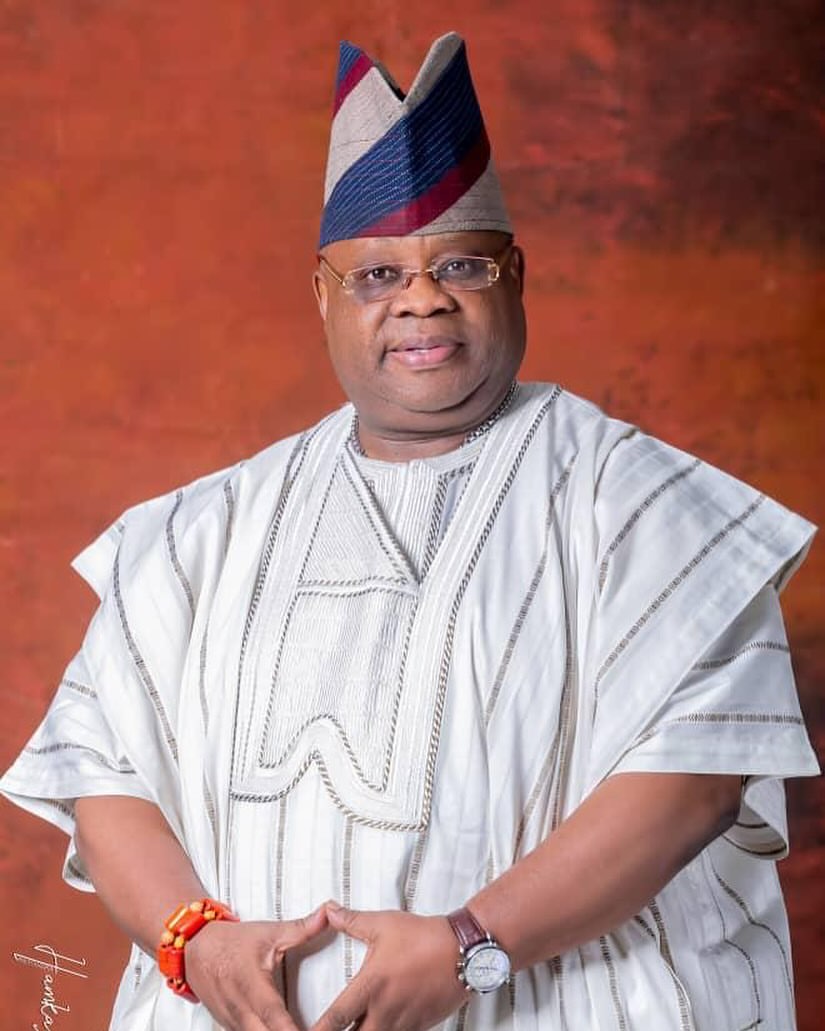
Adeleke biography is the story of Senator Ademola Jackson Nurudeen Adeleke, a Nigerian businessman, politician, philanthropist and two-term Governor of Osun State whose public career has been shaped by family legacy, business experience, electoral setbacks, political resilience and an unusually recognizable public personality.
Born on 13 May 1960 in Enugu, Adeleke grew up in the influential Adeleke family of Ede, Osun State. His father, Senator Ayoola Adeleke, was a prominent politician of Nigeria’s Second Republic, while his elder brother, Isiaka Adeleke, became the first civilian governor of Osun State. His other elder brother, Adedeji Adeleke, is a prominent businessman and the father of Nigerian music star David Adeleke, popularly known as Davido.
Adeleke’s own path was not straightforward. Before becoming a major political figure, he spent years in business and administration in Nigeria and the United States. He later entered electoral politics, became senator for Osun West, contested the Osun governorship twice before eventually winning in 2022, and secured re-election in August 2026.
The 2026 victory significantly changed the latest chapter of his story. On 16 August 2026, the Independent National Electoral Commission declared Adeleke the winner of the Osun governorship election after he secured 511,067 votes, defeating APC candidate Bola Oyebamiji, who received 444,815 votes. Adeleke won 19 of the state’s 30 local government areas.
Quick Facts About Ademola Adeleke
| Category | Details |
|---|---|
| Full name | Ademola Jackson Nurudeen Adeleke |
| Date of birth | 13 May 1960 |
| Place of birth | Enugu, Nigeria |
| State of origin | Osun State |
| Hometown | Ede |
| Profession | Politician, businessman, administrator and philanthropist |
| Current position | Governor of Osun State |
| First elected governor | 2022 |
| Re-elected | 2026 |
| Senatorial position | Senator representing Osun West, 2017–2019 |
| Political party | Accord |
| Former party | Peoples Democratic Party (PDP) |
| Father | Senator Ayoola Adeleke |
| Brother | Senator Isiaka Adeleke |
| Brother | Dr. Adedeji Adeleke |
| Famous nephew | Davido |
| Wife | Titilola Adeleke |
| Known political nickname | The Dancing Senator |
| State | Osun State, Nigeria |
Early Life and Family Background
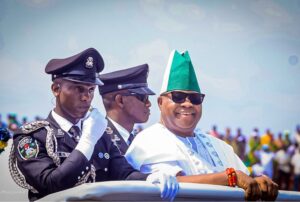
Ademola Nurudeen Jackson Adeleke was born on 13 May 1960 in Enugu, in what was then the Eastern Region of Nigeria. Although he was born outside the Southwest, his family roots are firmly associated with Ede in present-day Osun State. The Osun State Government describes him as a member of the Adeleke family of Ede and identifies him as the son of the late Senator Ayoola Adeleke.
His birth into the Adeleke family placed him within a household that already had strong connections to Nigerian public life. His father, Ayoola Adeleke, was a politician, labour activist and senator during the Second Republic. That political background would later become important in understanding Ademola Adeleke’s own movement into politics.
The Adeleke family eventually became one of the most recognizable political and business families associated with Osun State. Its influence extends beyond politics into business, education, entertainment and philanthropy.
Ademola’s older brother, Isiaka Adetunji Adeleke, became an important figure in Nigerian politics. Isiaka was elected the first civilian governor of Osun State in 1992 and later represented Osun West in the Senate. He died in April 2017.
Another of Ademola’s brothers is Adedeji Tajudeen Adeleke, commonly known as Deji Adeleke. He is a businessman, founder and president of Adeleke University, and chairman or chief executive associated with Pacific Holdings. He is also the father of Afrobeats superstar Davido.
This family network has made the surname “Adeleke” particularly prominent in contemporary Nigerian public life. Nevertheless, Ademola Adeleke’s political career developed through his own electoral contests and public positions rather than simply through his family’s reputation.
Education and Academic Journey
Adeleke’s education was shaped by both Nigeria and the United States.
He began his elementary education at Methodist Primary School in Surulere, Lagos State, before moving to what was then Old Oyo State, where he continued at Nawarudeen Primary School in Ikire. He later attended Ede Muslim Grammar School in Ede.
His educational journey later took him to the United States. Accounts published by the Osun State Government and other reputable Nigerian sources identify Jacksonville State University in Alabama as one of the institutions he attended, where he studied criminal justice and political science.
Adeleke’s academic story became particularly notable because he returned to formal education later in life.
After years spent in business and politics, he re-enrolled at Atlanta Metropolitan State College in the United States in 2019. He subsequently obtained a Bachelor of Science degree in criminal justice in 2021. The Osun State Government identifies this as part of his effort to complete an educational journey that had previously been interrupted by business and entrepreneurial commitments.
His decision to return to school in his late 50s became one of the more distinctive aspects of his biography. It demonstrated that his academic ambitions continued even after he had already established himself professionally.
A Second Chance at Education
For Adeleke, education was not confined to his youth.
His decision to return to university while already pursuing political ambitions attracted public attention. At the time, he had already served in the Senate and was preparing for another major political phase.
The experience also became part of the political debate surrounding him. Questions were raised during his political career about aspects of his educational credentials, particularly around his secondary-school qualifications. However, reporting on the legal disputes shows that the relevant court challenge did not succeed.
The broader lesson from this period is that Adeleke’s education became intertwined with the scrutiny that accompanies Nigerian electoral politics.
Business Career Before Politics
Long before he became Governor of Osun State, Adeleke developed professional experience in business and administration.
His career included work in the United States, where he was associated with Quicksilver Courier Company in Atlanta, Georgia, as a service contractor between 1985 and 1989. He subsequently became vice president of Origin International LLC, an Atlanta-based flavour and fragrance manufacturing company, from 1990 to 1994.
He also developed business connections in Nigeria.
According to the official profile published by the Osun State Broadcasting Corporation, Adeleke served as a director of Guinness Nigeria Limited between 1992 and 1999. He later became Group Executive Director of Pacific Holdings Limited, a company associated with his brother, Adedeji Adeleke, where he served from 2001 to 2016.
These positions gave him experience outside electoral politics.
That background is important because Adeleke did not enter public office directly from political activism. He had already spent years dealing with corporate administration, business management and entrepreneurship before seeking elected office.
His career also exposed him to international business environments, particularly in the United States, where he spent significant portions of his professional life.
From Businessman to Political Aspirant
Adeleke’s transition into politics was influenced partly by his family’s long political tradition.
His father had served as a senator, while his brother Isiaka had become one of the most important political figures in Osun State. The Osun State Government says Ademola’s interest in politics dates back to the early 1990s, when he began participating in political activities.
However, he did not immediately become an elected politician.
For years, his public identity remained connected to business, community activities and his family. His eventual electoral breakthrough came after the death of his elder brother Isiaka in April 2017.
Isiaka’s death created a vacant Senate seat representing Osun West. Ademola Adeleke entered the resulting by-election as the Peoples Democratic Party candidate and won. INEC subsequently issued him a Certificate of Return after the July 2017 by-election.
That victory transformed his public profile.
He was suddenly no longer simply a businessman from a famous political family. He had become a federal lawmaker representing an important senatorial district.
The “Dancing Senator” Emerges

One of the most unusual aspects of Adeleke’s political identity is his reputation for dancing.
During political campaigns and public celebrations, Adeleke became known for his energetic dancing. The image became so strongly associated with him that Nigerian media began referring to him as the “Dancing Senator.”
The nickname initially appeared to be a curiosity, but it eventually became part of his political brand.
Rather than distancing himself from the image, Adeleke embraced it. His public appearances frequently combined political messaging with music, dancing and crowd engagement.
For supporters, the dancing became a symbol of his personality and closeness to ordinary voters. Critics, however, sometimes used it to question whether his informal style was appropriate for serious political leadership.
The debate over the dancing ultimately became part of a larger conversation about Adeleke’s political identity: whether a politician’s personal charisma and accessibility should be considered strengths or distractions.
Adeleke’s subsequent electoral success suggested that the image did not prevent him from building a strong political base in Osun.
Senate Career and Osun West Representation
Adeleke served as senator representing Osun West from 2017 to 2019.
His time in the Senate was relatively short, but it was strategically important because it gave him a platform for the next stage of his political ambitions.
His political profile expanded rapidly after his election. He became increasingly visible in Osun State politics and developed a reputation as a grassroots politician with a strong following in Ede and other parts of the state.
His Senate career also prepared the ground for his first attempt at the governorship.
In 2018, Adeleke emerged as the Peoples Democratic Party’s candidate for governor of Osun State. His campaign attracted enormous public attention, helped by his popularity in Osun West and the wider Adeleke family’s political and social influence.
The 2018 Osun Governorship Election
The 2018 governorship election was one of the defining turning points in Adeleke’s political career.
He contested against the incumbent, Gboyega Oyetola of the All Progressives Congress, and other candidates in a closely fought election.
The initial election produced a highly contested outcome. Adeleke was declared the winner after the first round, but the election was later declared inconclusive and a rerun was held.
Oyetola eventually won the rerun and became governor.
For Adeleke, the defeat was a major setback.
Yet it also established him as one of the strongest opposition politicians in Osun State. Instead of disappearing from politics after losing the governorship, he continued to build his political base.
The 2018 contest also created a rivalry between Adeleke and Oyetola that would continue for years.
Their political paths would eventually intersect again in the 2022 election—and again in 2026.
Political Setback, Persistence and Reinvention
Adeleke’s political story is notable for the number of times he had to recover from setbacks.
His 2018 defeat could have ended his governorship ambitions. Instead, he remained politically active and continued to position himself as a major contender in Osun State.
He also returned to education during this period, completing his bachelor’s degree in criminal justice in 2021.
This period can therefore be viewed as a phase of reinvention.
Rather than relying entirely on his earlier Senate victory or family name, Adeleke continued to strengthen his credentials, maintain his political network and prepare for another governorship contest.
That preparation eventually paid off in 2022.
The Road to the 2022 Governorship Election
The 2022 Osun governorship election became Adeleke’s biggest political test.
By this point, he had already experienced victory and defeat at the state level. He had also become more widely known across Nigeria, particularly because of his distinctive public personality and his relationship with the Adeleke family.
Adeleke contested again on the platform of the Peoples Democratic Party.
His main opponent was Gboyega Oyetola, the incumbent APC governor who had defeated him in the controversial 2018 rerun.
The election therefore represented more than an ordinary contest.
It was effectively a rematch between two politicians whose political rivalry had already shaped Osun’s recent history.
Ademola Adeleke Wins the Osun Governorship in 2022
On 16 July 2022, Adeleke won the Osun State governorship election.
He received 403,371 votes, representing approximately 50.14 percent of the valid votes, while Oyetola received 375,027 votes, approximately 46.62 percent.
The victory was especially significant because Adeleke had previously lost to Oyetola.
The 2022 result therefore transformed the political narrative around him. The candidate who had once been defeated in a governorship rerun had returned four years later and defeated the incumbent.
Adeleke was sworn in as Governor of Osun State on 27 November 2022. The office made him the state’s political leader and placed him at the centre of decisions affecting millions of residents.
His victory also continued the Adeleke family’s unusual political connection to the state.
His late brother Isiaka had been the first civilian governor of Osun State, while Ademola now occupied the same office three decades later.
The Beginning of the Adeleke Administration
Adeleke’s administration entered office promising a people-oriented approach to governance.
The official profile of his government emphasizes themes including infrastructure, workers’ welfare, healthcare, education, economic development and grassroots engagement.
His political style remained noticeably different from the more formal image often associated with Nigerian governors.
Adeleke continued to project himself as a grassroots politician. His public appearances frequently featured direct interaction with residents, traditional rulers, workers, young people and community organizations.
This approach helped reinforce his political identity as a leader who wanted to remain visibly connected to ordinary citizens.
At the same time, governing presented challenges that were very different from campaigning.
As governor, Adeleke had to manage state finances, public-sector workers, infrastructure demands, education, healthcare, local government relations and political disputes.
His administration’s performance subsequently became the central issue in his campaign for a second term.
Governance, Infrastructure and Public Programs
One of the major themes of Adeleke’s administration has been infrastructure development.
The Osun State Government has highlighted road construction and rehabilitation, rural infrastructure and other development projects as important components of its agenda.
In July 2026, for example, the state government announced an expanded rural infrastructure agenda that included continued reconstruction and upgrading of internal roads in various local government areas.
Adeleke’s administration has also emphasized workers’ welfare and pensioners’ welfare.
In 2025, when explaining his decision to move to Accord, Adeleke said workers’ welfare had been one of the central concerns of his government. The official government account of his political transition said his choice of Accord was connected partly to the party’s emphasis on welfare.
Healthcare has also been highlighted by supporters of the administration.
Osun’s pensioners’ union, for example, cited access to healthcare through the Osun Health Insurance Scheme among the reasons for endorsing Adeleke’s re-election in 2026. Such claims are best understood as endorsements from supporters rather than independent assessments of overall government performance.
Political Challenges During His First Term
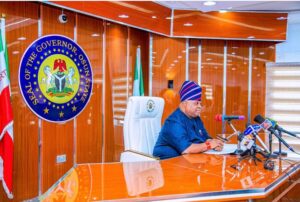
Adeleke’s first term was not without controversy.
One major issue involved the administration’s relationship with local government structures and political opponents. The dispute generated litigation and competing claims from the state government and opposition actors.
In January 2026, Adeleke addressed the public about the occupation of local government secretariats, arguing that certain local government chairmen and councillors had been removed or affected by court decisions.
The controversy reflected a broader political struggle between the Adeleke administration and the APC in Osun.
Political disagreements intensified as the 2026 governorship election approached.
For a governor seeking re-election, these disputes were significant because the campaign increasingly became a referendum on both his administration’s record and the broader political direction of Osun State.
Leaving the PDP for Accord
One of the biggest political developments of Adeleke’s second-term campaign occurred in late 2025.
After winning the 2022 election as a PDP candidate, Adeleke later left the party and adopted the Accord Party as his political platform for the 2026 governorship election.
He announced that he had joined Accord on 9 December 2025, explaining that the decision followed consultations with political stakeholders and that the party’s welfare-oriented philosophy aligned with his priorities.
The move was politically significant.
A sitting governor changing parties ahead of a re-election campaign always creates uncertainty. Adeleke had to demonstrate that he could transfer his political support from the PDP structure to Accord.
The transition eventually produced an unusual political arrangement: although Adeleke left the PDP, the Osun PDP leadership publicly supported his re-election campaign under the Accord platform.
That development strengthened his position heading into the 2026 election.
The 2026 Osun Governorship Election
The 2026 election became the latest and most important chapter in the Adeleke biography.
After four years in office, Adeleke sought another term as governor.
This time, he was contesting under Accord rather than PDP. His principal challenger was Bola Oyebamiji of the All Progressives Congress.
The election took place on 15 August 2026.
When the votes were counted, Adeleke had secured another major victory.
INEC declared him the winner after he received 511,067 votes. His closest opponent, Bola Oyebamiji, received 444,815 votes, while Najeem Salaam of the African Democratic Congress finished third with 17,180 votes.
Adeleke also won 19 of Osun’s 30 local government areas, while Oyebamiji won 11.
The victory gave Adeleke a second term as governor.
It also marked a remarkable political turnaround from his 2018 defeat.
From 2018 Defeat to 2026 Re-election
Adeleke’s electoral journey can be understood through four major moments:
- 2017: He won the Osun West senatorial by-election following the death of his brother, Isiaka.
- 2018: He contested the Osun governorship but ultimately lost the rerun to Gboyega Oyetola.
- 2022: He defeated Oyetola and became Governor of Osun State.
- 2026: He defeated Bola Oyebamiji and secured a second term.
This sequence is central to understanding why Adeleke’s biography has attracted so much public attention.
His career has been defined not simply by political success, but by his ability to recover from defeat.
Family and Personal Life
Adeleke is married to Titilola Adeleke and has children.
His family life has frequently attracted public attention because of the prominence of the wider Adeleke family.
His brother Adedeji Adeleke is a major Nigerian businessman and the father of Davido. This makes Davido Ademola Adeleke’s nephew.
Davido has also publicly supported his uncle’s political ambitions, particularly during election campaigns.
The relationship between politics and entertainment has therefore become another distinctive feature of the Adeleke family’s public identity.
Ademola Adeleke’s children and extended family have also appeared in public discussions surrounding the family, but personal details should be distinguished from verified political and professional information.
Ademola Adeleke and Davido

The relationship between Adeleke and Davido is one of the most searched aspects of the Adeleke biography.
Davido, whose birth name is David Adedeji Adeleke, is the son of Adedeji Adeleke, Ademola’s older brother.
This means that the Nigerian music superstar is Ademola Adeleke’s nephew.
The relationship has sometimes created an unusual intersection between Nigerian politics and popular culture.
Davido’s enormous international following has helped draw additional attention to Adeleke, particularly during political campaigns. At the same time, Adeleke’s political prominence has brought additional public attention to the Adeleke family as a whole.
However, Ademola Adeleke’s electoral victories should not be attributed solely to his relationship with Davido. His political organization, campaign structures, local support and electoral record are separate factors that must be considered.
Why Adeleke Became a Distinctive Political Figure
Adeleke’s public personality is unusual in Nigerian politics.
He has cultivated an image that combines traditional political organization with an informal and highly expressive public persona.
His dancing is perhaps the most recognizable example.
While many politicians attempt to project an image of distance and authority, Adeleke has frequently used music, dance and direct crowd interaction to communicate with supporters.
This has made him particularly recognizable among younger Nigerians and social-media audiences.
His opponents have sometimes criticized this style, but his supporters have interpreted it as evidence that he is approachable and comfortable among ordinary people.
His political brand ultimately became larger than the nickname “Dancing Senator.”
It became a recognizable part of his identity as “Imole,” a nickname associated with his political movement in Osun.
Major Achievements in His Political Career
Several milestones stand out in the career of Ademola Adeleke.
Becoming Senator for Osun West
His first major electoral breakthrough came in 2017 when he won the Osun West senatorial by-election.
The victory came after the death of his elder brother Isiaka Adeleke and marked Ademola’s formal arrival as an elected federal politician. INEC confirmed his victory and issued him a Certificate of Return. (INEC Nigeria)
Winning the Governorship in 2022
His 2022 governorship victory was arguably his biggest political achievement at that point.
He defeated incumbent Governor Gboyega Oyetola after having previously lost to him in 2018.
The victory demonstrated Adeleke’s ability to recover from electoral defeat and rebuild his political base.
Securing a Second Term in 2026
His August 2026 re-election became another major milestone.
With 511,067 votes, Adeleke defeated his principal challenger by more than 66,000 votes and secured another term as governor.
The result established him as one of the most electorally successful contemporary politicians in Osun State.
Awards and Recognition
Adeleke’s public recognition has largely been associated with his political career and public service.
However, claims about awards and honorary recognitions should be treated carefully.
Some sources have reported that he received the Nigerian Icon of Good Governance Award and recognition in the Nigerian Books of Record in 2025. Because such recognitions are not as easily independently verified as his elected offices, they should not be presented as equivalent to formal state or national honours without additional authoritative documentation.
The strongest verified recognition of Adeleke’s career remains electoral: his election as senator, his victory as governor in 2022 and his re-election as governor in 2026.
Adeleke’s Net Worth
Adeleke’s wealth is frequently discussed online because of his family’s substantial business background.
However, there is an important distinction between family wealth, business interests, assets attributed to him, and a personally verified net worth.
There is no sufficiently authoritative public financial disclosure establishing a definitive current personal net worth figure that can responsibly be presented as fact.
Therefore:
As of this writing, there is no publicly verified information confirming an exact current personal net worth for Ademola Adeleke.
Online figures that assign a specific dollar or naira value to his wealth should therefore be treated as estimates or claims unless supported by audited financial records, official asset declarations or other authoritative documentation.
His long professional association with businesses including Pacific Holdings demonstrates business experience, but it does not by itself establish his personal net worth.
Career Timeline
| Year | Career milestone |
|---|---|
| 1960 | Born in Enugu, Nigeria |
| 1980s | Continued education and professional activities in the United States |
| 1985–1989 | Associated with Quicksilver Courier Company in Atlanta |
| 1990–1994 | Vice President, Origin International LLC |
| 1992–1999 | Served as director of Guinness Nigeria |
| 2001–2016 | Group Executive Director, Pacific Holdings Limited |
| 2017 | Won Osun West senatorial by-election |
| 2018 | Contested Osun governorship election |
| 2019 | Returned to formal education in the United States |
| 2021 | Earned BSc in Criminal Justice from Atlanta Metropolitan State College |
| 2022 | Won Osun governorship election |
| 27 November 2022 | Became Governor of Osun State |
| December 2025 | Left PDP and adopted Accord for 2026 re-election bid |
| 15 August 2026 | Won Osun governorship election for a second term |
| 16 August 2026 | INEC declared him winner of the 2026 election |
Verified Quotes and Public Statements
Adeleke’s public speeches frequently focus on welfare, governance, political resilience and development.
In explaining his move to Accord, he said the party’s emphasis on welfare aligned with his government’s focus on workers and citizens. (Osun State Official Website)
During the 2026 campaign, he also repeatedly emphasized his desire to continue his administration’s infrastructure and development programs.
Because political statements are often campaign-oriented, they should be understood as statements of intention or political positioning rather than independent evidence that every promised outcome has been achieved.
Official Website and Public Information
The most authoritative source for information about Adeleke’s current governmental role is the official Osun State Government website.
Osun State Government — Governor Ademola Adeleke profile
For election-related information, the Independent National Electoral Commission remains the appropriate institutional authority.
Independent National Electoral Commission (INEC)
Public social-media accounts can change, so readers should verify that an account is marked as official or verified before treating it as belonging to Adeleke.
Legacy and Influence
The legacy of Ademola Adeleke is still being written.
At this stage, his most important contribution to Osun politics is arguably the demonstration of political resilience. He lost a governorship election in 2018, returned to the political arena, defeated the same opponent in 2022, governed for four years and then secured another electoral victory in 2026.
His story also represents the continuing influence of political families in Nigerian public life.
The Adeleke family has produced politicians, business leaders, educators and one of Nigeria’s most internationally recognized music stars. Yet Ademola’s own career has developed into a distinct political story rather than simply an extension of his family’s achievements.
His second-term victory in 2026 provides him with another opportunity to shape Osun State’s political and developmental trajectory.
Whether his administration’s infrastructure programs, welfare policies and governance reforms produce lasting institutional results will ultimately be a more important measure of his historical legacy than his popularity or political style.
The Bigger Story Behind Adeleke’s Biography
The most revealing way to understand Ademola Adeleke is not simply as the governor who became famous for dancing.
His life represents a combination of privilege, business experience, family influence, political ambition, electoral defeat, reinvention and persistence.
He was born into a family already connected to Nigerian politics. He built a professional career before seeking elected office. He entered the Senate after the death of his brother, lost a governorship contest, returned to education, won the governorship four years later and then successfully defended his position at the ballot box in 2026.
That journey explains why the Adeleke biography has become much larger than the story of one Nigerian politician.
It is also the story of how political identity is changing in modern Nigeria—where traditional family networks, business influence, grassroots organization, social media, popular culture and personal charisma increasingly intersect.
Adeleke’s public image may remain closely associated with his dancing, but his political record is ultimately defined by something more consequential: his ability to turn electoral disappointment into renewed political momentum.
As of August 2026, Ademola Adeleke stands at another important point in that journey. Having secured a second term as Governor of Osun State, he now has the opportunity to determine how his name will be remembered—not merely as a member of the famous Adeleke dynasty or the “Dancing Senator,” but as a political leader whose administration left a measurable and lasting mark on Osun State.
Also read: Seyi Makinde Biography: The Engineer Who Reimagined Governance in Oyo State
Frequently Asked Questions About Adeleke
Who is Ademola Adeleke?
Ademola Adeleke is a Nigerian politician, businessman and philanthropist who has served as Governor of Osun State since November 2022. He previously represented Osun West in the Nigerian Senate from 2017 to 2019.
When was Ademola Adeleke born?
Ademola Adeleke was born on 13 May 1960 in Enugu, Nigeria.
How old is Ademola Adeleke?
As of August 2026, Ademola Adeleke is 66 years old.
Where is Ademola Adeleke from?
Although he was born in Enugu, Adeleke is from the prominent Adeleke family of Ede in present-day Osun State.
Who is Ademola Adeleke’s father?
His father was Senator Ayoola Adeleke, a Nigerian politician and Second Republic senator.
Who was Isiaka Adeleke to Ademola Adeleke?
Isiaka Adeleke was Ademola Adeleke’s elder brother. Isiaka was the first civilian governor of Osun State and later served as senator for Osun West.
Is Ademola Adeleke related to Davido?
Yes. Davido is Ademola Adeleke’s nephew. Davido’s father, Adedeji Adeleke, is Ademola’s elder brother.
What did Ademola Adeleke study?
Adeleke studied criminal justice and political science during his educational journey in the United States. He later obtained a Bachelor of Science degree in criminal justice from Atlanta Metropolitan State College in 2021.
Was Ademola Adeleke a senator?
Yes. He represented Osun West in the Nigerian Senate from 2017 to 2019 after winning the senatorial by-election held following the death of his brother Isiaka.
When did Ademola Adeleke become governor?
Adeleke became Governor of Osun State on 27 November 2022 after winning the 2022 governorship election.
Who did Adeleke defeat in the 2022 Osun election?
He defeated incumbent Governor Gboyega Oyetola of the All Progressives Congress.
Who did Adeleke defeat in the 2026 Osun election?
In the 2026 election, Adeleke of Accord defeated APC candidate Bola Oyebamiji. Adeleke received 511,067 votes while Oyebamiji received 444,815 votes. (Channels Television)
Did Adeleke win the 2026 Osun governorship election?
Yes. INEC declared Ademola Adeleke the winner of the 15 August 2026 Osun governorship election, giving him a second term. (Punch Newspapers)
What political party does Ademola Adeleke belong to?
Adeleke currently belongs to the Accord Party. He previously contested and won the 2022 governorship election under the Peoples Democratic Party before leaving the PDP in 2025 and adopting Accord as his platform for the 2026 election. (Channels Television)
What is Ademola Adeleke’s nickname?
He is widely known as the “Dancing Senator” because of his energetic dancing at political and public events. His political movement in Osun has also used the nickname “Imole.”
What is Ademola Adeleke’s net worth?
There is no sufficiently authoritative public source establishing an exact current personal net worth for Adeleke. Figures published online should therefore be treated as estimates unless supported by verifiable financial documentation.








+ There are no comments
Add yours