





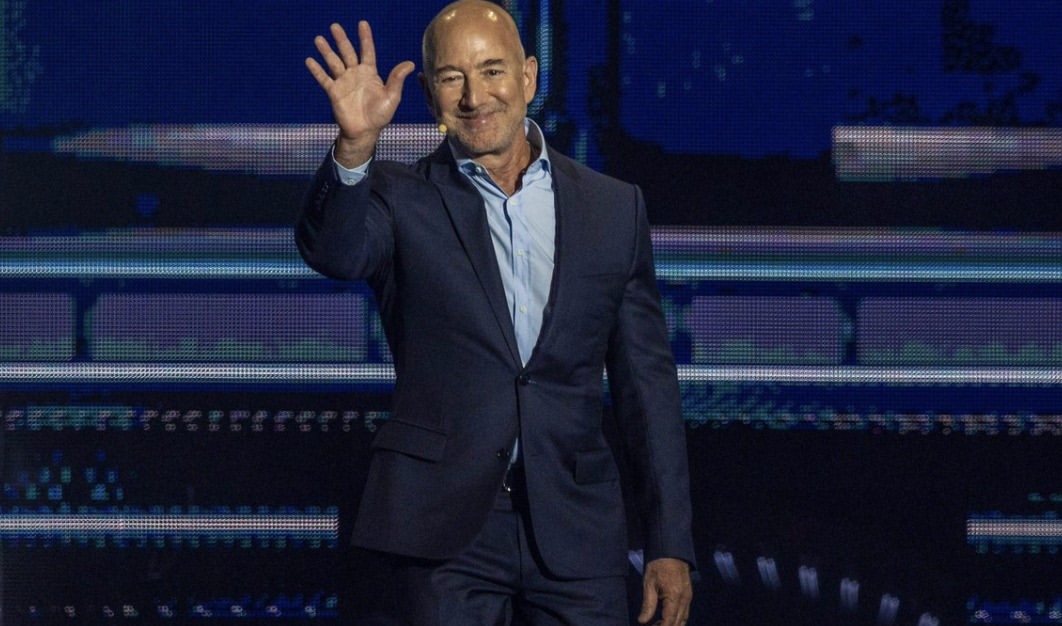
Jeff Bezos Biography is widely regarded as one of the most transformative entrepreneurs of the modern era. Best known as the founder of Amazon, he revolutionized online shopping, cloud computing, digital publishing, logistics, and private space exploration. From starting an online bookstore in his garage to building one of the world’s most valuable companies, Bezos’ journey is a story of innovation, calculated risk-taking, and relentless long-term thinking.
This Jeff Bezos biography presents a thoroughly researched account of his life based on publicly verifiable information from authoritative sources, including Amazon, Blue Origin, Princeton University, the U.S. Securities and Exchange Commission (SEC), Forbes, Bloomberg, reputable news organizations, verified interviews, and published books.
Throughout his career, Bezos has demonstrated an extraordinary ability to identify long-term technological trends before they became mainstream. His influence extends far beyond e-commerce, shaping industries such as cloud computing, artificial intelligence, entertainment, robotics, healthcare, logistics, and commercial spaceflight.
Early Life and Quick Facts
| Full Name | Jeffrey Preston Jorgensen (later Jeffrey Preston Bezos) |
|---|---|
| Popular Name | Jeff Bezos |
| Date of Birth | January 12, 1964 |
| Birthplace | Albuquerque, New Mexico, United States |
| Nationality | American |
| Occupation | Entrepreneur, Investor, Businessman |
| Known For | Founder of Amazon and Blue Origin |
| Education | Princeton University |
| Degree | B.S.E. in Electrical Engineering and Computer Science |
| Companies | Amazon, Blue Origin, Bezos Expeditions |
| Former Position | Executive Chairman and Former CEO of Amazon |
| Current Position | Executive Chairman of Amazon |
| Partner | Lauren Sánchez |
| Former Spouse | MacKenzie Scott (1993–2019) |
| Children | Four |
| Net Worth | Publicly estimated by financial publications; varies daily based on market value |
| Residence | Primarily United States |
Why Jeff Bezos Is One of the Most Influential Entrepreneurs

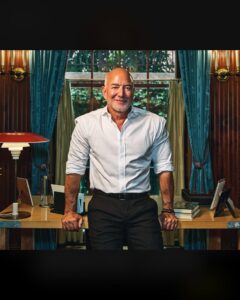
Few business leaders have changed as many industries as Jeff Bezos.
His leadership transformed:
- Online retail
- Cloud computing
- Artificial intelligence infrastructure
- Digital publishing
- Smart home technology
- Logistics
- Film and television streaming
- Commercial space exploration
Today, millions of businesses rely on technologies developed under Amazon’s leadership, while Amazon Web Services (AWS) powers a significant portion of the modern internet.
Early Life and Family Background
Jeff Bezos was born on January 12, 1964, in Albuquerque, New Mexico.
His biological father was Ted Jorgensen, while his mother was Jacklyn (Jackie) Gise Jorgensen, who was only 17 years old when Jeff was born.
His parents divorced when he was very young.
Several years later, Jackie married Miguel “Mike” Bezos, a Cuban immigrant who had come to the United States as part of Operation Pedro Pan after fleeing Cuba.
Mike Bezos legally adopted Jeff, and Jeff took his surname, becoming Jeff Bezos.
Bezos has spoken publicly about considering Mike Bezos his father, while his relationship with his biological father remained distant for many decades.
Growing Up in Houston and Miami
Jeff spent much of his childhood in Houston, Texas, where his father worked as an engineer for Exxon.
The family later moved to Miami, Florida.
From an early age, Bezos displayed exceptional curiosity.
He constantly experimented with electronics, mechanical devices, and scientific projects.
Family members have recalled that he often dismantled household items simply to understand how they worked.
Childhood Fascination with Science
Even as a child, Bezos demonstrated remarkable independence.
Among his early interests were:
- Computers
- Electronics
- Robotics
- Mathematics
- Space exploration
- Science fiction
According to accounts shared by family members, he converted his parents’ garage into a laboratory where he conducted experiments and built inventions.
Summer on His Grandparents’ Ranch
One of the most formative influences on Bezos was his maternal grandfather, Lawrence Preston Gise, who had worked at the U.S. Atomic Energy Commission.
Jeff spent many summers on his grandparents’ ranch in Texas.
There he learned practical skills including:
- Repairing machinery
- Building equipment
- Solving mechanical problems
- Self-reliance
Years later, Bezos credited these experiences with teaching him resilience and creative problem-solving.
Love of Reading
Books played a major role in Bezos’ development.
He became an avid reader, particularly enjoying:
- Science fiction
- Technology
- Engineering
- History
- Business
Authors such as Isaac Asimov, Robert Heinlein, and Jules Verne inspired his fascination with humanity’s future in space.
These early influences would later shape his vision for Blue Origin.
High School Years
Bezos attended Miami Palmetto Senior High School.
He excelled academically and developed a reputation for exceptional intelligence and leadership.
During high school he participated in science competitions and academic programs that further strengthened his interest in engineering and technology.
In 1982 he graduated as the class valedictorian.
During his graduation speech, he discussed ambitious ideas about humanity living and working in space—a vision that would become central to his career decades later.
Education at Princeton University
Jeff Bezos enrolled at Princeton University, one of America’s leading research institutions.
Initially interested in theoretical physics, he eventually changed his major after realizing that many classmates possessed extraordinary mathematical abilities.
Instead, he pursued Electrical Engineering and Computer Science.
The decision proved pivotal.
Princeton provided rigorous technical training while exposing him to emerging fields such as:
- Computer systems
- Software engineering
- Algorithms
- Artificial intelligence
- Networks
In 1986, Bezos graduated with a Bachelor of Science in Engineering (B.S.E.) with high honors.
Beginning His Professional Career
After graduating, Bezos received offers from several prestigious employers.
He chose to work in technology and finance, believing these industries represented the future.
His early employers included:
Fitel
At Fitel, Bezos helped develop international trading networks.
The experience introduced him to large-scale computer systems and financial technology.
Bankers Trust
He later joined Bankers Trust, where he rapidly advanced into management.
His technical expertise distinguished him from many traditional banking professionals.
D. E. Shaw & Co.
In 1990, Bezos joined the investment firm D. E. Shaw & Co., one of Wall Street’s most innovative quantitative hedge funds.
There he worked under founder David E. Shaw.
By age 30, Bezos had become one of the firm’s youngest senior vice presidents.
The Rise of the Internet
While working at D. E. Shaw, Bezos encountered a statistic that changed his life.
Internet usage was growing by more than 2,000% annually, an astonishing rate for any technology.
He recognized that such explosive growth represented a once-in-a-generation business opportunity.
Instead of asking what business already existed online, Bezos asked a different question:
“What business should exist because of the Internet?”
This question ultimately led to one of the most significant entrepreneurial decisions in modern business history.
Developing the Amazon Business Idea
Bezos created a list of products that could potentially be sold online.
He evaluated numerous possibilities, including:
- Computer software
- Office supplies
- Music
- Videos
- Books
Books emerged as the strongest candidate because:
- Millions of titles existed.
- Physical bookstores could stock only a small fraction.
- Books were standardized products.
- They were relatively easy to ship.
- Customers already knew exactly what they wanted.
The Cross-Country Road Trip
In 1994, Bezos made what many considered a risky decision.
He resigned from his lucrative position at D. E. Shaw.
Together with his wife, MacKenzie Scott, he drove from New York to Seattle.
During the cross-country trip, Bezos wrote much of Amazon’s initial business plan while MacKenzie drove.
Seattle was chosen because it offered access to technology talent, software engineers, and major book distributors.
Launching Amazon
Jeff Bezos officially founded Amazon in 1994.
The company initially operated from the garage of his rented home in Bellevue, Washington.
Early employees assembled desks using inexpensive wooden doors purchased from hardware stores—a symbol of the company’s frugal culture.
The website officially launched in July 1995 as an online bookstore.
Within weeks, orders began arriving from customers across the United States and dozens of other countries.
What started as a simple online bookstore would soon become one of the most influential businesses in history.
Amazon’s First Days of Operation
When Amazon.com officially launched in July 1995, its mission was straightforward: become the world’s largest bookstore. Jeff Bezos believed the internet eliminated the physical limitations of traditional bookstores, allowing customers to choose from millions of titles instead of the few thousand available on store shelves.
The first book reportedly sold on Amazon was Fluid Concepts and Creative Analogies by Douglas Hofstadter. Within its first month, Amazon had shipped books to customers in all 50 U.S. states and more than 40 countries, proving that there was strong global demand for online shopping.
Although sales were encouraging, the company remained far from profitable. Bezos prioritized customer growth over short-term earnings, believing that long-term value would come from building customer trust and loyalty.
The Customer Obsession Philosophy
One of Jeff Bezos’ defining leadership principles was what he called customer obsession.
Rather than focusing primarily on competitors, Amazon concentrated on improving the customer experience.
This philosophy emphasized:
- Low prices
- Wide product selection
- Fast delivery
- Reliable customer service
- Easy returns
- Continuous innovation
Bezos often argued that customers are “beautifully, wonderfully dissatisfied.” Even when customers are happy, they expect something better tomorrow. This mindset drove Amazon to keep innovating.
Amazon Goes Public
On May 15, 1997, Amazon became a publicly traded company on the NASDAQ stock exchange under the ticker symbol AMZN.
The initial public offering (IPO) priced shares at $18 per share (before later stock splits).
At the time, many analysts questioned whether an online bookstore could justify its valuation. Bezos, however, viewed Amazon as much more than a bookstore.
In his now-famous shareholder letters, he emphasized that Amazon would make decisions based on long-term value rather than short-term profits.
Expanding Beyond Books
After establishing itself in book sales, Amazon rapidly expanded into new product categories.
These included:
- Music CDs
- DVDs
- Electronics
- Toys
- Video games
- Home goods
- Clothing
- Beauty products
Eventually, Amazon evolved into an online marketplace where third-party sellers could also offer products.
This marketplace model dramatically expanded Amazon’s inventory without requiring the company to own every item it sold.
Surviving the Dot-Com Crash
The late 1990s witnessed enormous enthusiasm for internet companies.
Many startups attracted billions of dollars in investment despite generating little or no profit.
When the dot-com bubble burst between 2000 and 2002, hundreds of internet companies failed.
Amazon’s stock price fell dramatically, losing more than 90% of its peak value.
Many commentators predicted that Amazon would collapse.
Instead, Bezos focused on:
- Cutting unnecessary costs
- Improving operational efficiency
- Expanding product offerings
- Building stronger logistics systems
His willingness to make difficult decisions helped Amazon survive while many competitors disappeared.
Reinventing Logistics
One of Bezos’ biggest strategic advantages was recognizing that logistics would determine the future of e-commerce.
Rather than relying entirely on outside shipping providers, Amazon invested heavily in:
- Fulfillment centers
- Warehouse automation
- Distribution networks
- Inventory management
- Delivery technology
These investments required billions of dollars but enabled Amazon to provide increasingly faster delivery.
Over time, Amazon developed one of the world’s most sophisticated logistics networks.
Introducing Amazon Prime
In 2005, Amazon introduced one of its most successful innovations: Amazon Prime.
For an annual membership fee, customers received:
- Unlimited fast shipping on eligible products
- Exclusive shopping benefits
- Later, access to streaming entertainment
- Music services
- Digital books
- Gaming benefits
- Grocery discounts in certain markets
Initially, some analysts believed the program would lose money because of shipping costs.
Instead, Prime became one of Amazon’s greatest competitive advantages.
Prime members generally purchased more products and remained loyal customers for many years.
The Birth of Amazon Web Services (AWS)
Perhaps Jeff Bezos’ most significant business decision was one that initially received little public attention.
In 2006, Amazon launched Amazon Web Services (AWS).
Originally designed to solve Amazon’s internal computing challenges, AWS evolved into a cloud computing platform allowing businesses to rent computing infrastructure over the internet.
AWS offered services including:
- Cloud storage
- Computing power
- Databases
- Machine learning tools
- Artificial intelligence services
- Networking
- Cybersecurity solutions
Today, AWS serves startups, governments, universities, and many of the world’s largest corporations.
It has become one of Amazon’s most profitable divisions and played a central role in the growth of cloud computing worldwide.
The Kindle Revolution
In 2007, Amazon introduced the Kindle, its first electronic reading device.
The Kindle transformed the publishing industry by allowing readers to purchase and download books within seconds.
For authors and publishers, Kindle created new opportunities through digital publishing.
Amazon later expanded Kindle into:
- Kindle Paperwhite
- Kindle Oasis
- Kindle Scribe
- Kindle Direct Publishing (KDP)
KDP enabled independent authors to publish books without traditional publishing houses, reshaping the global publishing landscape.
Acquisitions That Expanded Amazon
Throughout Bezos’ leadership, Amazon acquired numerous companies that strengthened its ecosystem.
Some of the most notable acquisitions include:
| Company | Year | Strategic Purpose |
|---|---|---|
| Audible | 2008 | Audiobooks |
| Zappos | 2009 | Online footwear and apparel |
| Kiva Systems | 2012 | Warehouse robotics |
| Twitch | 2014 | Live video streaming |
| Whole Foods Market | 2017 | Grocery retail |
| Ring | 2018 | Smart home security |
| MGM Studios | 2022 | Entertainment and media |
These acquisitions allowed Amazon to enter new industries while strengthening existing businesses.
Leadership Principles
Jeff Bezos developed a distinctive management philosophy that influenced Amazon’s culture.
Some of the best-known leadership principles include:
- Customer Obsession
- Ownership
- Invent and Simplify
- Learn and Be Curious
- Hire and Develop the Best
- Think Big
- Bias for Action
- Frugality
- Earn Trust
- Deliver Results
These principles continue to guide Amazon’s operations.
The Famous Empty Chair
One of Bezos’ most well-known management practices involved placing an empty chair in meetings.
The chair symbolized the customer.
Its purpose was to remind executives that every major decision should consider the customer’s interests.
Although simple, the practice became one of Amazon’s most recognizable leadership symbols.
Writing Instead of PowerPoint
Unlike many corporations, Amazon discouraged PowerPoint presentations during executive meetings.
Instead, Bezos required detailed six-page written narratives.
Meetings often began with executives silently reading these documents before discussion started.
Bezos believed this approach encouraged deeper thinking and clearer reasoning than slide presentations.
Becoming One of the World’s Richest People
As Amazon expanded globally, Bezos’ ownership stake increased dramatically in value.
His wealth grew alongside Amazon’s stock price.
Over the years, he became:
- One of the richest people in modern history.
- The world’s richest person for several periods according to major financial rankings.
- One of the most influential investors in technology.
Because much of his wealth is tied to Amazon shares, publicly reported estimates fluctuate daily based on stock market performance.
Bezos Expeditions
Alongside Amazon, Bezos established Bezos Expeditions, his personal investment firm.
Through it, he has invested in companies across various sectors, including technology, healthcare, biotechnology, media, artificial intelligence, and clean energy.
Some notable investments have included:
- Google (early investment through venture capital connections)
- Airbnb
- Uber
- Business Insider (early investment)
- Grail
- Unity Biotechnology
His investment strategy typically focuses on businesses with significant long-term growth potential.
Balancing Risk and Long-Term Thinking
A hallmark of Bezos’ career has been his willingness to invest heavily in projects that may not generate immediate profits.
He often emphasized that innovation requires experimentation and that not every experiment will succeed.
This philosophy allowed Amazon to pursue ambitious initiatives that reshaped multiple industries.
By the end of the 2010s, Amazon had evolved far beyond an online retailer into a global technology company with operations spanning cloud computing, artificial intelligence, logistics, entertainment, smart devices, advertising, healthcare, and digital infrastructure.
Meanwhile, Bezos himself had become one of the most recognized business leaders in the world, setting the stage for his next major ventures—including private space exploration through Blue Origin, ownership of The Washington Post, philanthropy, and eventually stepping down as Amazon’s Chief Executive Officer.
Expanding Beyond Amazon
By the early 2010s, Jeff Bezos had already transformed Amazon into one of the world’s most influential technology companies. Rather than slowing down, he began investing more time and resources into projects that reflected his broader vision for the future.
These ventures included:
- Commercial space exploration
- Journalism
- Climate initiatives
- Biotechnology
- Artificial intelligence
- Philanthropy
- Long-term scientific research
Bezos often explained that successful businesses should think in decades rather than quarters, a philosophy that shaped nearly every major investment he made.
Founding Blue Origin
Long before private spaceflight became a mainstream industry, Bezos dreamed of making space travel more affordable and accessible.
In 2000, he founded Blue Origin, a privately funded aerospace company headquartered in Kent, Washington.
The company’s motto, “Gradatim Ferociter,” is Latin for “Step by Step, Ferociously.”
This phrase reflects Bezos’ belief that meaningful technological progress requires patience, persistence, and continuous improvement.
The Vision Behind Blue Origin
Inspired by science fiction writers and space pioneers, Bezos envisioned a future in which millions of people could live and work in space.
His long-term goals included:
- Reducing the cost of space travel.
- Developing reusable rockets.
- Building space infrastructure.
- Supporting scientific research.
- Enabling future space industries.
- Helping preserve Earth by moving heavy industry into space over time.
Unlike many aerospace companies focused solely on government contracts, Blue Origin sought to build a sustainable commercial space business.
New Shepard Program
Blue Origin’s first major success came with the New Shepard rocket system.
Designed for suborbital spaceflight, New Shepard allows passengers and scientific payloads to briefly experience space and weightlessness before safely returning to Earth.
A major technological breakthrough was its reusable rocket system.
Instead of discarding rockets after launch, Blue Origin developed technology that enabled boosters to land vertically and be used again.
This innovation significantly reduced launch costs and influenced the broader commercial space industry.
Competing in the New Space Race
Blue Origin became one of the leading private aerospace companies alongside organizations such as:
- SpaceX
- United Launch Alliance
- Rocket Lab
Although each company follows a different strategy, all contribute to expanding commercial access to space.
Bezos has consistently maintained that competition drives innovation and ultimately benefits humanity.
Flying to Space
On July 20, 2021, exactly 52 years after the Apollo 11 Moon landing, Jeff Bezos traveled to space aboard Blue Origin’s first crewed New Shepard mission.
The flight lasted approximately eleven minutes.
Passengers included:
- Jeff Bezos
- Mark Bezos (his brother)
- Wally Funk (aviation pioneer)
- Oliver Daemen (private astronaut)
The successful mission represented a historic milestone for Blue Origin and demonstrated years of technological development.
Acquiring The Washington Post
In 2013, Bezos surprised many observers by purchasing The Washington Post for $250 million through his personal investment company.
Importantly, the newspaper was not acquired by Amazon.
Instead, Bezos purchased it personally.
At the time, traditional newspapers faced declining print revenues and increasing digital competition.
Revitalizing a Historic Newspaper
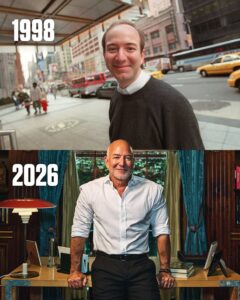
Following the acquisition, Bezos encouraged long-term investment in digital journalism.
The newspaper expanded:
- Digital subscriptions.
- Mobile applications.
- Data-driven journalism.
- Technology infrastructure.
- International readership.
While editorial decisions remained under newsroom leadership, Bezos supported investments that strengthened the newspaper’s digital business model.
Today, The Washington Post is widely regarded as one of the world’s leading digital news organizations.
Bezos Expeditions
Beyond Amazon and Blue Origin, Bezos manages a diverse portfolio through Bezos Expeditions, his private investment office.
Investments span numerous industries, including:
- Artificial intelligence
- Healthcare
- Biotechnology
- Financial technology
- Robotics
- Media
- Transportation
His investment philosophy emphasizes companies capable of solving significant long-term challenges.
Climate and Environmental Initiatives
As public attention increasingly focused on climate change, Bezos announced one of the largest environmental commitments by an individual.
In 2020, he launched the Bezos Earth Fund, pledging US$10 billion to support efforts addressing climate change and nature conservation.
The fund provides grants to organizations working on:
- Climate science
- Clean energy
- Biodiversity
- Forest conservation
- Sustainable agriculture
- Carbon reduction
- Environmental innovation
Since its launch, the Earth Fund has committed billions of dollars to research institutions, universities, conservation groups, and nonprofit organizations.
The Bezos Day One Fund
In 2018, Bezos established the Day One Fund, focusing on two primary objectives:
- Supporting organizations assisting homeless families.
- Creating and expanding high-quality Montessori-inspired preschools in underserved communities.
The initiative reflects Bezos’ interest in improving educational opportunities during early childhood.
Philanthropic Evolution
Earlier in his career, Bezos was sometimes criticized for not donating at the same scale as several other billionaires.
In recent years, however, his philanthropic activities have expanded substantially.
His charitable giving now supports initiatives related to:
- Climate change.
- Education.
- Medical research.
- Journalism.
- Community development.
- Scientific innovation.
Stepping Down as Amazon CEO
On July 5, 2021, Jeff Bezos officially stepped down as Chief Executive Officer of Amazon.
He was succeeded by Andy Jassy, who had previously led Amazon Web Services (AWS).
Rather than leaving the company entirely, Bezos became Executive Chairman of Amazon’s Board.
This role allows him to focus on:
- Long-term innovation.
- Major strategic decisions.
- New technologies.
- Blue Origin.
- Philanthropic initiatives.
The leadership transition marked the end of Bezos’ 27-year tenure as Amazon’s CEO.
Marriage to MacKenzie Scott
Jeff Bezos married novelist MacKenzie Scott in 1993.
The couple met while working at D. E. Shaw in New York.
MacKenzie played an important role during Amazon’s earliest years.
She helped with administrative work, bookkeeping, and logistics while the company operated from its garage in Bellevue, Washington.
Together they built Amazon from a startup into a global technology company.
Divorce
In January 2019, Bezos and MacKenzie Scott announced their divorce after 25 years of marriage.
The divorce was finalized later that year.
As part of the settlement, MacKenzie Scott received approximately 25% of the couple’s Amazon shares, making her one of the world’s wealthiest women.
She subsequently became one of the world’s most prominent philanthropists, donating billions of dollars to charitable causes.
Despite the divorce, both have spoken respectfully about one another’s contributions to Amazon’s early success.
Relationship with Lauren Sánchez
Following his divorce, Bezos entered a relationship with Lauren Sánchez, an American journalist, television personality, helicopter pilot, and entrepreneur.
The couple made numerous public appearances together at:
- Space launches.
- Philanthropic events.
- International conferences.
- Award ceremonies.
In 2023, they announced their engagement.
They have continued collaborating on philanthropic and space-related initiatives.
Family Life
Jeff Bezos is the father of four children.
He has consistently chosen to keep his children out of the public spotlight.
As a result, relatively little verified public information is available about their private lives.
Bezos has generally emphasized protecting his family’s privacy despite his global public profile.
Leadership Philosophy
Several themes consistently define Jeff Bezos’ approach to leadership:
- Long-term thinking.
- Customer obsession.
- Willingness to experiment.
- Acceptance of failure as part of innovation.
- High hiring standards.
- Operational excellence.
- Continuous learning.
One of his most frequently cited ideas is that companies should maintain the mindset of a startup regardless of their size.
This philosophy became known as “Day 1.”
According to Bezos, remaining in “Day 1” means staying innovative, avoiding complacency, and constantly focusing on customers.
Major Awards and Recognition
Over his career, Bezos has received numerous honors, including:
- TIME Person of the Year (1999).
- Axel Springer Award.
- Carnegie Medal of Philanthropy (shared recognition through philanthropic initiatives).
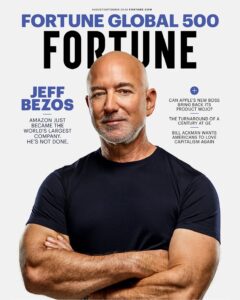
- Multiple rankings among the world’s most influential business leaders by Forbes, Fortune, Bloomberg, and TIME.
He has also received honorary recognition from academic and technology organizations for his contributions to innovation and entrepreneurship.
Criticism and Controversies
Like many high-profile business leaders, Bezos has faced criticism.
Areas of public debate have included:
- Amazon warehouse working conditions.
- Labor unionization efforts.
- Antitrust investigations.
- Corporate taxation.
- Market competition.
- Environmental impact.
Bezos and Amazon have responded to many of these issues through public statements, operational changes, and investments in workplace safety and sustainability. Many of these topics continue to be discussed by policymakers, researchers, labor organizations, and industry observers.
A Lasting Influence
By the mid-2020s, Jeff Bezos had become more than the founder of Amazon.
He had emerged as a leading figure in:
- Technology.
- Entrepreneurship.
- Artificial intelligence.
- Space exploration.
- Digital media.
- Climate philanthropy.
- Long-term innovation.
His ideas on customer focus, experimentation, and long-term decision-making continue to influence entrepreneurs, executives, and investors around the world.
Part 4: Net Worth, Business Empire, Legacy, FAQs, and Conclusion
Jeff Bezos’ Business Empire
Although Jeff Bezos is best known as the founder of Amazon, his business interests extend far beyond e-commerce. Over more than three decades, he has built and invested in companies across technology, aerospace, media, healthcare, artificial intelligence, robotics, and venture capital.
Some of the organizations closely associated with Bezos include:
| Organization | Role | Industry |
|---|---|---|
| Amazon | Founder & Executive Chairman | E-commerce, Cloud Computing, AI |
| Blue Origin | Founder | Aerospace |
| Bezos Expeditions | Founder | Venture Capital |
| The Washington Post | Owner | Media |
| Bezos Earth Fund | Founder | Climate Philanthropy |
| Day One Fund | Founder | Education & Homelessness |
Together, these organizations represent one of the most diversified entrepreneurial portfolios in the world.
Investment Portfolio
Through Bezos Expeditions and personal investments, Jeff Bezos has backed numerous innovative companies.
Publicly reported investments include interests in:
- Airbnb
- Uber
- Google (through an early investment)
- Business Insider
- Unity Biotechnology
- Grail
- Stack Overflow
- Various artificial intelligence startups
- Healthcare technology companies
- Robotics firms
His investment philosophy generally favors businesses with disruptive technologies and long-term growth potential.
Jeff Bezos’ Net Worth
Jeff Bezos has consistently ranked among the wealthiest individuals in modern history.
Unlike a fixed salary, most of his wealth comes from his ownership of Amazon shares and other investments. As a result, his net worth fluctuates daily with financial markets.
According to publicly reported estimates by financial publications such as Forbes and Bloomberg, Bezos’ fortune has frequently exceeded US$200 billion during periods of strong market performance.
Because stock prices change continuously, there is no single permanent figure for his wealth.
Readers seeking current estimates should consult real-time wealth rankings published by reputable financial organizations.
Major Achievements
Jeff Bezos’ career includes numerous milestones that have transformed global business.
Among his most significant achievements are:
- Founded Amazon in 1994.
- Built Amazon into one of the world’s largest companies.
- Helped pioneer large-scale e-commerce.
- Revolutionized cloud computing through Amazon Web Services (AWS).
- Popularized digital reading with the Kindle.
- Founded Blue Origin.
- Acquired and modernized The Washington Post.
- Created the Bezos Earth Fund.
- Led Amazon for 27 years before becoming Executive Chairman.
- Inspired a generation of entrepreneurs through long-term business thinking.
Books by Jeff Bezos
Jeff Bezos has not written a traditional autobiography.
However, several official collections and books feature his ideas and writings.
Notable publications include:
- Invent and Wander: The Collected Writings of Jeff Bezos (2020).
- Amazon’s annual shareholder letters (widely studied in business schools).
- Numerous verified interviews and keynote speeches.
Several biographies have also been written about Bezos by respected journalists and authors, though these are independent works rather than books authored by him.
Leadership Lessons
Business leaders frequently study Bezos’ management philosophy.
Some of his best-known principles include:
- Think long term.
- Focus relentlessly on customers.
- Accept failure as part of innovation.
- Make decisions quickly when possible.
- Build systems that scale.
- Hire exceptional talent.
- Encourage experimentation.
- Stay curious.
- Remain adaptable.
These ideas have influenced startups, Fortune 500 companies, and business schools worldwide.
Selected Verified Quotes
Jeff Bezos has made many memorable public statements. Among his most widely cited are:
“Your margin is my opportunity.”
This reflects his belief that companies charging excessive prices create opportunities for competitors.
“We are stubborn on vision. We are flexible on details.”
This quote summarizes Amazon’s long-term strategic approach.
“If you double the number of experiments you do per year, you’re going to double your inventiveness.”
This statement highlights his emphasis on innovation through experimentation.
“What’s dangerous is not to evolve.”
Bezos has consistently argued that businesses must adapt to changing technology and customer expectations.
Career Timeline
| Year | Milestone |
|---|---|
| 1964 | Born in Albuquerque, New Mexico |
| 1986 | Graduated from Princeton University |
| 1986 | Joined Fitel |
| 1988 | Worked at Bankers Trust |
| 1990 | Joined D. E. Shaw & Co. |
| 1994 | Founded Amazon |
| 1995 | Amazon launched online |
| 1997 | Amazon became a public company |
| 2000 | Founded Blue Origin |
| 2005 | Launched Amazon Prime |
| 2006 | Introduced Amazon Web Services |
| 2007 | Released the Kindle |
| 2013 | Purchased The Washington Post |
| 2018 | Created the Day One Fund |
| 2020 | Announced the Bezos Earth Fund |
| 2021 | Flew to space aboard Blue Origin and became Amazon Executive Chairman |
| 2025–2026 | Continued leading Blue Origin, philanthropic initiatives, and long-term investments while serving as Executive Chairman of Amazon |
Official Website
- Amazon: www.amazon.com
- Blue Origin: www.blueorigin.com
- Bezos Earth Fund: www.bezosearthfund.org
Verified Social Media Accounts
X (formerly Twitter)
As of this writing, these are his primary verified public social media platforms.
Legacy and Global Influence
Jeff Bezos has fundamentally changed the way people shop, read, consume entertainment, store digital information, and think about innovation.
Amazon revolutionized online retail and built one of the world’s largest cloud computing platforms. Blue Origin has contributed to the commercialization of space exploration, while his investments in journalism, philanthropy, and climate initiatives demonstrate an expanding influence beyond technology.
His annual shareholder letters are widely studied by entrepreneurs, executives, and MBA students as examples of strategic thinking and organizational leadership. Concepts such as “Day 1,” customer obsession, and long-term decision-making have become central themes in modern business education.
While his career has also attracted scrutiny regarding labor practices, market power, and regulatory issues, there is broad agreement that Bezos has reshaped multiple industries in lasting ways.
Conclusion
The story of Jeff Bezos is one of relentless curiosity, calculated risk, and long-term vision. From a child fascinated by science and engineering to the founder of one of the world’s most influential companies, his journey illustrates the impact that innovation and persistence can have on global commerce.
Through Amazon, he transformed online shopping into an everyday experience. Through Amazon Web Services, he helped create the modern cloud computing industry. Through Blue Origin, he continues pursuing the goal of expanding humanity’s presence in space. His philanthropic initiatives, including the Bezos Earth Fund and the Day One Fund, further reflect his interest in addressing long-term global challenges.
Whether viewed as a visionary entrepreneur, a transformative business leader, or a pioneer of technological change, Jeff Bezos remains one of the defining figures of the 21st-century global economy. His influence continues to shape technology, business strategy, innovation, and the future of commerce for generations to come.
Also read: Herbert Wigwe Biography: The Inspiring Life, Vision, and Enduring Legacy of Nigeria’s Banking Icon
Frequently Asked Questions
Who is Jeff Bezos?
Jeff Bezos is an American entrepreneur, investor, and businessman best known as the founder of Amazon and Blue Origin.
When was Jeff Bezos born?
He was born on January 12, 1964.
Where was Jeff Bezos born?
He was born in Albuquerque, New Mexico, United States.
What did Jeff Bezos study?
He earned a Bachelor of Science in Engineering in Electrical Engineering and Computer Science from Princeton University.
Why is Jeff Bezos famous?
He founded Amazon, transformed global e-commerce, pioneered cloud computing through AWS, founded Blue Origin, and became one of the world’s wealthiest entrepreneurs.
Is Jeff Bezos still the CEO of Amazon?
No. He stepped down as CEO in July 2021 and now serves as Executive Chairman of Amazon.
Who was Jeff Bezos’ wife?
He was married to novelist and philanthropist MacKenzie Scott from 1993 until their divorce in 2019.
Is Jeff Bezos married now?
As of this writing, Jeff Bezos is married to Lauren Sánchez. The couple married in June 2025 in Venice, Italy, after announcing their engagement in 2023.
How many children does Jeff Bezos have?
He has four children.
What is Blue Origin?
Blue Origin is Jeff Bezos’ aerospace company focused on reusable rockets and commercial spaceflight.
What is Jeff Bezos’ net worth?
His net worth changes daily because it is largely based on the market value of his investments, particularly Amazon stock. Financial publications such as Forbes and Bloomberg provide regularly updated estimates.
Does Jeff Bezos own The Washington Post?
Yes. He purchased the newspaper in 2013 through a personal investment, separate from Amazon.
What is Bezos’ leadership philosophy?
His philosophy emphasizes customer obsession, long-term thinking, innovation, experimentation, and continuous improvement.









+ There are no comments
Add yours