






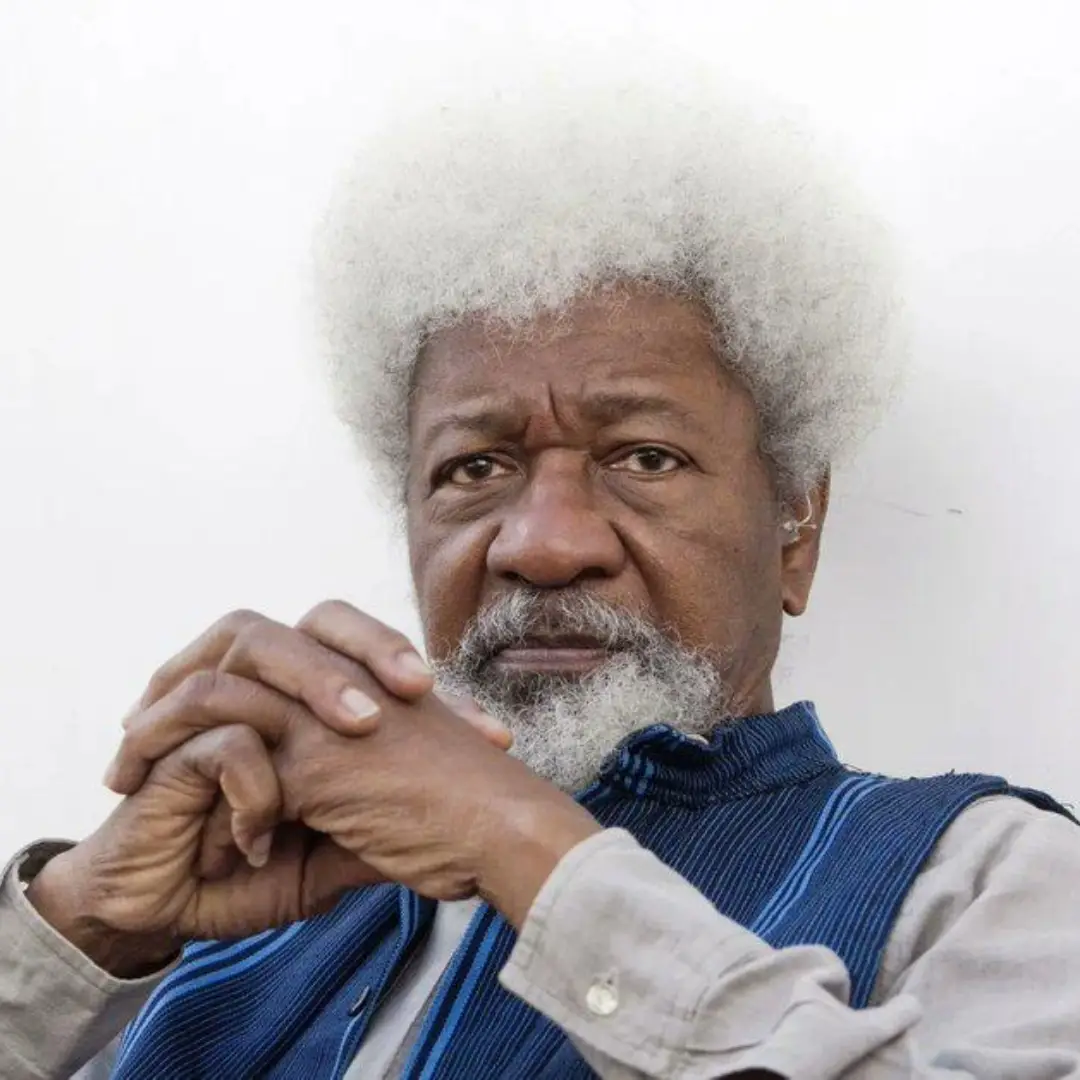
Wole Soyinka Biography is one of Africa’s greatest intellectuals, playwrights, poets, essayists, novelists, and human rights advocates. For more than six decades, he has shaped global conversations on literature, democracy, freedom, culture, and justice. His fearless criticism of dictatorship, groundbreaking literary works, and lifelong commitment to human rights have earned him international recognition, including becoming the first African to receive the Nobel Prize in Literature in 1986.
This Wole Soyinka Biography explores the extraordinary life of Akinwande Oluwole Babatunde Soyinka—from his childhood in colonial Nigeria to becoming one of the world’s most respected literary figures and public intellectuals. The biography is based on publicly verifiable information from reliable sources, including the Nobel Prize, universities, published interviews, academic publications, and reputable news organizations.
Early Life and Quick Facts
| Full Name | Akinwande Oluwole Babatunde Soyinka |
|---|---|
| Popular Name | Wole Soyinka |
| Date of Birth | 13 July 1934 |
| Age | 92 (as of 2026) |
| Birthplace | Abeokuta, Ogun State, Nigeria |
| Nationality | Nigerian |
| Ethnicity | Yoruba |
| Occupation | Playwright, Poet, Novelist, Essayist, Professor, Human Rights Activist |
| Parents | Samuel Ayodele Soyinka and Grace Eniola Soyinka |
| Religion | Raised in a Christian family while deeply influenced by Yoruba traditional beliefs and culture |
| Education | Government College Ibadan; University College Ibadan; University of Leeds |
| Famous For | Nobel Prize in Literature (1986) |
| Spouse | Married multiple times during his lifetime |
| Children | Publicly known to have children |
| Literary Genres | Drama, Poetry, Fiction, Essays, Memoirs |
| Years Active | 1950s–Present |
Who Is Wole Soyinka?
Professor Wole Soyinka is widely regarded as one of the greatest African writers in history. His influence extends far beyond literature into politics, education, philosophy, theatre, and human rights.
Throughout his career, Soyinka has challenged oppression, military dictatorship, censorship, corruption, and injustice. His writings combine rich African traditions with universal themes of freedom, morality, identity, and power.
Today, his books are studied in universities across Africa, Europe, North America, Asia, and beyond.
The Meaning Behind His Name
His full name is Akinwande Oluwole Babatunde Soyinka.
“Wole” is a shortened form of Oluwole, the name by which he has become internationally known.
Although some online searches use the phrase “Wole Soyinka Chukwuma Biography,” there is no publicly verified information indicating that “Chukwuma” forms part of his legal or birth name. His verified full name remains Akinwande Oluwole Babatunde Soyinka.
Early Life and Family Background
Wole Soyinka was born on 13 July 1934 in Abeokuta, in present-day Ogun State, southwestern Nigeria.
At the time, Nigeria was under British colonial administration.
He grew up in an educated and disciplined household that valued learning, culture, and public service.
His Father: Samuel Ayodele Soyinka
His father, Samuel Ayodele Soyinka, was an Anglican minister and headmaster.
Known affectionately in Soyinka’s memoirs as “Essay,” he believed strongly in education, discipline, and intellectual development.
His father’s influence helped cultivate Soyinka’s lifelong passion for reading and critical thinking.
His Mother: Grace Eniola Soyinka
His mother, Grace Eniola Soyinka, was a teacher, shopkeeper, and respected women’s activist.
She played an active role in the Abeokuta Women’s Union, led by the renowned activist Funmilayo Ransome-Kuti.
In his memoir Ake: The Years of Childhood, Soyinka affectionately referred to his mother as “Wild Christian.”
Her courage, independence, and commitment to justice profoundly shaped his worldview.
Growing Up in Colonial Nigeria
Soyinka’s childhood coincided with growing nationalist movements against British colonial rule.
He witnessed firsthand the tension between colonial authority and indigenous traditions.
These experiences later became recurring themes in his literary works, where he explored questions of identity, power, religion, and freedom.
A Childhood Surrounded by Stories
One of the defining features of Soyinka’s upbringing was his exposure to storytelling.
He grew up listening to:
- Yoruba myths.
- Folktales.
- Religious teachings.
- Traditional festivals.
- Community ceremonies.
These early experiences would later inspire many of his plays and essays.
Unlike many writers who drew primarily from European traditions, Soyinka successfully blended Yoruba cosmology with classical Western literary techniques.
His memoir Ake: The Years of Childhood provides one of the richest firsthand accounts of growing up in colonial Nigeria.
Education and Academic Journey
St. Peter’s Primary School
Wole Soyinka began his education at St. Peter’s Primary School in Abeokuta.
He demonstrated exceptional intelligence from an early age.
Teachers quickly recognized his curiosity and remarkable reading ability.
Government College Ibadan
He later attended the prestigious Government College, Ibadan, one of Nigeria’s leading secondary schools.
There he excelled academically and developed interests in literature, debate, theatre, and writing.
Many future Nigerian leaders and intellectuals also studied at Government College during this period.
University College Ibadan
In 1952, Soyinka entered University College, Ibadan (now the University of Ibadan).
He studied English literature, Greek, and Western history.
During his university years, he became increasingly involved in theatre and creative writing.
He also began publishing essays and participating in dramatic productions.
Transfer to the University of Leeds
Seeking broader academic opportunities, Soyinka transferred to the University of Leeds in the United Kingdom.
There he studied English literature under the distinguished literary scholar Wilson Knight.
At Leeds, Soyinka refined his understanding of:
- Shakespeare.
- Classical drama.
- Modern theatre.
- Literary criticism.
- European philosophy.
His exposure to British theatre strengthened his dramatic technique while reinforcing his determination to create distinctly African literature.
Beginning His Career in Theatre
After graduating from Leeds, Soyinka remained briefly in Britain.
He worked with the Royal Court Theatre in London, one of the most influential theatres in modern British drama.
This experience exposed him to professional playwriting, directing, and stage production.
It also gave him valuable insight into international theatre practices.
However, Soyinka remained committed to developing modern African theatre rather than pursuing a permanent career abroad.
Returning to Nigeria
As Nigeria approached independence, Soyinka returned home with a clear vision.
He believed literature should do more than entertain.
It should question authority.
It should preserve African culture.
It should expose injustice.
It should encourage critical thinking.
His return coincided with an exciting period in Nigerian history, as artists, writers, musicians, and intellectuals sought to define a new national identity after colonial rule.
Founding Theatre Companies
Shortly after returning, Soyinka established theatre groups that became important platforms for experimental African drama.
One of the earliest was The 1960 Masks, created to celebrate Nigeria’s independence.
Later, he founded the Orisun Theatre Company, through which many of his plays were staged.
These productions combined:
- Traditional Yoruba performance.
- Music.
- Dance.
- Ritual symbolism.
- Contemporary political themes.
This innovative style distinguished Soyinka from many of his contemporaries and helped establish modern African theatre on the global stage.
The Birth of a Literary Voice
By the early 1960s, Wole Soyinka had already begun attracting attention as one of Africa’s most original playwrights.
His early dramatic works challenged audiences intellectually while remaining deeply rooted in African philosophy and history.
Rather than imitating European literary traditions, Soyinka developed a unique voice that fused Yoruba spirituality with universal human concerns.
This distinctive approach would soon produce some of the most influential works in African literature and establish him as one of the continent’s greatest writers.
The Rise of a New African Literary Voice
By the early 1960s, Wole Soyinka had established himself as one of Nigeria’s most promising playwrights. While many African writers of the period focused primarily on colonialism, Soyinka explored broader themes such as power, morality, corruption, identity, tradition, religion, and the responsibilities of leadership.
His writing challenged audiences intellectually. Rather than offering simple answers, he encouraged readers and theatergoers to question authority, confront moral dilemmas, and examine the complexities of human nature.
Unlike many of his contemporaries, Soyinka refused to present Africa as either entirely heroic or entirely victimized. His works portrayed societies with both strengths and weaknesses, making his writing timeless and universally relevant.
Nigeria’s Independence and the Birth of Modern African Theatre
Nigeria gained independence from Britain on 1 October 1960.
The country’s independence inspired optimism but also raised important questions about governance, national identity, and the future of African nations.
Soyinka believed literature had an important role to play during this historic transition.
To mark Nigeria’s independence, he established the 1960 Masks, a theater company that produced original dramatic works celebrating African creativity while critically examining post-colonial society.
A few years later, he founded the Orisun Theatre Company, which became another important platform for innovative African drama.
These productions blended:
- Yoruba mythology.
- Traditional music.
- Dance.
- Ritual performance.
- Modern political commentary.
- Experimental stage techniques.
His theatrical style distinguished him from many other writers and helped introduce African drama to international audiences.
Early Plays That Established His Reputation
During the 1960s, Soyinka wrote several plays that became classics of African literature.
Among his earliest successes was The Swamp Dwellers (1958), which explored tensions between tradition and modernization in rural Nigeria.
He followed this with The Lion and the Jewel (1959), one of his best-known plays.
The play examines the conflict between traditional African values and Western influence through humor, satire, and memorable characters. It remains one of the most widely studied African plays in schools and universities.
Another major work, A Dance of the Forests (1960), was commissioned as part of Nigeria’s independence celebrations.
Rather than presenting an idealized vision of the nation, Soyinka warned that independence alone would not solve problems such as corruption, abuse of power, and social injustice.
The play surprised many audiences because of its bold message, but it demonstrated Soyinka’s willingness to challenge political leaders regardless of popular opinion.
Expanding Beyond Drama
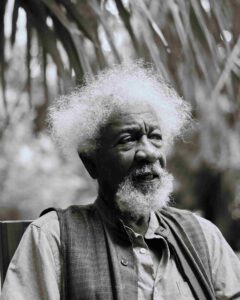
Although Soyinka first gained international recognition as a playwright, he also excelled in other literary forms.
Over the following decades, he published:
- Novels.
- Poetry collections.
- Essays.
- Memoirs.
- Literary criticism.
His writing consistently examined:
- Political oppression.
- Cultural identity.
- Human dignity.
- Religion.
- Freedom.
- Violence.
- Justice.
His versatility established him as one of Africa’s most accomplished literary figures.
Important Early Literary Works
Some of Soyinka’s most influential publications from this period include:
Plays
- The Swamp Dwellers (1958)
- The Lion and the Jewel (1959)
- A Dance of the Forests (1960)
- The Trials of Brother Jero (1960)
- The Strong Breed (1964)
- Kongi’s Harvest (1965)
These works demonstrated his remarkable ability to combine entertainment with deep philosophical and political commentary.
Teaching and Academic Career
Alongside his writing, Soyinka also pursued an academic career.
He taught literature and drama at several Nigerian universities, including:
- University of Lagos.
- University of Ife (now Obafemi Awolowo University).
As a lecturer, he inspired generations of students to think critically about literature, politics, and society.
His classrooms became known for rigorous intellectual discussion rather than passive learning.
Political Activism
Soyinka believed writers should not remain silent in the face of injustice.
Unlike authors who preferred to separate literature from politics, he consistently argued that intellectuals had a responsibility to defend freedom and human rights.
Throughout the 1960s, he openly criticized:
- Electoral fraud.
- Political violence.
- Abuse of power.
- Corruption.
- Ethnic division.
His activism frequently placed him at odds with political authorities.
The Western Nigeria Election Crisis
One of Soyinka’s earliest acts of political resistance occurred during the political crisis in Western Nigeria in 1965.
According to widely documented accounts, he entered a regional broadcasting station in Ibadan and replaced an official political announcement with his own message criticizing electoral manipulation.
Although details of the incident have been recounted differently over the years, it became one of the defining moments of his public life.
He was arrested but later released after legal proceedings.
The event reinforced his reputation as someone willing to take personal risks in defense of democratic principles.
The Nigerian Civil War
The greatest challenge of Soyinka’s early life came during the Nigerian Civil War (1967–1970).
As tensions escalated between the Federal Government and the secessionist Republic of Biafra, Soyinka sought peaceful dialogue.
Rather than supporting continued violence, he attempted to encourage negotiations that might prevent further bloodshed.
His efforts, however, drew suspicion from the federal authorities.
Arrest and Solitary Confinement
In August 1967, the Nigerian military government arrested Soyinka on allegations related to his contacts with Biafran representatives.
He denied supporting secession, maintaining that his goal had been to promote peace.
He was detained without trial for approximately 22 months, much of that time in solitary confinement.
The conditions of his imprisonment were extremely harsh.
He had limited access to books, writing materials, and communication with the outside world.
Despite these restrictions, he continued writing secretly on scraps of paper, cigarette packets, and other available materials whenever possible.
The experience became one of the defining periods of his life.
Writing Under Imprisonment
Instead of breaking his spirit, imprisonment strengthened Soyinka’s resolve.
Many of his later works reflected on:
- Isolation.
- State repression.
- Human resilience.
- Moral courage.
- Freedom.
- Psychological endurance.
His prison experiences later inspired the memoir The Man Died: Prison Notes, first published in 1972.
The title comes from one of his most quoted statements:
“The man dies in all who keep silent in the face of tyranny.”
This work remains one of the most important prison memoirs written by an African author.
Release After the Civil War
Following the end of the Nigerian Civil War in 1970, Soyinka was released from prison.
Although physically free, he remained deeply concerned about Nigeria’s political future.
Rather than withdrawing from public life, he resumed writing, teaching, and speaking out on issues affecting democracy and human rights.
His imprisonment transformed him from an acclaimed playwright into an internationally recognized symbol of resistance against oppression.
International Recognition Grows
Following his release, Soyinka’s reputation expanded rapidly beyond Africa.
Universities, literary organizations, and cultural institutions around the world invited him to lecture and participate in international conferences.
His works began appearing in numerous languages and were increasingly studied in literature departments worldwide.
Critics praised his ability to combine African philosophical traditions with universal themes of justice, freedom, and human dignity.
By the early 1970s, Wole Soyinka was no longer regarded simply as Nigeria’s leading playwright. He had become one of the most influential literary voices in the developing world, admired not only for his artistic achievements but also for his courage in defending freedom of expression.
From National Writer to Global Literary Icon
By the late 1970s, Wole Soyinka had established himself as one of the world’s leading literary voices. His plays, novels, poems, and essays were being translated into numerous languages and taught in universities across Africa, Europe, North America, Asia, and Latin America.
Unlike many writers whose influence remained largely within literature, Soyinka became equally respected as a public intellectual, political commentator, and defender of democracy. His willingness to criticize authoritarian governments—regardless of ideology—made him one of Africa’s most influential advocates for human rights.
Expanding His Literary Works
Following his release from prison, Soyinka entered one of the most productive periods of his career.
His writing became broader in scope, exploring themes such as:
- Political violence.
- Moral responsibility.
- Religion.
- Colonialism and its legacy.
- African identity.
- Corruption.
- Freedom of expression.
- Cultural memory.
His works became increasingly philosophical while remaining deeply rooted in Yoruba traditions and mythology.
Major Novels
Although Soyinka is best known as a playwright, he also wrote influential novels.
Among his most notable are:
The Interpreters (1965)
His first novel follows a group of educated Nigerians navigating the complexities of post-independence society. It explores corruption, idealism, identity, and the challenges faced by a newly independent nation.
Season of Anomy (1973)
Written after his imprisonment, this novel examines dictatorship, resistance, sacrifice, and the struggle for justice. It is widely regarded as one of his most politically charged works.
Poetry Collections
Poetry has remained an essential part of Soyinka’s literary career.
Some of his best-known collections include:
- Idanre and Other Poems (1967)
- A Shuttle in the Crypt (1972)
- Ogun Abibiman (1976)
- Mandela’s Earth and Other Poems (1988)
- Samarkand and Other Markets I Have Known (2002)
His poetry often reflects personal experiences, political events, Yoruba spirituality, and broader philosophical questions about humanity.
Memoirs
Soyinka has written several acclaimed memoirs that provide insight into different stages of his life.
Among the most important are:
Ake: The Years of Childhood (1981)
This memoir vividly recounts his childhood in Abeokuta during colonial rule. It is widely regarded as one of the finest autobiographical works by an African writer.
Isara: A Voyage Around Essay (1989)
This work pays tribute to his father, Samuel Ayodele Soyinka, whom he affectionately called “Essay.”
Ibadan: The Penkelemes Years (1994)
This memoir covers his university years and Nigeria’s transition toward independence, blending personal experiences with national history.
You Must Set Forth at Dawn (2006)
This autobiography examines his adult life, political activism, imprisonment, and international experiences.
Together, these memoirs offer one of the most comprehensive autobiographical records produced by any modern African writer.
Essays and Political Writing
In addition to fiction and drama, Soyinka has written extensively on politics, democracy, religion, and culture.
His essays frequently criticize:
- Military dictatorship.
- Religious extremism.
- Ethnic intolerance.
- Corruption.
- Censorship.
- Abuse of power.
He has consistently argued that writers and intellectuals have a moral duty to challenge injustice wherever it exists.
The Nobel Prize in Literature
The defining moment of Soyinka’s literary career came in 1986, when he was awarded the Nobel Prize in Literature.
The Swedish Academy honored him:
“who in a wide cultural perspective and with poetic overtones fashions the drama of existence.”
This historic achievement made him:
- The first African to receive the Nobel Prize in Literature.
- The first Black African Nobel laureate in Literature.
- One of the most internationally celebrated African intellectuals.
The award recognized not only his literary brilliance but also his courage in defending freedom of expression and human dignity.
Global Reaction to the Nobel Prize
The announcement was greeted with celebration throughout Nigeria, Africa, and the wider literary world.
Universities organized lectures and tributes.
Governments issued congratulatory messages.
African writers viewed the award as a landmark recognition of African literature on the global stage.
Soyinka, however, remained characteristically modest, emphasizing that the honor also reflected the richness of African storytelling traditions.
Academic Career Around the World
Over the decades, Soyinka has held teaching and research appointments at many leading universities.
These include:
- University of Ife (now Obafemi Awolowo University).
- University of Lagos.
- University of Ibadan.
- Yale University.
- Cornell University.
- Emory University.
- Harvard University (visiting appointments).
- University of Nevada, Las Vegas.
He has also delivered distinguished lectures at institutions across Europe, Asia, Africa, and the Americas.
His courses have explored:
- Comparative literature.
- African drama.
- Creative writing.
- Theatre studies.
- Political philosophy.
- Cultural history.
Exile During Military Rule
The political situation in Nigeria deteriorated during the military regimes of the 1990s.
Soyinka became one of the strongest critics of General Sani Abacha’s government.
As repression intensified, he left Nigeria and lived in exile to avoid arrest.
While abroad, he continued advocating for democracy and speaking out against human rights abuses.
Despite the personal risks involved, he remained one of the most vocal international critics of military dictatorship in Nigeria.
Following the death of General Abacha in 1998 and Nigeria’s return to civilian rule in 1999, Soyinka was able to return home more freely.
International Human Rights Advocacy
Beyond Nigeria, Soyinka has spoken on numerous global issues, including:
- Democracy.
- Freedom of speech.
- Political prisoners.
- Terrorism.
- Religious extremism.
- Cultural preservation.
- Academic freedom.
He has addressed audiences at the United Nations, international literary festivals, universities, and human rights conferences around the world.
Public Intellectual and Social Critic
Even in his later years, Soyinka has remained an active participant in public debates.
He regularly comments on issues affecting:
- Nigerian democracy.
- African governance.
- Education.
- Freedom of expression.
- Cultural identity.
- International politics.
His opinions often generate widespread discussion because of his long-standing reputation for intellectual independence.
Literary Style
Critics frequently describe Soyinka’s writing as intellectually demanding and richly symbolic.
Distinctive features of his work include:
- Yoruba mythology.
- Classical Greek influences.
- Complex symbolism.
- Poetic language.
- Moral ambiguity.
- Philosophical dialogue.
- Political satire.
Rather than simplifying difficult issues, his works invite readers to think critically and interpret multiple layers of meaning.
Influence on African Literature
Soyinka’s success helped demonstrate that African literature could stand alongside the world’s greatest literary traditions.
His achievements influenced generations of writers, including novelists, dramatists, poets, and scholars from across the continent.
Many contemporary African authors cite him as a major inspiration, not only because of his literary excellence but also because of his unwavering commitment to truth and justice.
His contributions have helped establish African literature as a central part of world literature rather than a peripheral tradition.
Continuing to Write
Even after receiving the Nobel Prize, Soyinka did not slow down.
He continued publishing books, essays, plays, and articles while participating in literary festivals and public lectures around the world.
His career, spanning more than six decades, reflects an extraordinary dedication to literature, education, and public service.
By combining artistic brilliance with moral courage, Wole Soyinka has secured his place among the greatest writers of the twentieth and twenty-first centuries.
Personal Life
Despite his international fame, Wole Soyinka has maintained a relatively private personal life. While he has often written about his experiences, philosophy, and political beliefs, he has generally kept details of his family out of the public spotlight.
Throughout his life, he has balanced writing, teaching, activism, and public service while remaining deeply connected to Nigerian culture and the Yoruba intellectual tradition.
Marriages and Family
Wole Soyinka has been married more than once.
His spouses have included:
- The late Barbara Dixon, a British writer.
- Olaide Soyinka, a Nigerian librarian and educator.
- Folake Doherty, whom he later married.
Public records indicate that he has children from his marriages. Among the best-known is Dr. Moremi Soyinka-Onijala, a medical professional.
Soyinka has generally chosen not to make his family life a central part of his public image, preferring that attention remain on his literary and civic work.
Religion and Traditional Beliefs
Soyinka was born into an Anglican Christian family.
However, throughout his writings, lectures, and interviews, he has expressed a deep appreciation for Yoruba traditional religion, philosophy, and mythology.
His works frequently feature deities such as Ogun, whom he uses as both a literary and philosophical symbol.
Rather than promoting one religious tradition over another, Soyinka has consistently advocated for:
- Religious freedom.
- Tolerance.
- Rational thinking.
- Respect for cultural diversity.
Major Literary Works
Over a career spanning more than six decades, Soyinka has published dozens of influential works.
Selected Plays
- The Swamp Dwellers (1958)
- The Lion and the Jewel (1959)
- A Dance of the Forests (1960)
- The Trials of Brother Jero (1960)
- The Strong Breed (1964)
- Kongi’s Harvest (1965)
- Death and the King’s Horseman (1975)
- Opera Wonyosi (1977)
- King Baabu (2001)
Selected Novels
- The Interpreters (1965)
- Season of Anomy (1973)
- Chronicles from the Land of the Happiest People on Earth (2021)
Selected Memoirs
- The Man Died (1972)
- Ake: The Years of Childhood (1981)
- Isara: A Voyage Around Essay (1989)
- Ibadan: The Penkelemes Years (1994)
- You Must Set Forth at Dawn (2006)
Selected Poetry Collections
- Idanre and Other Poems
- A Shuttle in the Crypt
- Ogun Abibiman
- Mandela’s Earth and Other Poems
- Samarkand and Other Markets I Have Known
These publications remain staples of literature courses around the world and continue to influence writers, scholars, and students.
Major Awards and Honors
Wole Soyinka has received hundreds of honors throughout his career.
Some of the most significant include:
- Nobel Prize in Literature (1986) – First African recipient.
- Commander of the Federal Republic (CFR) – Nigeria.
- Numerous honorary doctorates from universities around the world.
- Benson Medal of the Royal Society of Literature.
- Anisfield-Wolf Book Award.
- Commonwealth Poetry Prize (early in his career).
- International Human Rights awards from various organizations.
- Membership in numerous prestigious academies and literary institutions.
His awards recognize not only literary excellence but also his lifelong commitment to democracy and human rights.
Academic Contributions
Soyinka has taught at several internationally respected universities.
These include:
- University of Ibadan.
- University of Lagos.
- Obafemi Awolowo University.
- Yale University.
- Cornell University.
- Emory University.
- Harvard University (visiting appointments).
- University of Nevada, Las Vegas.
Thousands of students have studied under his guidance, and his lectures continue to influence new generations of scholars.
Political and Human Rights Advocacy
Throughout his career, Soyinka has remained one of Africa’s most outspoken defenders of democracy.
He has criticized:
- Military dictatorship.
- Election fraud.
- Religious extremism.
- Terrorism.
- Corruption.
- Human rights abuses.
- Government repression.
His activism has often attracted controversy, but it has also earned him respect as an independent public intellectual who speaks according to principle rather than political affiliation.
Business Interests
Unlike many public figures, Wole Soyinka is not known primarily as a businessman.
His career has focused on:
- Literature.
- Theatre.
- Academia.
- Public speaking.
- Human rights advocacy.
As of this writing, there is no publicly verified information confirming that he owns major commercial businesses or investment conglomerates.
Wole Soyinka Net Worth
Numerous websites publish estimates of Wole Soyinka’s wealth.
However, these figures vary widely and are not supported by verified public financial disclosures.
As of this writing, there is no publicly verified information confirming Wole Soyinka’s net worth.
Any specific figure circulating online should therefore be treated as speculative rather than factual.
Leadership and Writing Philosophy
Throughout his life, several principles have consistently shaped Soyinka’s work:
- Freedom of expression.
- Intellectual independence.
- Social justice.
- Cultural preservation.
- Democratic governance.
- Moral courage.
- Critical thinking.
He has repeatedly argued that writers have a responsibility to challenge injustice rather than remain silent.
Notable Verified Quotes
Among Wole Soyinka’s most frequently cited statements are:
“The man dies in all who keep silent in the face of tyranny.”
“Books and all forms of writing are terror to those who wish to suppress the truth.”
“Justice is the first condition of humanity.”
These quotations capture his lifelong commitment to truth, freedom, and human dignity.
Career Timeline
| Year | Milestone |
|---|---|
| 1934 | Born in Abeokuta, Ogun State |
| 1952 | Entered University College, Ibadan |
| 1954 | Transferred to the University of Leeds |
| 1958 | Published The Swamp Dwellers |
| 1959 | Published The Lion and the Jewel |
| 1960 | Founded the 1960 Masks theatre company |
| 1965 | Published The Interpreters |
| 1967–1969 | Imprisoned during the Nigerian Civil War |
| 1972 | Published The Man Died |
| 1975 | Published Death and the King’s Horseman |
| 1981 | Published Ake: The Years of Childhood |
| 1986 | Won the Nobel Prize in Literature |
| 1994 | Went into exile during military rule |
| 1999 | Returned following Nigeria’s return to democratic rule |
| 2006 | Published You Must Set Forth at Dawn |
| 2021 | Published Chronicles from the Land of the Happiest People on Earth |
| 2024–2026 | Continued writing, lecturing, and participating in global literary and public policy discussions |
Official Website and Verified Social Media
Official Website
As of this writing, there is no officially maintained personal website that has been publicly verified as Wole Soyinka’s official website.
Readers seeking authoritative information can consult:
- The Nobel Prize profile.
- University faculty profiles where applicable.
- Major publishers of his books.
As of this writing, there is no publicly verified official Instagram account belonging to Wole Soyinka.
X (Formerly Twitter)
As of this writing, there is no publicly verified official X account belonging to Wole Soyinka.
Legacy and Influence
Few writers have shaped African literature as profoundly as Wole Soyinka. His body of work spans drama, poetry, fiction, memoir, and essays, offering a rich exploration of history, identity, power, justice, and the human condition.
His influence reaches far beyond literature. As an outspoken advocate for democracy, freedom of expression, and human rights, he has inspired generations of writers, academics, activists, and political leaders across the world.
Winning the Nobel Prize in Literature in 1986 elevated African literature on the global stage, but Soyinka’s enduring legacy lies in the consistency of his principles. Whether confronting colonialism, military dictatorship, censorship, or religious extremism, he has remained committed to truth and intellectual independence.
Today, his books continue to be studied in universities around the world, his plays are regularly performed on international stages, and his essays remain relevant to contemporary debates about governance, culture, and justice.
For more than seven decades, Wole Soyinka has demonstrated that literature can be both a work of art and a force for social change. His life stands as a testament to the power of words, courage, and unwavering commitment to human dignity, securing his place among the greatest writers and public intellectuals of modern times.
Alos read: Innocent Ifediaso Chukwuma Biography: How a Spare Parts Trader Built Nigeria’s First Indigenous
Frequently Asked Questions
Who is Wole Soyinka?
Wole Soyinka is a Nigerian playwright, poet, novelist, essayist, professor, and human rights activist. He became the first African to win the Nobel Prize in Literature.
What is Wole Soyinka’s full name?
His full name is Akinwande Oluwole Babatunde Soyinka.
Is “Chukwuma” part of Wole Soyinka’s name?
No. There is no publicly verified information confirming that “Chukwuma” is part of his legal or birth name.
When was Wole Soyinka born?
He was born on 13 July 1934.
Where is Wole Soyinka from?
He is from Abeokuta, Ogun State, Nigeria.
Why is Wole Soyinka famous?
He is famous for his literary achievements, political activism, defense of human rights, and becoming the first African Nobel laureate in Literature.
Which universities did Wole Soyinka attend?
He studied at Government College, Ibadan; University College, Ibadan; and the University of Leeds.
Which is Wole Soyinka’s most famous play?
Among his best-known works are The Lion and the Jewel and Death and the King’s Horseman.
Why was Wole Soyinka imprisoned?
He was detained without trial during the Nigerian Civil War after advocating peaceful dialogue between the warring sides.
Has Wole Soyinka written an autobiography?
Yes. His memoirs include Ake: The Years of Childhood, Ibadan: The Penkelemes Years, and You Must Set Forth at Dawn.
What is Wole Soyinka’s religion?
He was raised in an Anglican Christian family while also drawing extensively on Yoruba traditional beliefs and philosophy in his writings.
What is Wole Soyinka’s net worth?
There is no publicly verified figure confirming his net worth.














+ There are no comments
Add yours