





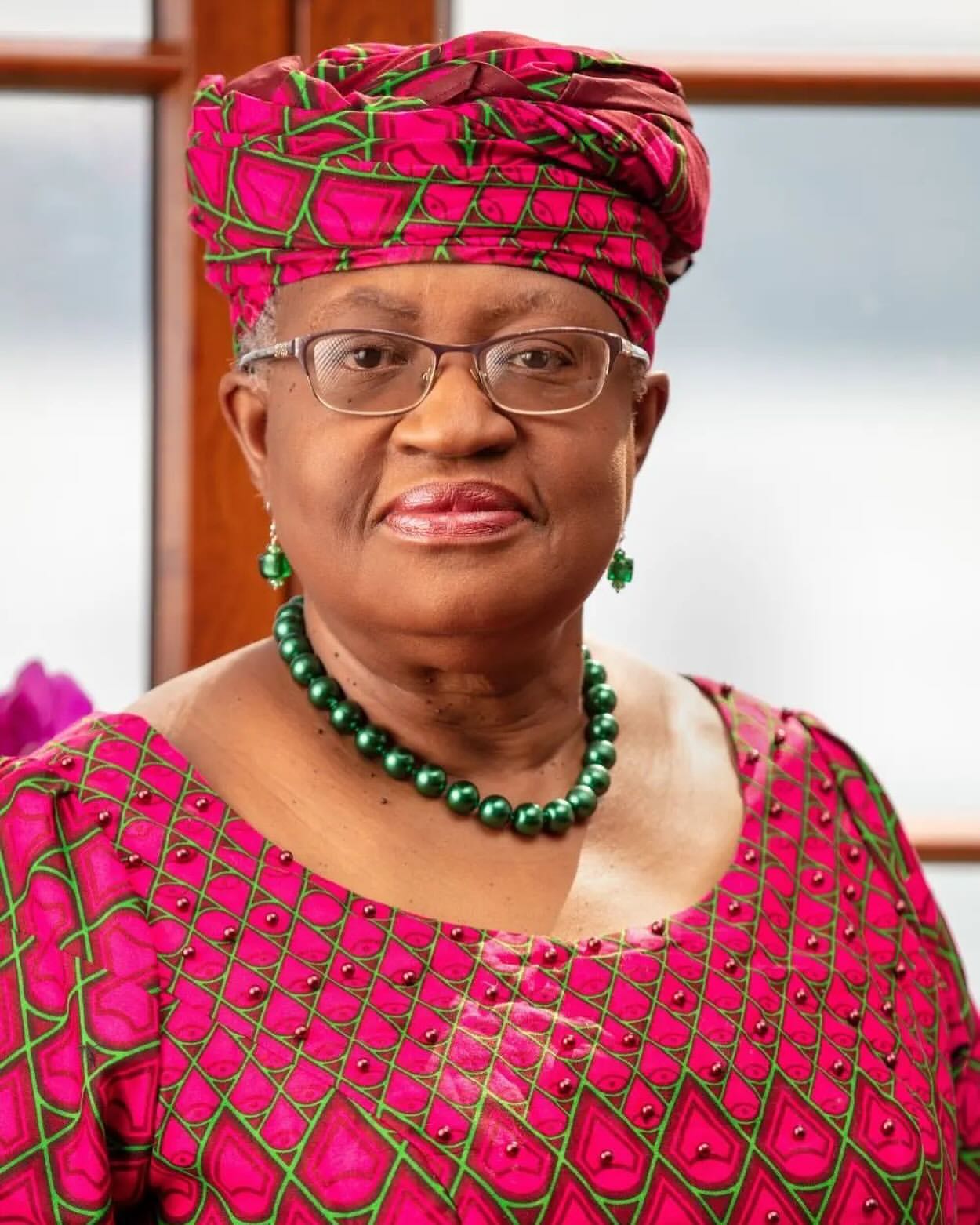
Okonjo-Iweala Biography explores her remarkable life story—from her childhood in Delta State, Nigeria, to the highest levels of international economic leadership. Every section is based on publicly verifiable information from authoritative sources, including the World Trade Organization, the World Bank, reputable news organizations, government publications, and verified interviews.
Early Life and Quick Facts
| Full Name | Ngozi Okonjo-Iweala |
|---|---|
| Popular Name | Ngozi Okonjo-Iweala |
| Date of Birth | 13 June 1954 |
| Age | 72 (as of 2026) |
| Place of Birth | Ogwashi-Ukwu, Delta State, Nigeria |
| Nationality | Nigerian-American |
| Ethnicity | Igbo |
| Parents | Professor Chukwuka Okonjo and Professor Kamene Okonjo |
| Occupation | Economist, International Development Expert |
| Current Position | Director-General, World Trade Organization |
| Education | Harvard University; Massachusetts Institute of Technology (MIT) |
| Former Employer | World Bank |
| Political Office | Nigeria’s Minister of Finance (2003–2006, 2011–2015) |
| Husband | Dr. Ikemba Iweala |
| Children | Four |
| Religion | Christianity |
| Known For | Debt Relief, Economic Reforms, WTO Leadership |
Why Ngozi Okonjo-Iweala Is Globally Respected
Among African economists, very few possess a career that spans government service, international finance, diplomacy, and global trade policy. Dr. Ngozi Okonjo-Iweala is respected because she consistently combines technical expertise with practical leadership.
She has negotiated multibillion-dollar debt relief for Nigeria, supervised major public finance reforms, worked at the World Bank for approximately twenty-five years, and later became the first African and first woman to head the World Trade Organization.
Her reputation extends beyond Africa because governments across Europe, Asia, North America, and Latin America frequently seek her expertise on development finance, climate policy, public health financing, and international trade.
Early Life and Family Background
Ngozi Okonjo-Iweala was born on 13 June 1954 in Ogwashi-Ukwu, located in present-day Delta State, Nigeria.
She was born into a distinguished academic and traditional family. Her father, Professor Chukwuka Okonjo, served as the Obi (traditional ruler) of the Ogwashi-Ukwu Kingdom. Before becoming king, he was a respected professor of mathematics.
Her mother, Professor Kamene Okonjo, was also an accomplished academic. She became one of Nigeria’s pioneering female professors and made significant contributions to sociology and education.
Growing up in such an intellectually stimulating environment greatly influenced Ngozi’s passion for education, discipline, and public service.
Unlike many future political leaders, she often credits her parents with teaching her the importance of integrity, excellence, and hard work rather than political ambition.
Growing Up During Nigeria’s Civil War
One of the defining experiences of her childhood was the Nigerian Civil War (1967–1970).
Because her family belonged to the Igbo ethnic group, they experienced significant hardship during the conflict.
Food shortages became common.
Educational opportunities were disrupted.
Daily life became uncertain.
The experience left a lasting impression on her understanding of poverty, conflict, and economic instability.
Years later, she would explain that witnessing these hardships strengthened her commitment to economic development and poverty reduction.
The Influence of Her Parents
Her father encouraged analytical thinking and academic excellence.
Her mother emphasized social responsibility and education as tools for national development.
Their combined influence helped shape her balanced approach to leadership—combining economic analysis with concern for ordinary people’s welfare.
Many observers believe this early upbringing explains why her economic reforms often focused not only on macroeconomic stability but also on reducing poverty.
Education and Academic Journey
From an early age, Ngozi displayed exceptional academic ability.
She attended schools in Nigeria before receiving an opportunity to study abroad.
Harvard University
She earned admission to Harvard University, where she studied Economics.
At Harvard she graduated magna cum laude in 1976 with a Bachelor of Arts in Economics.
Studying at Harvard exposed her to some of the world’s leading economists and development thinkers.
It also deepened her understanding of international finance, public policy, and global economic systems.
Massachusetts Institute of Technology (MIT)
After Harvard, she continued her education at the Massachusetts Institute of Technology (MIT).
At MIT she completed a Ph.D. in Regional Economics and Development in 1981.
Her doctoral research focused on economic development and regional planning, subjects that later became central to her career at the World Bank and Nigeria’s Ministry of Finance.
Her education at two of the world’s most prestigious universities established the intellectual foundation for her future leadership.
Beginning Her Career at the World Bank
After completing her doctoral studies, Ngozi Okonjo-Iweala joined the World Bank.
Few people could have predicted that this would become one of the most influential careers in the institution’s history.
She steadily rose through increasingly senior positions over approximately twenty-five years.
During this period, she worked across Africa, Asia, Europe, and Latin America.
Her assignments covered:
- Economic development
- Poverty reduction
- Budget reforms
- International lending
- Infrastructure financing
- Public sector governance
- Development strategy
Her colleagues frequently praised her analytical ability, diplomatic skills, and willingness to tackle politically difficult reforms.
Working Across Continents
Unlike many economists who specialize in one region, Okonjo-Iweala worked on development challenges across multiple continents.
She advised governments on:
- Economic restructuring
- Fiscal reforms
- Public expenditure management
- Debt sustainability
- Anti-corruption measures
- Infrastructure investment
These experiences helped her understand how different countries approached development and why some reform strategies succeeded while others failed.
Rise to Managing Director
Her performance eventually earned promotion to one of the highest-ranking positions within the World Bank.
She became the institution’s Managing Director, overseeing major operational portfolios and helping supervise billions of dollars in development financing.
She became one of the highest-ranking Africans ever to serve in the organization.
Her responsibilities included supervising projects affecting millions of people worldwide.
By the early 2000s, she had become one of the most respected development economists in the world.
International Reputation Before Joining Nigerian Government
Even before entering Nigerian politics, she was already recognized internationally.
Her expertise was sought by:
- Governments
- International financial institutions
- Development agencies
- Academic institutions
- Global policy organizations
She developed a reputation for combining rigorous economic analysis with practical solutions.
This international credibility later became one of Nigeria’s greatest diplomatic assets when she entered government service.
The Call to Serve Nigeria
In 2003, President Olusegun Obasanjo invited Ngozi Okonjo-Iweala to return to Nigeria and serve as Minister of Finance.
Leaving a prestigious position at the World Bank was not an easy decision.
However, she believed Nigeria needed experienced technocrats who were willing to implement difficult but necessary reforms.
Accepting the role meant stepping into one of the country’s most challenging public offices at a time when Nigeria faced serious fiscal and governance issues.
Her arrival in government marked the beginning of one of the most transformative periods in Nigeria’s economic history.
Minister of Finance, Debt Relief, and Economic Reforms
Minister of Finance: A Turning Point in Nigerian History
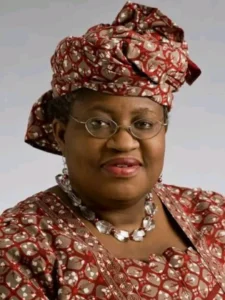
When Dr. Ngozi Okonjo-Iweala assumed office as Nigeria’s Minister of Finance in July 2003 under President Olusegun Obasanjo, the country faced enormous economic challenges. Although Nigeria was Africa’s largest oil producer, decades of poor fiscal management, heavy external debt, corruption, and weak institutions had limited economic growth.
International investors viewed Nigeria as a high-risk destination. Public confidence in government finances was low, and much of the nation’s annual revenue was consumed by debt servicing rather than development.
Bringing more than twenty years of experience from the World Bank, Okonjo-Iweala sought to modernize Nigeria’s financial management and restore confidence in the country’s economy.
The State of Nigeria’s Economy in 2003
When she entered office, Nigeria faced several pressing issues:
- External debt exceeding US$30 billion.
- Heavy dependence on crude oil revenue.
- Weak public financial management.
- High levels of poverty despite oil wealth.
- Low investor confidence.
- Poor budget implementation.
- Limited fiscal transparency.
- Significant corruption concerns.
These problems had accumulated over many years and could not be solved through short-term measures alone. Okonjo-Iweala believed that structural reforms were necessary to build a stronger and more resilient economy.
Launching Comprehensive Economic Reforms
Working closely with President Obasanjo and other members of the economic management team, she introduced wide-ranging reforms aimed at improving fiscal discipline and public accountability.
Key reform priorities included:
- Strengthening budget planning.
- Improving government revenue collection.
- Increasing transparency in public spending.
- Stabilizing inflation.
- Building foreign exchange reserves.
- Reforming procurement systems.
- Encouraging private sector investment.
Many of these reforms were politically sensitive because they challenged entrenched interests that benefited from inefficiencies in government spending.
Introducing Fiscal Responsibility
One of her major priorities was ensuring that government expenditures reflected available resources rather than political pressure.
She promoted:
- More realistic budgeting.
- Better expenditure monitoring.
- Greater transparency in oil revenues.
- Stronger financial reporting.
- Improved coordination between ministries.
These reforms aimed to reduce waste and improve the effectiveness of public spending.
The Oil Price-Based Fiscal Rule
Among her most significant policy innovations was the introduction of an oil price-based fiscal rule.
Rather than spending all oil revenues immediately, the government based its annual budget on a conservative benchmark oil price.
When international oil prices exceeded that benchmark, excess revenue was saved instead of spent.
This approach helped:
- Build fiscal reserves.
- Reduce inflationary pressure.
- Protect Nigeria against future oil price declines.
- Improve macroeconomic stability.
The policy later became an important component of Nigeria’s broader fiscal framework and was widely discussed by international financial institutions as an example of prudent resource management.
The Excess Crude Account
To implement this strategy, the government established the Excess Crude Account (ECA).
The account served as a savings mechanism for oil revenues earned above the approved benchmark price.
During periods of high oil prices, billions of dollars were accumulated in the account.
These savings helped Nigeria better withstand future economic shocks and demonstrated a commitment to more disciplined fiscal management.
Although the Excess Crude Account later became the subject of political debate, its creation represented a significant shift in Nigeria’s approach to managing natural resource revenues.
Leading Nigeria’s Paris Club Debt Negotiations
Perhaps the defining achievement of Okonjo-Iweala’s first tenure as Finance Minister was securing historic debt relief from the Paris Club of creditor nations.
For decades, Nigeria had struggled with a massive external debt burden.
Despite making billions of dollars in repayments over the years, interest charges and penalties meant that the country’s debt remained extremely high.
Debt servicing consumed resources that could otherwise have been invested in:
- Education.
- Healthcare.
- Roads.
- Infrastructure.
- Electricity.
- Poverty reduction.
Negotiating with the Paris Club
Negotiations with the Paris Club were exceptionally complex.
The Paris Club is an informal group of official creditor countries that coordinates debt solutions for debtor nations.
Securing debt cancellation required Nigeria to demonstrate:
- Sound economic management.
- Fiscal discipline.
- Transparent governance.
- Commitment to structural reforms.
- Sustainable debt policies.
Okonjo-Iweala played a central role in these negotiations, working alongside Nigerian officials and international partners.
The Historic Debt Relief Agreement
In October 2005, Nigeria reached a landmark agreement with the Paris Club.
The deal resulted in approximately US$18 billion in debt relief, one of the largest debt cancellation agreements ever granted to an African country at the time.
Nigeria also paid roughly US$12 billion to settle the remaining obligations, enabling the country to exit decades of unsustainable debt.
The agreement significantly reduced Nigeria’s external debt burden and improved its international financial standing.
Global Recognition
The successful negotiations attracted international attention.
Economists and development experts described the agreement as one of Africa’s most important debt restructuring achievements.
It strengthened Nigeria’s reputation among:
- International investors.
- Multilateral institutions.
- Credit rating agencies.
- Development partners.
The debt relief also created greater fiscal space for investment in national development priorities.
Strengthening Transparency in Public Finance
Another hallmark of Okonjo-Iweala’s leadership was her emphasis on transparency.
She believed that citizens should know how government resources were managed.
To improve accountability, the Ministry of Finance began publishing monthly allocations distributed to Nigeria’s federal, state, and local governments.
This initiative increased public access to financial information and encouraged greater scrutiny of government spending.
While transparency alone could not eliminate corruption, it represented an important step toward more open governance.
Public Procurement Reforms
Public procurement had long been vulnerable to inefficiency and abuse.
To address these concerns, reforms introduced during her tenure emphasized:
- Competitive bidding.
- Standardized procurement procedures.
- Independent oversight.
- Better value for public funds.
- Reduced opportunities for contract inflation.
These reforms later contributed to broader institutional improvements in Nigeria’s public financial management.
Encouraging Private Sector Growth
Okonjo-Iweala consistently argued that sustainable economic development required a vibrant private sector.
Government alone, she believed, could not generate sufficient employment or innovation.
Her policies therefore sought to create an environment that encouraged:
- Domestic investment.
- Foreign direct investment.
- Entrepreneurship.
- Business confidence.
- Economic diversification.
Although structural challenges remained, these reforms signaled Nigeria’s commitment to improving its investment climate.
Serving Briefly as Foreign Minister
In June 2006, while still serving in government, Okonjo-Iweala was appointed Nigeria’s Minister of Foreign Affairs.
Her tenure in that role was relatively short, lasting only a few months before leaving government in August 2006.
Despite its brevity, the appointment reflected the confidence placed in her leadership and diplomatic abilities.
Her international experience enabled her to represent Nigeria effectively on global economic and diplomatic issues.
Returning to International Development
Following her departure from the Nigerian government in 2006, Okonjo-Iweala returned to international development work.
She resumed a senior leadership role at the World Bank, where she continued contributing to global development policy.
Her experience implementing reforms in Nigeria enriched her perspective, allowing her to bridge the gap between policy design and practical implementation.
Lessons from Her First Tenure
Her first period as Finance Minister demonstrated that meaningful economic reform often requires difficult political choices.
Supporters praised her for:
- Promoting fiscal discipline.
- Improving transparency.
- Securing historic debt relief.
- Enhancing Nigeria’s international reputation.
- Building stronger public financial institutions.
Critics, however, argued that some reforms imposed short-term economic hardships and that deeper structural issues, including corruption and infrastructure deficits, remained unresolved.
Okonjo-Iweala acknowledged that economic reform is an ongoing process and that institutional change takes time. She frequently emphasized that lasting progress depends on consistent policies rather than isolated initiatives.
By the end of her first tenure, she had established herself as one of Africa’s most respected economic policymakers. Her success in negotiating debt relief and advancing fiscal reforms positioned her as a leading voice in international development and laid the groundwork for her eventual return to Nigeria’s Ministry of Finance in 2011.
Returning to Government in 2011
Following the 2011 presidential election, President Goodluck Jonathan invited Dr. Ngozi Okonjo-Iweala to return to government. This time, she was appointed Minister of Finance as well as Coordinating Minister for the Economy, giving her broader responsibility for coordinating Nigeria’s overall economic policy.
The appointment reflected the confidence that both domestic and international observers had in her ability to guide Africa’s largest economy through a period of significant opportunity and uncertainty.
Unlike her first tenure, she now had the additional responsibility of ensuring that different ministries worked together toward common economic objectives.
Nigeria’s Economic Landscape in 2011
When Okonjo-Iweala returned to office, Nigeria had made progress in several areas since her first tenure, but substantial challenges remained.
These included:
- Heavy dependence on crude oil exports.
- High youth unemployment.
- Widespread poverty.
- Inadequate infrastructure.
- Electricity shortages.
- Security concerns in parts of the country.
- Continued corruption within public institutions.
She argued that Nigeria needed not only economic growth but also inclusive growth that would create jobs and improve living standards.
Coordinating the National Economy
As Coordinating Minister for the Economy, Okonjo-Iweala oversaw economic planning across multiple government agencies.
Her responsibilities included:
- Fiscal policy.
- Budget preparation.
- Economic coordination.
- Public finance management.
- Relations with international financial institutions.
- Investment promotion.
- Debt management.
She also represented Nigeria at major international meetings involving the International Monetary Fund (IMF), the World Bank, the African Development Bank, and the G20, where she advocated for policies that supported developing economies.
The Transformation Agenda
One of the central economic frameworks during President Jonathan’s administration was the Transformation Agenda, a medium-term development strategy aimed at accelerating economic growth and reducing poverty.
Okonjo-Iweala played a leading role in implementing its economic components, which focused on:
- Infrastructure development.
- Agricultural modernization.
- Job creation.
- Public financial reforms.
- Economic diversification.
- Improvements in education and healthcare.
She emphasized that sustainable development required stronger institutions rather than dependence on oil revenue alone.
Fuel Subsidy Reform
One of the most controversial decisions during her second tenure involved the reform of Nigeria’s fuel subsidy system.
For many years, the federal government had spent billions of naira subsidizing petrol prices.
Supporters of subsidy reform argued that:
- The system disproportionately benefited wealthy consumers.
- Large amounts of public funds were lost through fraud and corruption.
- Subsidies reduced government resources available for education, healthcare, and infrastructure.
Okonjo-Iweala maintained that subsidy reform would allow the government to invest more effectively in long-term development.
Nationwide Protests
In January 2012, the government’s attempt to remove fuel subsidies led to nationwide protests and strikes.
Many Nigerians expressed concern that higher fuel prices would increase transportation costs, food prices, and the overall cost of living.
The demonstrations became one of the largest public protests in Nigeria’s democratic history.
After negotiations with labor unions and civil society organizations, the government partially reinstated the subsidy, reducing the immediate impact on consumers.
Although the episode was politically difficult, Okonjo-Iweala continued to argue that subsidy reform remained economically necessary if accompanied by stronger social protections.
Subsidy Reinvestment Program
To demonstrate that savings from subsidy reform would benefit citizens, the government introduced the Subsidy Reinvestment and Empowerment Programme (SURE-P).
The initiative supported projects such as:
- Road construction.
- Maternal and child healthcare.
- Youth employment.
- Public transportation.
- Vocational training.
While supporters viewed the program as an effort to redirect public resources toward development, critics questioned its effectiveness and implementation.
Rebasing Nigeria’s Economy
One of the most significant statistical developments during her second tenure was the rebasing of Nigeria’s Gross Domestic Product (GDP) in 2014.
GDP rebasing updated the methodology used to measure economic activity by incorporating sectors that had grown substantially over previous decades.
The revised figures showed that Nigeria had become Africa’s largest economy by GDP, surpassing South Africa.
The exercise reflected improved statistical measurement rather than sudden economic expansion, but it highlighted the growing importance of sectors such as:
- Telecommunications.
- Entertainment.
- Financial services.
- Retail trade.
- Information technology.
Okonjo-Iweala emphasized that larger GDP figures did not automatically translate into improved living standards, noting that economic growth must be inclusive.
Public Financial Management Reforms
During her second tenure, she continued strengthening systems designed to improve accountability in government finances.
These efforts included:
- Expanding electronic payment systems.
- Reducing opportunities for payroll fraud.
- Improving expenditure monitoring.
- Enhancing treasury management.
- Strengthening budget transparency.
One notable initiative was the wider implementation of the Treasury Single Account (TSA) framework, which sought to consolidate government revenues and improve cash management. Although the policy was fully implemented after her tenure, foundational work occurred during this period.
Fighting Corruption Through Systems Reform
Okonjo-Iweala often argued that corruption should be addressed not only through prosecutions but also by redesigning government systems to reduce opportunities for abuse.
Her reforms focused on:
- Electronic financial transactions.
- Greater transparency.
- Stronger procurement rules.
- Better auditing.
- Public disclosure of government finances.
She acknowledged that institutional reform was a gradual process requiring sustained political commitment.
International Recognition
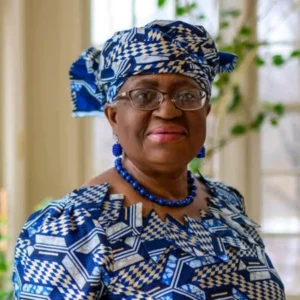
Throughout her second tenure, Okonjo-Iweala became one of Africa’s most recognizable voices on economic policy.
She spoke regularly at international forums organized by:
- The World Bank.
- International Monetary Fund.
- World Economic Forum.
- United Nations.
- African Development Bank.
Her speeches often addressed:
- Economic development.
- Women’s leadership.
- Public finance.
- Trade.
- Poverty reduction.
- Global inequality.
Kidnapping of Her Mother
One of the most traumatic events of her public life occurred in December 2012 when her elderly mother, Professor Kamene Okonjo, was kidnapped in Delta State.
The kidnappers reportedly demanded that Okonjo-Iweala resign from government and pay a ransom.
The incident attracted widespread national and international attention.
After several days in captivity, her mother was released.
Okonjo-Iweala later described the experience as deeply painful but stated that it strengthened rather than weakened her resolve to continue serving the country.
Balancing Public Service and Family
Despite holding some of the world’s most demanding leadership positions, Okonjo-Iweala has consistently emphasized the importance of family.
She has spoken publicly about balancing professional responsibilities with marriage and motherhood.
Her husband, Dr. Ikemba Iweala, is a neurosurgeon. Together, they have four children.
One of their sons, Dr. Uzodinma Iweala, is an internationally recognized physician, author, and public intellectual known for his novel Beasts of No Nation.
Okonjo-Iweala has often credited her family’s support as an important source of strength throughout her career.
Corporate and International Leadership Roles
After leaving government in 2015, Okonjo-Iweala returned to international leadership.
She joined the boards of several major organizations, including:
- Twitter (now X Corp., before its acquisition by Elon Musk).
- Standard Chartered PLC.
- The African Risk Capacity.
- The Global Alliance for Vaccines and Immunization (Gavi), where she later served as Chair of the Board.
These appointments reflected her growing influence in global finance, governance, and public health.
Candidacy for World Bank President
In 2012, while serving in Nigeria’s government, Okonjo-Iweala became the first woman and the first African officially nominated to contest for the presidency of the World Bank.
Although the position ultimately went to Dr. Jim Yong Kim, her candidacy was widely regarded as historic.
It challenged the long-standing convention that an American should always lead the institution and sparked broader discussions about diversity and merit in global financial governance.
A Reputation Beyond Politics
By the end of her second tenure in government, Okonjo-Iweala had become more than a Nigerian public official.
She was widely recognized as:
- A respected economist.
- A reform-minded policymaker.
- A global development expert.
- An advocate for women in leadership.
- A leading voice on sustainable economic growth.
- A champion of transparent public finance.
Her influence increasingly extended beyond Nigeria, preparing the way for the most historic chapter of her career: her election as Director-General of the World Trade Organization.
Making History at the World Trade Organization
The defining chapter of the Okonjo-Iweala Biography came in 2021 when Dr. Ngozi Okonjo-Iweala was appointed the seventh Director-General of the World Trade Organization (WTO).
Her appointment was historic for several reasons:
- She became the first woman to lead the WTO.
- She became the first African to serve as Director-General.
- She became one of the few women to head a major multilateral economic institution.
Her selection followed an extensive international process involving WTO member governments. After broad support from member states, she officially assumed office on 1 March 2021.
The appointment was celebrated across Africa and around the world as a milestone for gender equality and representation in global economic governance.
Leading the WTO During a Period of Global Uncertainty
Okonjo-Iweala assumed office during one of the most challenging periods in modern international trade.
The world was dealing with:
- The COVID-19 pandemic.
- Disruptions to global supply chains.
- Rising protectionist policies.
- Food security concerns.
- Inflationary pressures.
- Increasing geopolitical tensions.
Her leadership focused on strengthening cooperation among WTO members and ensuring that trade remained a tool for economic recovery and development.
COVID-19 Vaccine Access
One of her earliest priorities was improving access to COVID-19 vaccines, especially for low-income and developing countries.
She worked with governments, pharmaceutical companies, and international organizations to encourage:
- Increased vaccine production.
- More equitable distribution.
- Greater international cooperation.
- Reduced barriers affecting medical supplies.
She consistently argued that no country would be fully protected until vaccines became accessible worldwide.
Reforming the WTO
Since taking office, Okonjo-Iweala has emphasized the need to modernize the World Trade Organization.
Her reform agenda has included:
- Restoring confidence in the multilateral trading system.
- Improving the organization’s dispute settlement processes.
- Supporting digital trade.
- Promoting sustainable development.
- Strengthening rules governing fisheries subsidies.
- Increasing support for developing economies.
- Enhancing transparency among WTO members.
While WTO reforms require consensus among member states and therefore progress gradually, she has remained a leading advocate for constructive dialogue and practical solutions.
Supporting Africa Through Trade
Throughout her tenure, Okonjo-Iweala has consistently highlighted Africa’s potential in global trade.
She has encouraged:
- Greater intra-African trade.
- Industrialization.
- Value-added manufacturing.
- Youth entrepreneurship.
- Women’s economic participation.
She has also expressed support for the implementation of the African Continental Free Trade Area (AfCFTA), emphasizing that stronger regional trade can accelerate economic growth across the continent.
Climate Change and Sustainable Trade
Another major area of her work has involved promoting environmentally sustainable trade.
She has argued that trade policy should contribute to addressing global challenges such as:
- Climate change.
- Food insecurity.
- Energy transition.
- Sustainable development.
Her speeches often stress that economic growth and environmental responsibility should complement one another.
Books Written by Ngozi Okonjo-Iweala
In addition to her work as an economist and policymaker, Okonjo-Iweala is an accomplished author.
Some of her notable books include:
| Title | Year |
|---|---|
| Reforming the Unreformable: Lessons from Nigeria | 2012 |
| Fighting Corruption Is Dangerous: The Story Behind the Headlines | 2018 |
| Women and Leadership: Real Lives, Real Lessons (co-authored with Julia Gillard) | 2020 |
These books draw on her experiences in public service, international development, and leadership, offering insights into governance, reform, and the challenges faced by women leaders.
Major Awards and Honors
Over the course of her distinguished career, Okonjo-Iweala has received numerous honors from governments, universities, and international organizations.
Some of the most notable include:
- Grand Commander of the Order of the Niger (GCON), one of Nigeria’s highest national honors.
- Forbes’ list of the World’s Most Powerful Women (multiple years).
- TIME 100 recognition.
- Honorary doctorates from universities across Africa, Europe, and North America.
- Various international leadership and public service awards.
She has also been recognized by organizations promoting women’s leadership, good governance, and global development.
Memberships and International Boards
Throughout her career, she has served on or advised several prominent organizations, including:
- Gavi, the Vaccine Alliance (Chair of the Board).
- African Risk Capacity.
- Standard Chartered PLC.
- Twitter, Inc. (before its acquisition and subsequent restructuring).
- Various United Nations and international advisory panels.
These roles reflect the broad respect she commands across sectors including finance, health, technology, and international development.
Business Interests
Unlike many public figures, there is no publicly verified information indicating that Okonjo-Iweala owns large private business conglomerates or extensive commercial enterprises.
Her career has been centered primarily on:
- Public service.
- International organizations.
- Economic policy.
- Development finance.
- Global governance.
As of this writing, there is no publicly verified information confirming significant personal business investments beyond standard board memberships and professional engagements.
Ngozi Okonjo-Iweala Net Worth
Dr. Ngozi Okonjo-Iweala has never publicly disclosed her personal wealth.
Various websites publish estimated figures, but these estimates differ substantially and are not supported by official financial disclosures.
As of this writing, there is no publicly verified information confirming her net worth.
Readers should therefore treat unofficial estimates with caution.
Leadership Philosophy
Throughout her career, several themes have consistently shaped her leadership style:
- Integrity.
- Evidence-based decision-making.
- Fiscal discipline.
- Transparency.
- Global cooperation.
- Inclusive economic growth.
- Long-term institutional reform.
She has frequently emphasized that strong institutions are more important than strong personalities and that sustainable development depends on accountable governance.
Selected Verified Quotes
Among her widely quoted public statements are:
“Trade can be a force for good.”
“Strong institutions outlive individuals.”
“Reform is difficult, but it is necessary.”
These statements reflect her longstanding emphasis on cooperation, institution-building, and economic reform.
Career Timeline
| Year | Milestone |
|---|---|
| 1954 | Born in Ogwashi-Ukwu, Delta State, Nigeria |
| 1976 | Graduated from Harvard University |
| 1981 | Earned Ph.D. from MIT |
| 1982 | Joined the World Bank |
| 2003 | Appointed Nigeria’s Minister of Finance |
| 2005 | Led negotiations resulting in approximately US$18 billion in Paris Club debt relief |
| 2006 | Briefly served as Minister of Foreign Affairs |
| 2007 | Returned to senior leadership at the World Bank |
| 2011 | Reappointed Minister of Finance and Coordinating Minister for the Economy |
| 2012 | Became the first African woman nominated for World Bank President |
| 2015 | Left Nigerian government service |
| 2021 | Became Director-General of the World Trade Organization |
| 2025 | Reappointed by WTO members for a second four-year term beginning 1 September 2025 |
Official Website and Verified Social Media
Official Website
- World Trade Organization profile: www.wto.org
Verified Social Media
- X (formerly Twitter): x.com/NOIweala
- LinkedIn: Public professional profile through the World Trade Organization.
Legacy and Global Influence
Dr. Ngozi Okonjo-Iweala’s legacy extends far beyond the offices she has held. She has become a symbol of principled leadership, sound economic management, and the growing influence of African professionals in international institutions.
Her work on Nigeria’s debt relief changed the country’s fiscal outlook. Her leadership at the World Bank contributed to development efforts across multiple regions. At the WTO, she continues to advocate for a rules-based trading system that benefits both developed and developing economies.
She has also inspired countless young people—particularly women—to pursue careers in economics, public policy, and international affairs. Her career demonstrates that expertise, integrity, and persistence can shape policy on a global scale.
Rather than being remembered solely as a Nigerian public official, Ngozi Okonjo-Iweala is widely regarded as one of the most influential economic leaders of her generation. Her contributions to development finance, public sector reform, and global trade have earned her a lasting place in modern economic history.
With decades of service spanning national government and international institutions, she remains an enduring example of leadership grounded in knowledge, accountability, and a commitment to improving lives through sound public policy.
Also read: Araga BBN Biography: The Inspiring Journey of BBNaija Season 11’s Rising Fashio
Frequently Asked Questions
Who is Ngozi Okonjo-Iweala?
She is a Nigerian-American economist and international development expert who serves as the Director-General of the World Trade Organization.
When was Ngozi Okonjo-Iweala born?
She was born on 13 June 1954.
Where is Ngozi Okonjo-Iweala from?
She is from Ogwashi-Ukwu, Delta State, Nigeria.
Who are Ngozi Okonjo-Iweala’s parents?
Her parents are Professor Chukwuka Okonjo and Professor Kamene Okonjo, both respected academics.
What is Ngozi Okonjo-Iweala famous for?
She is best known for leading Nigeria’s economic reforms, negotiating Paris Club debt relief, serving as Nigeria’s Finance Minister, and becoming the first woman and first African to lead the WTO.
Which universities did she attend?
She studied Economics at Harvard University and earned a Ph.D. in Regional Economics and Development from MIT.
Is Ngozi Okonjo-Iweala married?
Yes. She is married to Dr. Ikemba Iweala, a neurosurgeon.
How many children does she have?
She and her husband have four children.
What books has she written?
Among her best-known books are Reforming the Unreformable, Fighting Corruption Is Dangerous, and Women and Leadership.
What is Ngozi Okonjo-Iweala’s religion?
She is a Christian.
What is her net worth?
There is no publicly verified figure confirming her net worth.
Why is her appointment to the WTO historic?
Because she became both the first woman and the first African to serve as Director-General of the organization.










+ There are no comments
Add yours