



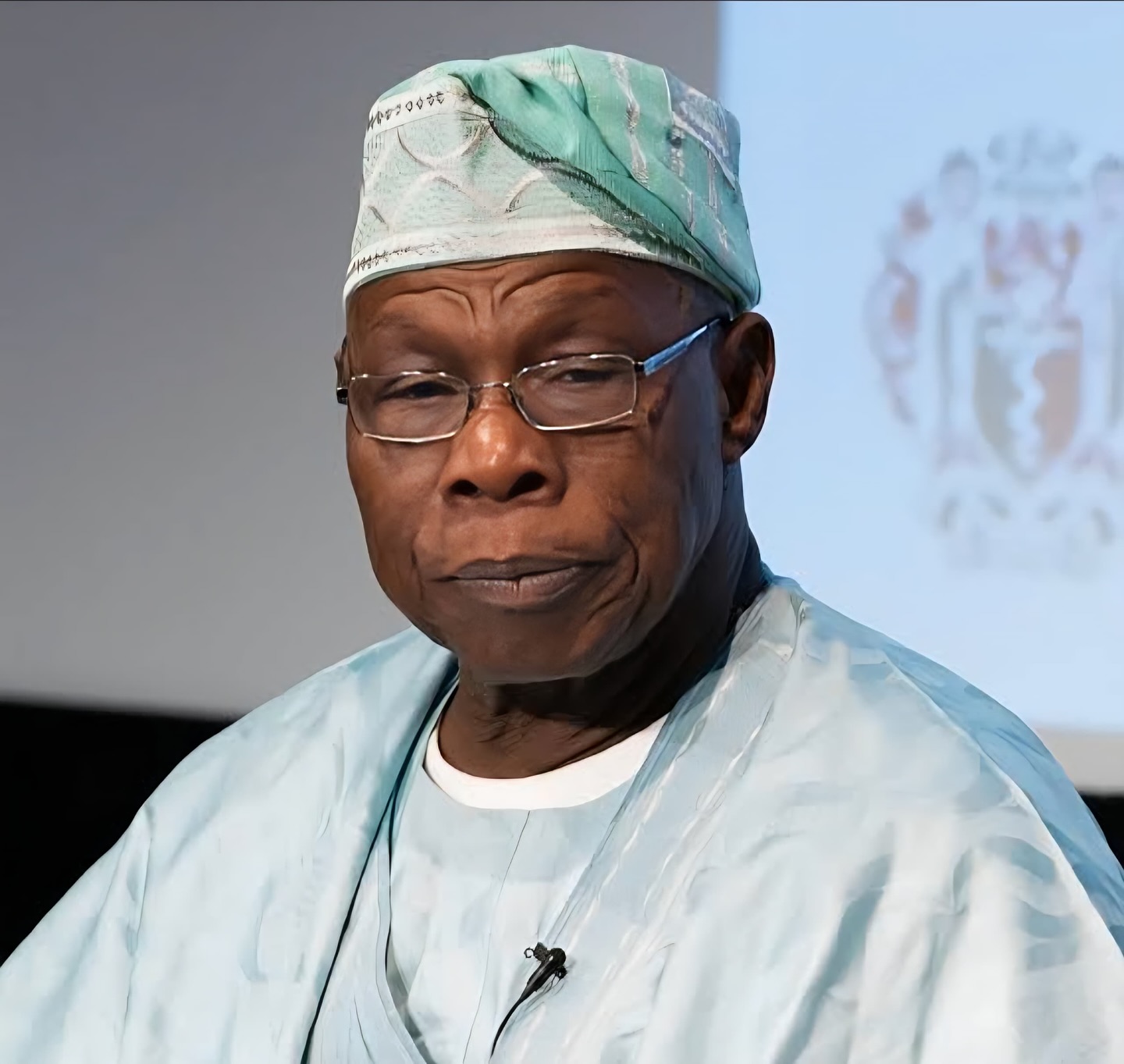
Olusegun Obasanjo’s life is inseparable from the modern history of Nigeria. Soldier, military ruler, elected president, farmer, author, political strategist, diplomat and African elder statesman, he has occupied an unusual number of influential positions across more than six decades of public life.
Born on 5 March 1937 in Ibogun-Olaogun in present-day Ogun State, Nigeria, Obasanjo rose from a modest rural background to become one of the most consequential figures in Nigerian politics. He first ruled Nigeria as a military head of state from 1976 to 1979, when he supervised the transition to civilian government, and later returned to power through democratic elections as president from 1999 to 2007. Nigeria’s State House records both periods of national leadership.
The extraordinary feature of an Obasanjo biography is therefore not simply the number of offices he has held. It is the number of times Nigerian history placed him at a decisive crossroads.
He was a young army officer during the Nigerian Civil War. He later commanded troops during the final phase of the conflict, became military head of state after the assassination of General Murtala Mohammed, and voluntarily transferred power to an elected civilian administration in 1979.
Years later, after being imprisoned during the military dictatorship of General Sani Abacha, Obasanjo returned to political life and won the 1999 presidential election. He subsequently became the first elected president of Nigeria’s Fourth Republic and served two terms.
Even after leaving Aso Rock, his political influence did not disappear. He became increasingly active in African diplomacy, mediation, election observation, leadership development, agriculture and public commentary. The United Nations appointed him Special Envoy for the Great Lakes region in 2008, reflecting the international reputation he had developed as a mediator.
As of 2026, Obasanjo remains an influential Nigerian elder statesman. President Bola Tinubu publicly celebrated his 89th birthday in March 2026 and described his influence as extending across Nigeria, Africa and the wider international community.
Quick Facts About Olusegun Obasanjo
| Category | Details |
|---|---|
| Full name | Olusegun Matthew Okikiola Ogunboye Aremu Obasanjo |
| Common name | Olusegun Obasanjo |
| Date of birth | 5 March 1937 |
| Age in 2026 | 89 |
| Place of birth | Ibogun-Olaogun, Ogun State, Nigeria |
| Nationality | Nigerian |
| Ethnic background | Yoruba |
| Profession | Soldier, politician, statesman, farmer, author and diplomat |
| Military rank | General |
| Military head of state | 1976–1979 |
| President of Nigeria | 1999–2007 |
| Political party during presidency | Peoples Democratic Party |
| Major international role | UN Special Envoy for the Great Lakes region |
| Major African role | Chairperson of the African Union |
| Major initiative | African Leadership Forum |
| Major educational institution associated with him | Bells University of Technology |
| Major cultural institution | Olusegun Obasanjo Presidential Library |
| Known for | Military leadership, democratic transition, economic reforms, African diplomacy and mediation |
| Current status | Former president and elder statesman |
The United Nations identifies Obasanjo as having been born on 5 March 1937 and records his military service, role in the Nigerian Civil War, two periods as Nigeria’s national leader and later international peace-making work.
Early Life and Family Background

Olusegun Obasanjo was born into a farming family in Ibogun-Olaogun, a community in what is now Ogun State in southwestern Nigeria.
His childhood was shaped by rural life and the social environment of pre-independence Nigeria. Unlike many political figures who entered public life through elite universities or established political families, Obasanjo’s early path was comparatively modest.
The circumstances of his upbringing became an important part of the story of his rise. His family did not have the financial resources to send him to university after secondary school, a limitation that would eventually influence his decision to enter the military.
The InterAction Council records that Obasanjo attended Baptist Boys’ High School in Abeokuta between 1952 and 1956 and performed well academically. After completing his schooling, he briefly worked as a teacher before joining the Nigerian Army in 1958.
That decision transformed the direction of his life.
The young Obasanjo entered adulthood at a particularly important moment in Nigerian history. The country was moving toward independence, nationalist politics was intensifying, and the military was becoming an increasingly important institution in the emerging state.
For Obasanjo, the army offered something his family circumstances could not easily provide: professional training, upward mobility and an opportunity to serve at a national level.
His education would therefore become unusual. Although he did not follow the conventional university route at that stage, he received extensive military and technical education in Nigeria, Britain and India.
This combination of practical experience and professional military training later became one of the foundations of his leadership style.
Education and Military Training
Obasanjo’s educational journey is one of the most interesting elements of his biography because it demonstrates how his career developed outside the conventional university pathway.
After attending Baptist Boys’ High School in Abeokuta, he briefly worked as a teacher before enlisting in the Nigerian Army in March 1958.
His initial military training included the Regular Officers’ Special Training School in Teshie, Ghana, followed by Mons Officer Cadet School at Aldershot in England.
His training did not end there.
He subsequently attended institutions connected with military engineering, surveying and defence studies. The InterAction Council biography records training at the Royal College of Military Engineering in Chatham, the School of Survey in Newbury, the Indian Army School of Engineering in Poona and other military institutions.
This technical background was significant.
Obasanjo was not trained only as a battlefield officer. His exposure to engineering, surveying and defence studies gave him a broader professional understanding of military organization and infrastructure.
Over time, he continued to acquire knowledge through professional experience, international assignments, diplomacy and political leadership.
Later in life, he also became associated with higher education and theological study. The Olusegun Obasanjo Leadership Institute identifies him as holding a PhD in theology from the National Open University of Nigeria.
His educational story consequently evolved from a young man who could not initially afford university to an internationally experienced statesman and scholar whose interests extended beyond military affairs.
Joining the Nigerian Army
Obasanjo joined the Nigerian Army in 1958, just two years before Nigeria achieved independence.
The timing was important.
Nigeria was preparing to become an independent state, and its armed forces were transitioning from a colonial institution into a national military. Officers such as Obasanjo were therefore entering an institution that would soon become central to the country’s political development.
His military career lasted approximately 21 years.
According to the United Nations, his service included military training in England and India, participation in a United Nations peacekeeping mission in the former Zaire and command responsibilities during Nigeria’s civil war.
His career advanced steadily through the ranks.
The experience he gained during military operations, combined with his professional training and exposure to international affairs, positioned him for increasingly senior responsibilities.
But the event that would most dramatically change his career was the Nigerian Civil War.
Obasanjo and the Nigerian Civil War
The Nigerian Civil War, fought from 1967 to 1970, was one of the defining tragedies of Nigeria’s early history.
The conflict began after the attempted secession of the southeastern region as the Republic of Biafra. It resulted in enormous loss of life and left deep political, social and emotional scars across the country.
Obasanjo became a significant military commander during the conflict.
He eventually commanded the Third Marine Commando Division, which operated in the southeastern theatre. By the final stage of the war, his forces had advanced into territory held by Biafran forces.
In January 1970, Colonel Philip Effiong, who had assumed leadership of Biafra after Emeka Ojukwu left Nigeria, surrendered to the federal side.
Obasanjo was the federal commander who received the instrument of surrender.
Nigeria’s State House described this moment in its 2025 tribute to Obasanjo as a symbolic event that marked the end of the country’s 30-month civil war.
The experience left a permanent mark on Obasanjo’s political outlook.
He emerged from the war as a senior and nationally recognized military officer. More importantly, he became associated with the preservation of Nigeria’s territorial unity.
This would later influence his political language, particularly his strong emphasis on Nigerian nationalism and national integration.
For Obasanjo, the civil war was not simply a military campaign. It was an event that helped define his understanding of the Nigerian state and his own place within it.
From Soldier to National Leadership
The years immediately after the civil war brought Obasanjo into the highest levels of military administration.
Nigeria was politically unstable, and successive military governments had replaced the country’s elected civilian institutions.
In 1975, General Murtala Mohammed became head of state after a coup that removed General Yakubu Gowon.
Obasanjo became deputy head of state under Murtala Mohammed.
The arrangement would not last long.
On 13 February 1976, Murtala Mohammed was assassinated during an attempted coup in Lagos. The assassination abruptly changed the country’s leadership.
Obasanjo, as deputy head of state, became head of the Federal Military Government.
He was then responsible for governing Nigeria during a period of political uncertainty while also continuing a transition programme intended to restore civilian rule.
This was the first time Obasanjo occupied the highest political office in Nigeria.
Obasanjo as Military Head of State, 1976–1979
Obasanjo’s first administration was fundamentally different from his later presidency.
He came to power as a military officer rather than through an election. Yet one of the defining decisions of his first administration was the decision to continue the transition toward civilian government.
The State House records his military tenure as running from 13 February 1976 until 1 October 1979.
His government pursued a programme intended to return Nigeria to elected civilian government.
A new constitution was developed, political parties were permitted to organize, elections were held and a civilian government was ultimately established.
On 1 October 1979, Obasanjo handed power to Shehu Shagari, who became president of Nigeria’s Second Republic.
The significance of this transition was considerable.
Obasanjo became the first Nigerian military ruler to voluntarily hand over power to an elected civilian administration.
The United Nations later described the transition as a defining element of his historical record, noting that he presided over the voluntary return to civilian rule in 1979.
The Organization of African Unity also formally commended him in 1979 for his service and for the transition, praising his contribution to Africa and the liberation of the continent.
That decision would eventually become one of the strongest arguments in favor of Obasanjo’s reputation as a believer in constitutional government, even though his own first period in power had begun through military rule.
Why the 1979 Handover Became Central to Obasanjo’s Legacy
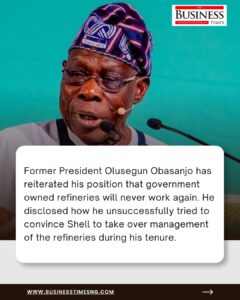
The political significance of Obasanjo’s 1979 handover became clearer with the passage of time.
Nigeria had experienced military intervention in politics since 1966. Military governments had become a recurring feature of the country’s political system.
Obasanjo’s decision to return power to civilians therefore represented a break with a pattern that would later be repeated by other military rulers.
It also became an important part of the personal narrative surrounding him.
Years later, when Obasanjo returned to the presidency through elections in 1999, supporters could point to his earlier transition programme as evidence that he had already demonstrated a willingness to return Nigeria to civilian government.
Critics, however, continued to assess his military record alongside his later democratic credentials.
That tension is important to understanding an honest Obasanjo biography.
His political legacy cannot be reduced to either praise or criticism. His career contains both democratic achievements and controversial episodes, and the meaning of his leadership has remained heavily debated in Nigeria.
Life After Military Rule
After leaving office in 1979, Obasanjo did not disappear from public life.
He entered a new phase that combined agriculture, international diplomacy, African development work, writing and public advocacy.
Agriculture became particularly important.
The United Nations describes him as moving into agribusiness after his military retirement. His interest in farming became one of the most enduring parts of his post-military identity.
This period also expanded his international profile.
Rather than remaining exclusively focused on Nigerian politics, Obasanjo became involved in international organizations and African initiatives dealing with peace, security, development and governance.
He participated in international commissions and organizations and became increasingly recognized as a figure capable of moving between military, political and diplomatic environments.
One of his most important initiatives during this period was the establishment of the African Leadership Forum in 1988.
The organization reflected an idea that would remain central to his thinking: Africa’s development depended heavily on the quality of its leadership and institutions.
The African Leadership Forum
Obasanjo founded the African Leadership Forum in 1988.
The initiative was designed to create a platform for discussion of leadership, development, governance and African affairs.
This was significant because Obasanjo was no longer holding national political office at the time. His influence was increasingly being exercised through ideas, networks and international engagement rather than through formal government authority.
His work on African leadership also helped establish the foundation for his later role as an elder statesman.
He increasingly participated in international discussions involving African political transitions, peace and security.
His activities included involvement in discussions concerning Namibia, Angola, South Africa, Mozambique and Burundi. The United Nations later highlighted this record when appointing him to a major mediation role in Central Africa.
This period demonstrated that Obasanjo’s political career had expanded beyond Nigeria.
He was becoming an African statesman whose influence was increasingly international.
Obasanjo and the Struggle Against Apartheid
Southern Africa became another important chapter in Obasanjo’s international career.
During the final decades of apartheid, he participated in international efforts related to South Africa and the wider liberation struggle.
He served as co-chair of the Commonwealth Eminent Persons Group on Apartheid in South Africa.
His involvement placed him alongside prominent international figures attempting to encourage political change and negotiations in the region.
For Obasanjo, African liberation was closely connected to the question of African development and self-determination.
His later diplomatic work would continue this pattern: he frequently argued that African problems required African participation in finding solutions.
Political Repression and Imprisonment
The most dramatic reversal in Obasanjo’s post-military life came during the rule of General Sani Abacha.
By the 1990s, Nigeria had once again fallen under military dictatorship.
Obasanjo became increasingly critical of military authoritarianism and was eventually arrested and imprisoned.
He was accused of involvement in a coup plot against the Abacha government.
Obasanjo denied the allegations.
The United Nations records that he was imprisoned in 1995 on what it described as a phantom coup-plot charge and remained imprisoned until his release in 1998.
His imprisonment profoundly altered his political trajectory.
A man who had once ruled Nigeria as a military head of state was now a prisoner of another military government.
The contrast was striking.
Obasanjo had voluntarily handed power to civilians in 1979. Sixteen years later, he was imprisoned under a military regime that showed little interest in the democratic transition he had once overseen.
His time in prison also reinforced his international reputation as a Nigerian political figure who had experienced both the privileges and dangers of state power.
From Prisoner to Presidential Candidate

General Sani Abacha died suddenly in June 1998.
His death opened the way for a political transition.
General Abdulsalami Abubakar became head of state and initiated a programme that eventually led to democratic elections.
Obasanjo was released from prison.
Instead of withdrawing permanently from politics, he made the extraordinary decision to contest for the presidency.
He joined the Peoples Democratic Party, which had emerged as one of the major political forces during the transition.
The presidential election of 1999 became one of the most consequential contests of his life.
Obasanjo won the election and became president of Nigeria on 29 May 1999.
The State House identifies him as the president of the Fourth Republic from 29 May 1999 to 29 May 2007.
His return to the presidency was historically unusual.
He had already ruled Nigeria as a military leader.
Now he was returning as an elected civilian president after having spent years outside government and a period in prison.
The journey from military ruler to political prisoner to elected president made Obasanjo one of the most unusual political figures in Nigerian history.
Obasanjo and the Birth of the Fourth Republic
Obasanjo took office at a moment of enormous national expectation.
Nigeria had spent much of the previous decades under military rule. The country had experienced political instability, economic difficulties, international isolation and deep institutional weaknesses.
The new democratic government therefore faced a challenge much larger than simply organizing elections.
It had to rebuild confidence in Nigerian institutions.
Obasanjo’s administration focused on strengthening relations with international partners, reforming government institutions, attracting investment and addressing Nigeria’s substantial external debt.
The early years of the administration were marked by attempts to restore Nigeria’s international standing.
Nigeria’s return to democratic government also opened the door to renewed engagement with international financial institutions and Western governments.
The transition was not without controversy, however.
Obasanjo’s presidency became known for strong executive authority, political confrontation and disputes with opponents, state governments and other political actors.
As with his military administration, his leadership style generated both admiration and criticism.
Economic Reform and Nigeria’s External Debt
One of the most frequently cited achievements of Obasanjo’s second administration was the management of Nigeria’s external debt.
When he became president in 1999, Nigeria faced serious debt-service problems and substantial arrears.
The International Monetary Fund records that the Obasanjo administration worked to normalize Nigeria’s relationship with creditors. In December 2000, Nigeria reached a Paris Club agreement involving the rescheduling of almost the entire stock of Paris Club debt outstanding at the time.
The debt issue remained central to the administration’s economic diplomacy.
Eventually, Nigeria reached a landmark agreement with the Paris Club that led to major debt relief after negotiations and payments.
The significance went beyond the headline figures.
Debt relief gave the government greater fiscal room and helped improve Nigeria’s standing with international financial institutions and investors.
Supporters of Obasanjo have consequently identified debt management as one of the major economic achievements of his presidency.
Critics, however, have questioned aspects of the economic reforms and the distribution of their benefits.
A balanced assessment therefore requires distinguishing the documented debt negotiations from broader political claims about the administration’s economic success.
Obasanjo and NEPAD
Obasanjo’s influence during the early 2000s extended well beyond Nigeria.
He became one of the leading African political figures involved in the development of the New Partnership for Africa’s Development, commonly known as NEPAD.
NEPAD emerged from African efforts to create a development framework that emphasized economic transformation, good governance, investment and African ownership of development priorities.
The International Fund for Agricultural Development notes Obasanjo’s role in helping establish NEPAD and the African Peer Review Mechanism, as well as his leadership positions within African institutions.
The African Peer Review Mechanism was particularly important because it connected development with governance.
The underlying idea was that African states should voluntarily assess one another’s political, economic and institutional performance.
For Obasanjo, this was consistent with a broader philosophy that Africa’s future required stronger leadership, accountability and institutions.
His Nigerian presidency therefore became intertwined with a wider continental agenda.
Obasanjo as African Union Chairman
In July 2004, Obasanjo became Chairperson of the African Union.
The position gave him a continental platform at a time when African leaders were dealing with conflicts, democratic transitions, humanitarian crises and economic challenges.
During his tenure, he was involved in efforts to promote African-led responses to continental problems.
His approach was strongly associated with the principle that Africans should play the leading role in solving African conflicts.
During a 2004 United Nations press conference, Obasanjo, who was then chairman of the African Union, emphasized the importance of African states taking the lead in addressing the continent’s problems.
This philosophy became a recurring theme throughout his diplomatic career.
Whether dealing with Nigeria, the Democratic Republic of the Congo, Sudan or other African conflicts, Obasanjo repeatedly presented himself as an advocate for African-led solutions.
The Cameroon-Nigeria Border Dispute
Another important diplomatic chapter of Obasanjo’s presidency involved relations between Nigeria and Cameroon.
The two countries had a longstanding dispute over the Bakassi Peninsula and their land and maritime boundary.
The International Court of Justice issued a ruling in 2002 concerning the boundary.
Rather than allowing the dispute to develop into a major armed confrontation, Nigeria and Cameroon worked through a United Nations-supported process.
Obasanjo participated directly in high-level negotiations with Cameroonian President Paul Biya.
The United Nations recorded a series of meetings between the two presidents designed to support implementation of the International Court of Justice ruling and resolve outstanding issues peacefully.
The episode became one of the examples frequently cited when assessing Obasanjo’s preference for negotiated settlement in international disputes.
It also demonstrated how his military background did not prevent him from pursuing diplomatic solutions when national interests were at stake.
Obasanjo’s Leadership Style
Understanding Obasanjo’s leadership style is essential to understanding both his successes and controversies.
He has generally projected an image of discipline, decisiveness and personal authority.
His military background influenced the way he approached government.
He tended to place strong emphasis on hierarchy, organization, national unity and institutional authority.
Supporters have viewed these qualities as necessary in a country as politically complex as Nigeria.
Critics have sometimes interpreted the same qualities as evidence of an overly centralized or confrontational approach to power.
Both interpretations form part of his historical record.
Obasanjo’s political career also demonstrates a strong capacity for adaptation.
He moved from military rule to civilian democracy, from commander to diplomat, from prisoner to presidential candidate and from national leader to international mediator.
That ability to reinvent himself is arguably one of the defining characteristics of his public life.
Family and Personal Life
Obasanjo’s family life has attracted significant public attention throughout his career.
His first wife was Esther Oluremi Obasanjo, popularly associated with the name Mama Iyabo. They married in 1963 and had children, including Iyabo Obasanjo, who later became a politician and served as a senator representing Ogun Central.
Obasanjo later married Stella Obasanjo, who became First Lady of Nigeria when he returned to the presidency in 1999.
Stella Obasanjo remained First Lady until her death in October 2005.
Her death was a major personal tragedy during Obasanjo’s presidency and received extensive national and international attention.
Obasanjo has also had children who have pursued careers in medicine, politics, academia, business and the military.
Because accounts of his wider family relationships vary across sources, claims about every aspect of his private life should be treated carefully. Where a specific personal detail cannot be independently established through reliable public sources, it should not be presented as established fact.
What is clear is that family has remained an important part of Obasanjo’s public identity, while several members of his family have developed independent public profiles.
The Death of Stella Obasanjo
The death of Stella Obasanjo in 2005 was one of the most painful moments of his second presidency.
She died in Spain on 23 October 2005 following complications associated with cosmetic surgery.
Her death occurred while Obasanjo was still serving as president, adding a deeply personal tragedy to an already demanding political period.
Stella had occupied a visible position as First Lady and was involved in public causes, including issues affecting women and children.
Her death therefore generated both personal grief and widespread public reaction.
The event remains an important part of any complete account of Obasanjo’s presidency because it affected the president personally while also bringing intense public attention to the responsibilities and risks associated with medical treatment abroad.
Obasanjo’s Business and Agricultural Interests
Agriculture has been one of the most consistent non-political dimensions of Obasanjo’s life.
After leaving military office in 1979, he developed substantial interests in farming and agribusiness.
His agricultural activities contributed to the image he cultivated of himself as a farmer and statesman rather than simply a retired politician.
Agriculture also became an important theme in his later advocacy.
The International Fund for Agricultural Development identifies Obasanjo as a strong advocate for food security, agribusiness and the empowerment of young people and women. It also notes his role in the Nigeria Zero Hunger Project and his involvement with the Africa Food Prize.
However, claims about the exact value of Obasanjo’s personal business holdings or total wealth should be treated with caution.
There is no single authoritative, independently verified public financial statement that establishes a definitive current personal net worth for him.
Therefore, as of this writing, there is no publicly verified information confirming a precise figure for Olusegun Obasanjo’s current net worth.
Any website presenting an exact figure without transparent documentation should be treated skeptically.
Obasanjo and Bells University of Technology
Education became another major area of Obasanjo’s post-presidential legacy.
He was associated with the establishment of Bells University of Technology in Ota, Ogun State.
The institution reflects his long-standing interest in science, technology, professional education and national development.
The university’s significance extends beyond its connection with a former president.
It represents Obasanjo’s belief that Nigeria’s development requires institutions capable of producing technically skilled graduates.
His interest in education also continued through leadership-development initiatives and the preservation of historical records.
The Olusegun Obasanjo Presidential Library
One of the most visible institutions associated with Obasanjo is the Olusegun Obasanjo Presidential Library in Abeokuta.
The library was developed as a historical, cultural and educational institution designed to preserve documents and materials relating to Nigerian political history.
It also provides a physical representation of Obasanjo’s place in Nigeria’s political story.
The broader foundation connected with the institution identifies Obasanjo as its founder and board chairman and describes his role in establishing the library as part of his post-presidential legacy.
The library is important not simply because it carries his name.
It reflects a larger question about how Nigerian political history is remembered, documented and interpreted.
For supporters, it is a contribution to historical preservation and education.
For scholars and critics, it is also a source through which the legacy of one of Nigeria’s most controversial political figures can be examined.
International Peacebuilding After the Presidency
Obasanjo’s departure from Aso Rock did not mark the end of his political career.
Instead, it opened perhaps the most international phase of his public life.
In December 2008, United Nations Secretary-General Ban Ki-moon appointed him Special Envoy for the Great Lakes region.
His assignment focused heavily on the conflict involving the Democratic Republic of the Congo and Rwanda.
The United Nations described Obasanjo as an experienced African mediator with previous involvement in peace efforts involving Namibia, Angola, South Africa, Mozambique and Burundi.
His role involved working with governments and regional actors to reduce tensions and encourage dialogue.
This appointment was significant because it transformed a former Nigerian president into an international peace negotiator.
He would subsequently participate in election observation missions and other diplomatic initiatives across Africa.
His reputation as an elder statesman therefore became increasingly connected to conflict resolution rather than formal political office.
Mediation in the Democratic Republic of the Congo
The Great Lakes region presented Obasanjo with one of his most difficult diplomatic assignments.
Eastern Democratic Republic of the Congo had suffered prolonged conflict involving armed groups, regional tensions and political instability.
The United Nations asked Obasanjo to help facilitate dialogue and improve relations among the governments involved.
His appointment was formally acknowledged by the UN Security Council.
The assignment demonstrated why Obasanjo’s background was considered useful.
He understood military institutions from personal experience.
He also understood political power from having governed Nigeria.
And after decades of international engagement, he had developed relationships across the African diplomatic community.
Those three experiences—military, political and diplomatic—made him an unusual mediator.
Obasanjo and African Democratic Transitions
After leaving Nigeria’s presidency, Obasanjo also became involved in election observation and mediation efforts in different African countries.
His experience was increasingly sought when countries faced difficult political transitions.
He participated in efforts designed to prevent disputed elections from escalating into violence.
His involvement in Liberia is one example.
A United Nations publication on the UN Mission in Liberia records that Obasanjo visited Monrovia after Liberia’s 2017 presidential runoff election as a member of the UN Secretary-General’s High Level Advisory Board on Mediation. His purpose was to encourage the political parties and candidates to accept the election outcome peacefully.
This role illustrates the transformation of Obasanjo’s public identity.
In his early career, he had been a military commander.
At the height of his Nigerian political career, he had been a head of state and president.
Later, he became someone increasingly called upon to persuade political rivals to compromise.
Obasanjo and the Tigray Peace Process
Obasanjo’s later diplomatic career reached another major milestone through his involvement in the Ethiopia peace process.
He served as an African Union High Representative for the Horn of Africa and became one of the central mediators in negotiations between the Ethiopian government and the Tigray People’s Liberation Front.
The negotiations culminated in the signing of the November 2022 Pretoria Agreement, which established a permanent cessation of hostilities.
The achievement strengthened his reputation as one of Africa’s most experienced political mediators.
It also demonstrated the longevity of his diplomatic career.
More than four decades after he had left Nigeria’s military government, Obasanjo was still participating in negotiations over some of Africa’s most difficult political conflicts.
Obasanjo’s Books and Writing
Writing has been another important component of Obasanjo’s public life.
He has authored and contributed to books dealing with Nigeria, leadership, development, agriculture, politics and his own experiences.
His writing has provided an opportunity for him to explain his decisions in his own voice.
It has also generated controversy because political memoirs inevitably compete with the accounts of other participants in historical events.
For researchers, his books are therefore valuable primary sources but should be read alongside independent historical scholarship and documentary evidence.
This is particularly important when examining controversial episodes from Nigeria’s military era and the political conflicts of the Fourth Republic.
A Life Defined by Contradictions
The most compelling way to understand Obasanjo is through the contradictions that run throughout his biography.
He was a military ruler who became a democratic president.
He was a soldier who became an international mediator.
He was a former political prisoner who returned to become president.
He was a nationalist who increasingly operated on a continental stage.
He was both a powerful political insider and, at various moments, a critic of governments that followed him.
These contradictions are not flaws in the historical record; they are central to it.
They explain why Obasanjo remains so difficult to categorize.
To admirers, he is a disciplined nationalist who repeatedly stepped forward when Nigeria faced crisis.
To critics, he represents the concentration of political power and the complicated relationship between Nigeria’s military and democratic traditions.
Both perspectives are part of the continuing debate about his legacy.
Career Timeline
| Year | Major event |
|---|---|
| 1937 | Born in Ibogun-Olaogun, present-day Ogun State |
| 1952–1956 | Attended Baptist Boys’ High School, Abeokuta |
| 1958 | Joined the Nigerian Army |
| 1958–1959 | Completed officer training in Ghana and England |
| 1960s | Served in the Nigerian Army and international peacekeeping |
| 1967–1970 | Served during the Nigerian Civil War |
| 1970 | Commanded the Third Marine Commando during the final phase of the war |
| 1975 | Became deputy head of state under Murtala Mohammed |
| 1976 | Became Nigeria’s military head of state after Murtala Mohammed’s assassination |
| 1979 | Handed power to elected civilian president Shehu Shagari |
| 1980s | Expanded agricultural, international and development activities |
| 1988 | Founded the African Leadership Forum |
| 1990s | Participated in international development and peace initiatives |
| 1995 | Imprisoned under the Sani Abacha government |
| 1998 | Released from prison |
| 1999 | Elected president of Nigeria |
| 2004 | Became Chairperson of the African Union |
| 2005 | Lost his wife Stella Obasanjo |
| 2007 | Left the Nigerian presidency |
| 2008 | Appointed UN Special Envoy for the Great Lakes region |
| 2010s | Continued African mediation and election-related activities |
| 2022 | Played a major mediation role in the Ethiopia-Tigray peace process |
| 2026 | Celebrated his 89th birthday and remained active as an elder statesman |
The timeline reflects the documented progression from soldier to military head of state, elected president and international mediator.
Awards, Honours and International Recognition
Obasanjo has received numerous honours and has served in a wide range of international organizations and commissions.
One of the best-known recognitions associated with him is the Indira Gandhi Prize for Peace, Disarmament and Development, which he received in 1995.
He has also received honorary academic recognition from international institutions.
His international service has included roles connected with UNESCO, the World Health Organization, international disarmament initiatives and various African and global organizations.
His public record also includes leadership positions in international development and governance initiatives.
These honours reflect the fact that his influence was not confined to Nigeria’s domestic politics.
He became part of a wider generation of African leaders whose careers were closely connected with the continent’s post-colonial political development, liberation struggles, democratization and search for economic independence.
Official Sources and Public Institutions Connected to Obasanjo
For readers researching Obasanjo further, the most reliable starting points are institutional sources rather than celebrity-biography websites.
Nigeria State House — Past Heads of State and Presidents
United Nations — Olusegun Obasanjo profile and peacebuilding record
Olusegun Obasanjo Leadership Institute
Conclusion: The Enduring Story of Olusegun Obasanjo
An Obasanjo biography is ultimately a story about power, survival, reinvention and the turbulent political history of Nigeria.
Few Nigerians have experienced so many different sides of public life.
Obasanjo entered the army as a young man in the final years of colonial rule. He became a senior commander during the civil war, rose to the country’s highest military office, and then made the historic decision to hand power to civilians in 1979.
He later transformed himself into an international statesman, farmer and advocate for African development.
Then came imprisonment.
For many political figures, imprisonment would have marked the end of a career. For Obasanjo, it became the beginning of another extraordinary chapter.
After his release, he entered electoral politics and returned to Aso Rock as Nigeria’s first elected president of the Fourth Republic.
His presidency was consequential but controversial. It produced major economic and diplomatic initiatives while also generating intense political opposition and debate.
After leaving office in 2007, he again reinvented himself.
Rather than retiring completely, he became an elder statesman whose influence increasingly crossed national borders. From the Great Lakes region to Liberia and Ethiopia, he continued to participate in efforts to prevent conflict, encourage dialogue and strengthen African political institutions.
By 2026, at the age of 89, Obasanjo’s public career spans almost seven decades.
His legacy cannot be understood through one office, one political party or one achievement.
He is simultaneously part of Nigeria’s military history, democratic history, economic history and diplomatic history.
His supporters see a patriot who repeatedly accepted difficult national responsibilities.
His critics see a powerful and sometimes controversial political actor whose influence has remained unusually strong.
History will continue to debate both interpretations.
What is less debatable is the scale of his impact.
From the battlefield to the presidency, from prison to international mediation, Olusegun Obasanjo has remained one of the most consequential figures in Nigeria’s modern political story.
Also read: Afolabi Kazeem Biography: The Life, Career and Public Service Journey of ABK Afolabi
Frequently Asked Questions About Obasanjo Biography
Who is Olusegun Obasanjo?
Olusegun Obasanjo is a Nigerian former military head of state, former elected president, retired army general, farmer, author, diplomat and elder statesman. He ruled Nigeria as military head of state from 1976 to 1979 and later served as elected president from 1999 to 2007.
When was Olusegun Obasanjo born?
Olusegun Obasanjo was born on 5 March 1937 in Ibogun-Olaogun, in present-day Ogun State, Nigeria. He turned 89 in March 2026.
How old is Olusegun Obasanjo?
As of August 2026, Olusegun Obasanjo is 89 years old.
Where is Olusegun Obasanjo from?
Obasanjo was born in Ibogun-Olaogun in Ogun State, southwestern Nigeria. He is of Yoruba background and has consistently emphasized Nigerian national identity throughout his public career.
What did Obasanjo do before becoming president?
Before becoming president, Obasanjo was a career military officer. He served in the Nigerian Army, participated in the Nigerian Civil War, commanded the Third Marine Commando and later became military head of state from 1976 to 1979.
When was Obasanjo Nigeria’s military head of state?
Obasanjo served as Nigeria’s military head of state from 13 February 1976 to 1 October 1979.
When was Obasanjo president of Nigeria?
Olusegun Obasanjo served as Nigeria’s elected president from 29 May 1999 to 29 May 2007.
Why is Obasanjo’s 1979 handover important?
His 1979 handover is historically important because he transferred power from a military government to an elected civilian administration under Shehu Shagari. It became one of the most important events associated with his first period in national leadership.
Was Obasanjo imprisoned?
Yes. During the military government of General Sani Abacha, Obasanjo was arrested and imprisoned in 1995 after being accused of involvement in a coup plot. He was released in 1998.
How did Obasanjo become president in 1999?
After Nigeria’s military transition following the death of Sani Abacha, Obasanjo entered the presidential race under the Peoples Democratic Party. He won the 1999 election and became president on 29 May 1999.
What is Obasanjo known for internationally?
He is particularly known for African diplomacy, mediation and peacebuilding. The United Nations appointed him Special Envoy for the Great Lakes region in 2008, and he later participated in other African peace and election initiatives.
What is Obasanjo’s role in African diplomacy?
Obasanjo has served in several African and international diplomatic roles, including African Union leadership, election observation and mediation in conflicts involving countries such as the Democratic Republic of the Congo and Ethiopia.
What is Obasanjo’s net worth?
There is no authoritative, independently verified public figure establishing Olusegun Obasanjo’s exact current net worth. Claims of specific amounts should therefore not be treated as established fact unless supported by transparent financial documentation.
Is Olusegun Obasanjo still active in politics?
Although he is no longer a holder of elected national office, Obasanjo remains active as an elder statesman, political commentator, mediator and participant in African leadership and development initiatives.
What is Obasanjo’s greatest achievement?
There is no universally accepted single greatest achievement. His most significant contributions include his 1979 transition to civilian rule, his role in Nigeria’s return to democracy in 1999, debt negotiations during his presidency, his contributions to African institutions and his later international mediation work.
What is Obasanjo’s legacy?
Obasanjo’s legacy is complex. He is remembered as both a former military ruler and elected democratic president, a major figure in Nigerian political history, an advocate of African-led solutions and an influential international mediator.






+ There are no comments
Add yours